
From Gaza Tunnels to New York Hallways
Asharq Al-Awsat, London, September 22
Benjamin Netanyahu rubs his eyes. He cannot believe what he is seeing. He cannot believe what he is hearing. It is as if the world is bombarding him with missiles that cannot be intercepted – missiles striking at his bloody madness, his reckless ambitions, and his delusions rooted in the dark caves of history. The latest blows came from Canada, Australia, and Britain, which recognized the State of Palestine.
British recognition carries a particular sting; it helps alleviate the historical wound inflicted by the Balfour Declaration. Netanyahu is bewildered. The world cannot be silenced, and fighter jets cannot be dispatched to discipline it. A painful question will haunt his legacy – and Jewish history as well. Did his adventures and crimes hasten the awakening of the world’s conscience, prompting a rush to recognize the Palestinian state?
Never before has powerful Israel endured such a torrent of diplomatic and political rebukes. The world could not endure the endless scenes from Gaza. Towers collapsing into dust. Houses annihilated with their families still inside. Tents set ablaze, with those seeking refuge trapped within them. Tiny bodies lowered into tiny graves. The deadly meals and treacherous bread. The torment of repeated displacements, each step shadowed by funerals.
Despair seems almost permanent, which is why the wounded seek solace in history. No force, however mighty, has ever succeeded in killing every person, erasing every home, or uprooting every tree. The dream of the oppressed burns hotter than the missiles of warplanes. It can hide in a child’s eyes, bide its time for a season or for generations, then erupt in defiance.
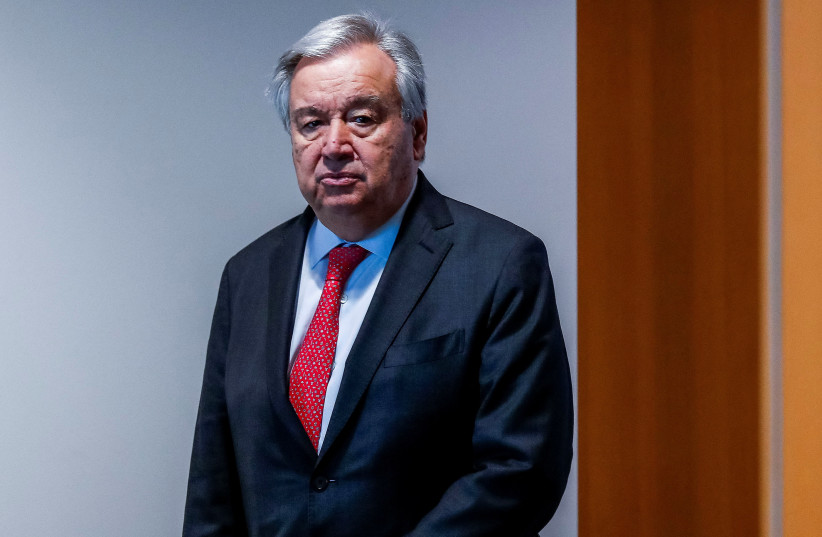
It is not true that the conscience of the world is made of stone, nor that its slumber will last forever. Here stands the world, from New York to Geneva, defending the principles of the UN and drying the tears of Secretary-General António Guterres.
This story does not belong to Palestine alone; it belongs to the entire Middle East. History shows that the Palestinian question remains the region’s deepest, most open wound, even when other crises command attention. Israeli policy has long sought to deny this wound, to erase the Palestinian people’s right to claim their land – or even a fragment of it.
The Netanyahu government continues to exploit the chaos of Yahya Sinwar’s Operation Al-Aqsa Flood to dismantle the Palestinian dream, erasing Gaza from the map while destabilizing and hollowing out the West Bank. Israel has used this “flood” as a pretext to reshape regional dynamics, boasting of toppling Bashar Assad, pushing Iran out of Syria, assassinating Hassan Nasrallah, and sending aircraft unchallenged across neighboring skies.
Israeli arrogance has grown so brazen that it has even dared to raid the residences of Hamas leaders in Doha. Meanwhile, attention in the region turns this week to pivotal developments in New York. The Saudi- and French-sponsored two-state solution conference represents a watershed moment for the Palestinian cause.
The Saudi leadership has thrown its full weight behind the effort, accelerating recognition of a Palestinian state, particularly across Europe and among major powers. This unprecedented momentum stands as an international response to Israel’s attempt to bury the Palestinian question beneath the rubble of Gaza.
For nations that have traditionally backed Israel or looked away from its crimes, acknowledging that the only path to ending the Israeli-Palestinian wars is the creation of an independent Palestinian state alongside Israel is no simple matter. Yet the realization is dawning that the Middle East will never achieve lasting stability without such a state. Stability in this region affects not only its own peoples but also Europe, the US, and the wider world, shaping global interests and the fragile balance of the international economy.
The two-state solution is the key. It alone can return Israel to itself – restore its borders, confine its aircraft to its own skies, and free it from the intoxication of regional arrogance. It can defuse the triggers of endless wars and remove the pretext for reckless adventures that seek to redraw the region’s map.
Despite Washington’s current stance, the combined Arab, Islamic, and international pressure behind the two-state solution will ultimately persuade the US administration, even President Donald Trump, that there is no other way to guarantee Palestinian rights and Israeli security.
This monumental diplomatic battle will demand time and patience, but it is the only path to lead the Middle East out of its dark tunnel. The two-state solution remains the sole window through which the region can escape its wars and horrors. What will unfold in New York is historic, but it is only the beginning. Between recognition of a Palestinian state and its realization on the ground lies a fierce struggle – inside Israel, within Palestinian ranks, and across other capitals, especially in the US.
The world has sent an unmistakable message: Palestinian rights cannot be erased. The future of nations is not determined by airstrikes but by respect for rights and international law. What happens in New York is merely the first stone in the foundation. The Netanyahu government must be compelled to halt the fire, sit at the negotiating table, and discuss borders and guarantees. To achieve this, Washington must be convinced that the time has come to heal the Palestinian wound based on justice.
Israel has no choice but to abandon Netanyahu’s suicidal lexicon. Continued killing in Gaza only deepens Israel’s entrapment in its own tunnel. The Israeli army may have reduced Gaza to a wasteland, but the Palestinian dream rises again from the ashes. Palestinians, too, have no choice but to engage in the battle for a two-state solution according to the principles of international legitimacy. National unity and national ambitions are more important than the fate of individual political factions.
– Ghassan Charbel
New Hope for Diabetics
El Watan, Egypt, September 23
Dr. Osama Hamdy, the acclaimed Egyptian physician at Harvard who consistently educates the public on medical breakthroughs, particularly in diabetes, has delivered a message of hope to Egyptian diabetics, many of whom have long been misled by herbalists and peddlers of false cures. A new revolution is on the horizon for diabetics worldwide, and Dr. Hamdy declares that four groundbreaking drugs are set to completely transform the treatment of obesity and Type 2 diabetes.
In a fierce global race among pharmaceutical companies, research has been completed on four novel medications that promise to redefine treatment standards. For the first time, we are seeing drugs capable of reducing body weight by up to 30% – surpassing even weight-loss surgery – and lowering cumulative blood sugar levels by 2.2%, a record unmatched by any current therapy. All four are awaiting approval by the US Food and Drug Administration, with authorization expected in early 2026, setting the stage for a new era in diabetes and obesity management.
The first is retatrutide, a triple-action drug that curbs appetite and boosts calorie burning by stimulating the body’s glucagon receptors. Clinical trials show an average weight loss of 24% in obese patients, reaching 28.5% in women, while diabetic patients experienced reductions in glycated hemoglobin (HbA1c) of up to 2.2%. Remarkably, 70% of obese participants using the drug for 48 weeks shed more than 20% of their weight, nearly half lost over 25%, and a quarter lost more than 30% for the first time – results far beyond those achieved through bariatric surgery.
The second is CagriSema, a dual-hormone treatment combining semaglutide, the active ingredient in Ozempic, with an amylin analog secreted by pancreatic cells. Both components suppress appetite and improve blood sugar control, but unlike other medications, CagriSema preserves muscle mass and even supports memory, concentration, and brain function. Obese patients lost an average of 22.7% of their weight, while Type 2 diabetics saw reductions of 15.7%, with a cumulative drop in blood sugar of about 1.5%.
The third is orforglipron, the first nonhormonal oral medication to mimic the effects of the hormones found in drugs like Ozempic and Mounjaro. Its chemical structure allows for low production costs and raises the possibility of combining it with diabetes treatments in a single pill. After 72 weeks, obese patients lost an average of 12.4% of their weight, with 30% shedding more than 15%. Cumulative blood sugar dropped by 1.8%, 75% of patients reached levels below 6.5%, and a quarter achieved levels under 5.7% – the normal range.
The fourth is oral semaglutide, the same hormone used in Ozempic but taken as a high-dose pill rather than an injection. Unlike the current oral version, Rybelsus, which tops out at 14 mg., this new 50 mg. dose delivers a 13.6% reduction in weight for obese patients, with 30% losing more than 20% of their body weight.
Other promising drugs remain in development, including MariTide, a once-monthly injection that could cut weight by up to 20%, and bimagrumab, which uniquely reduces body fat by 20.3% while increasing muscle mass.
We are on the brink of an unprecedented medical revolution in weight loss and diabetes control, with a relentless scientific race underway to end Type 2 diabetes. While these medications may present unforeseen challenges, clinical studies so far indicate that side effects are generally manageable and well-tolerated.
Industry analysts predict sales of these treatments will soar to $85 billion by 2026 and $150b. by 2030. Welcome to the future of science and the extraordinary possibilities it offers, including in Egypt. – Khaled Montaser
Social Development by Law in Kuwait
Al Qabas, Kuwait, September 23
Since its founding, Kuwait has pursued a legal path that reflects the state’s commitment to building a society grounded in justice, equality, and human dignity. The principles of social justice have been firmly entrenched in our society, making social legislation a key instrument for translating these ideals into practical reality.
Over the decades, the legal framework has steadily evolved to address new issues related to education, literacy, women, children, persons with disabilities, and housing while also modernizing labor and social insurance systems to strengthen social stability.
This progress stems from a clear leadership vision that seeks to balance the demands of economic development with the preservation of the social fabric, ensuring that the law mirrors the vitality of society and its aspirations for the future. Social development in Kuwait, driven by laws, has produced tangible positive outcomes, including the expansion of rights, steady developmental progress, and meaningful social change.
Women’s participation in public and professional life has grown significantly, and social justice has been advanced by supporting those who are financially or physically vulnerable.
Legislative amendments have also modernized the labor market, creating a more attractive environment for workers. At the same time, reforms to family and childhood laws have brought them closer to international human rights standards.
These legal transformations have fostered a more just and stable society and elevated Kuwait’s standing as a state determined to harmonize national culture with the values of modernity. The law has become an essential tool for strengthening trust between citizens and the state, paving the way for social development through more effective civil institutions.
The next phase calls for forward-looking legal proposals aimed at deepening social justice, expanding civic participation, empowering young women and men, and providing opportunities for them to demonstrate their abilities to drive positive change. Among these proposals are comprehensive laws to combat cyber violence and protect digital rights amid rapid technological transformation, as well as updated labor legislation to incorporate flexible models that reflect the demands of the new economy.
Additional reforms would support transparency and accountability in public institutions while enhancing environmental protection and community health to sustain social development and raise Kuwait’s profile in international forums.
Social inclusion laws, similar to those in the European Union, would guarantee equal opportunities for all groups without discrimination based on gender, race, or disability.
Environmental justice acts, like those in Canada and the Scandinavian countries, would link environmental protection to the quality of social life, with direct benefits for public health and societal stability.
Social economy laws, inspired by Spain and France, could encourage the growth of social and cooperative enterprises, creating sustainable jobs that strengthen social cohesion. Transparency and accountability laws, modeled on the Scandinavian experience, would enforce disclosure and institutional oversight, bolstering citizen confidence in state institutions and limiting corruption.
By adopting such advanced global standards, Kuwait can build a balanced and resilient society where the law serves not only as a mechanism of oversight but also as a driver of innovation and sustainability. This would propel the country toward greater global competitiveness while promoting justice and fostering development in tandem.
If implemented, these proposals would usher Kuwait into a new era of legal and social progress, transforming it into a model of institutionalization capable of protecting individual rights and ensuring collective advancement. Investing in the modernization of social laws is an investment in Kuwait’s future – one that enhances its stature among advanced nations and provides its citizens with a fair, adaptable legal environment capable of meeting the challenges of a rapidly changing world. – Ghadeer Mohamed Mahmood Aseeri
Israel’s ‘Security First’ Policy
Al-Ittihad, UAE, September 23
Israel continues to prioritize its “security first” policy, consistently pushing the prospect of peace to the foreground. Its political thinking and daily concerns have become overwhelmingly centered on ensuring security, sidelining the pursuit of peace. This fixation has placed security at the heart of Israel’s policies, obscuring and undermining the essential role of peace in achieving lasting stability.
While Israel maintains relationships with certain regional countries under the banner of peace, its dealings with the Palestinians remain rooted in brute force – anchored in the narrow concept of security while excluding peace, the very foundation that serves as the incubator and generator of sustainable security.
A significant portion of Israeli society favors coexistence and a genuine peace with the Palestinians, yet the state takes no real steps toward replacing its security-first mindset with a peace-driven strategy that could build a lasting partnership with its neighbors and the Palestinian people. Instead, it relies on military power as a shield, without securing the long-term stability that only peace can bring.
Several factors could eventually push Israel toward such a shift: the growing internal pressures of human and financial costs, the burden of prolonged wars, the recurring cycle of conflict, the heavy toll on daily life, the weakening of economic security, and the erosion of political stability within the state itself.
A new dynamic has also entered Israel’s relations with the Arab world through the Abraham Accords, which open opportunities for tolerance and reconciliation – opportunities that could flourish if Israel were to engage in genuine dialogue and pursue peace with the Palestinians, thereby advancing the long-sought stability of the Middle East.
At the same time, international calls for a two-state solution are intensifying, with successive recognitions of the Palestinian state gaining momentum. Regional shifts are increasingly unfavorable to Israel, which continues to lose ground by squandering diplomatic opportunities, while the Palestinian cause garners growing support from European and global public opinion. This rising international legitimacy strengthens the Palestinians’ resolve to maintain their legitimate national rights and simultaneously diminishes Israel’s standing both regionally and globally.
Under the leadership of Benjamin Netanyahu, Israel has mismanaged the ongoing conflict, allowing its military strength to blind it to the critical political realities of the region. This shortsightedness was especially evident in its reckless attack on Qatar, a key mediator in delicate negotiations.
By striking at the sovereignty of a negotiating state and its team, Israel committed an act of strategic folly that many consider unforgivable. The Gulf region’s atmosphere has since shifted, alliances have become shrouded in uncertainty, and the regional security landscape now demands a clearer reassessment of Israel’s priorities and external relationships.
Israel must free itself from illusions of invincibility, from self-admiration, and from the narcissistic outlook that isolates it from its geographic and political environment. As the saying goes, one cannot step into the same river twice – a reminder that opportunities once missed cannot easily be reclaimed.
Israel’s continued inhumane treatment of the steadfast Palestinian people, who are inseparable from their land and identity, and its persistent attempts to displace them through oppression, killing, torture, relentless bombardment, and systematic humiliation, represent an immoral and profoundly dangerous path. Such actions risk driving Palestinians of all ages toward extremism, a development for which Israel itself will ultimately bear the cost. – Ahmed Al Hosani
Translated by Asaf Zilberfarb. All assertions, opinions, facts, and information presented in these articles are the sole responsibility of their respective authors and are not necessarily those of The Media Line, which assumes no responsibility for their content.