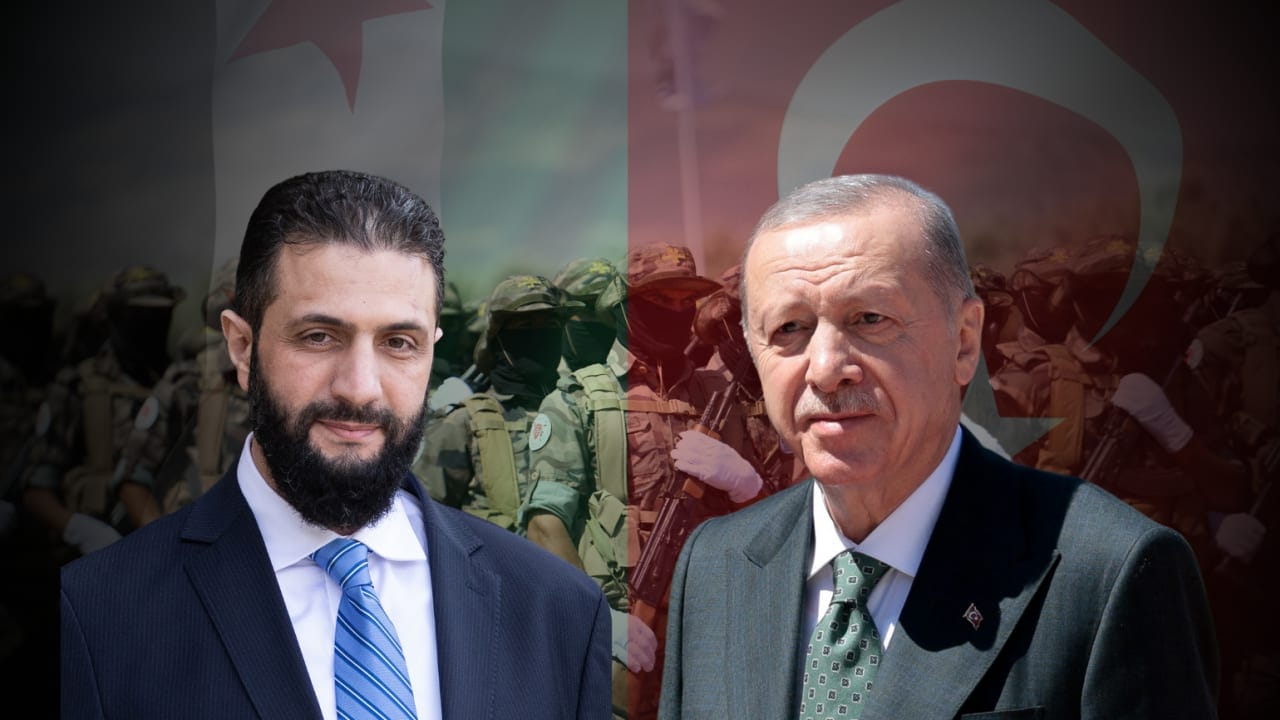
Turkey and Syria are rapidly increasing their ties. This is not surprising, because Ankara backed Syrian rebels for many years and was opposed to the Assad regime.
In addition, Turkey wants to take advantage of the openings in Syria and the power vacuum to increase its role there. Nevertheless, it’s worth keeping track of the various new deals taking place to understand how Ankara is moving quickly to cement itself on the ground.
Turkey was one of the first countries to send a high-level delegation to Damascus as the Assad regime fell from power while Hayat Tahrir al-Sham and its leader, Ahmed al-Sharaa, swept into Damascus.
Now, about 10 months later, Turkey and Syria are doing all the things one would expect of neighbors that support each other. Syria is the weaker and poorer partner in the relationship.
“Senior Syrian and Turkish officials met Saturday to discuss strengthening security coordination and boosting cooperation with Interpol, according to a statement from the Syrian Interior Ministry sent to SANA,” Syrian Arab News Agency (SANA), Syria’s official news agency, reported Sunday.

“Syrian Deputy Interior Minister for Security Affairs Maj.-Gen. Abdul Qader Tahan met with Turkish Deputy Interior Minister Munir Karaloğlu during an official visit to Ankara,” the report said.
The talks focused on activating Interpol’s work inside Syria, which will enable a crackdown on crime and involve training, SANA reported. The training agreement was signed earlier this year.
“The agreement allows Syrian Interior Ministry personnel to travel to Turkey for specialized training in multiple security fields to improve performance and readiness,” SANA reported. “The two sides also discussed Syria’s participation in the upcoming Internal Security Equipment Exhibition as part of efforts to strengthen bilateral security ties.”
Importance of reaching a practical framework
Meanwhile, over the past week Syrian Transportation Minister Yarub Badr discussed the importance of enhancing trade with Turkey. He met with a delegation from the Turkish Freight Companies Union (UND),” SANA reported.
“During the meeting, Minister Badr stressed the importance of reaching a practical framework that ensures smooth transportation between both sides by simplifying procedures at border crossings, contributing to faster shipping and supporting mutual interests,” the report said.
UND said about 400 trucks unload cargo at the Bab al-Hawa crossing. The goods are then moved into Syria with Syrian trucks.
Bab al-Hawa is located below several hills in Syria that frame the background for the pretty border crossing near the town of Reyhanli in Turkey’s Hatay province. For years, it was a major crossing point for trucks bringing goods to Syria from Turkey. Long lines of trucks would stretch into the distance.
When I went to that border in 2015, it was clear how important this access point is for Syria. It has remained important since then. It enabled goods to reach Idlib for many years and then also be transported onward.
After the Turkish invasion of Afrin in northern Syria in 2018, the crossing grew in importance, moving goods into Afrin as well.
“Both sides expressed hope that joint cooperation would contribute to strengthening trade exchange and facilitating logistical movement between the two countries, supporting their aspirations for a broader partnership in land transport,” SANA reported.
Turkey’s Syrian Civil Aviation Authority said it had received the first shipment of navigation devices and equipment provided by Turkey, as part of its support to enhance air transport safety in Syria, SANA reported.
“The shipment includes the Instrument Landing System (ILS), which facilitates aircraft landings in difficult weather conditions, in addition to the DVOR/DME system that provides aircraft with accurate data on direction and distance, Hassari explained in a statement to SANA,” the report said.
This is important because the devices will be installed at Damascus International Airport.