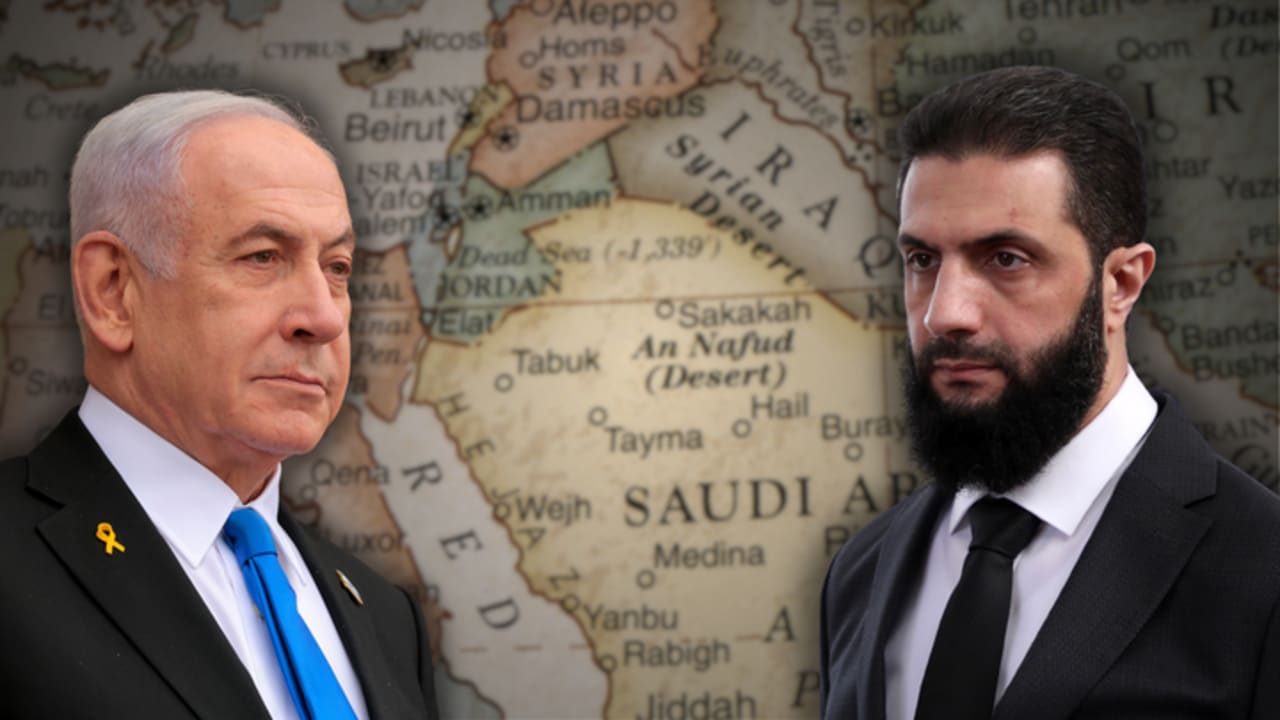
Syrian President Ahmed al-Sharaa discussed Syria’s position on Israel and its level of interactions with Jerusalem during a wide-ranging interview with state-run Al-Ikhbariyah Syria news channel on Friday.
“Syrian President Ahmad al-Sharaa confirmed that security talks with Israel are under way, explaining that negotiations aim to restore the security arrangements that existed under the 1974 disengagement agreement,” Syrian Arab News Agency (SANA), Syria’s official news agency, reported.
Syria’s transitional government has affirmed that it stands by the 1974 agreement, the report said.
It has notified the UN and called on “UNDOF forces to return to their previous positions on the disengagement zone,” Sharaa was quoted as saying. “We are now in the process of discussions with Israel, which considered the fall of the previous regime as Syria’s withdrawal from the 1974 agreement, even though Syria affirmed from the very first moment its commitment to it, notified the United Nations, and requested that UNDOF forces return to their previous positions.”
Sharaa is concerned that Israel’s airstrikes on Syria and backing of the Druze may be an effort to divide the country. He is also skeptical of some Israeli comments about the Assad regime. Israel was surprised by how fast the Assad regime fell on December 8, 2024, he said in the interview.

“He added that some Israeli policies show ‘regret’ over that collapse, alleging that Israel prefers Syria to remain a battlefield for regional score-settling,” SANA reported. “‘Excessive fear leads to war,’ he warned, urging de-escalation.”
Syrian outreach to the UN, Middle East, and Russia
Syria is reaching out to many countries. Sharaa intends to fly to New York to address the UN General Assembly later this month. He is also turning to other countries in the Middle East and to Russia.
“Syria has managed to build a good relationship with the United States and the West, maintain a calm relationship with Russia, and establish good relations with regional countries,” Sharaa was quoted as saying. “As for Iran, the wound was somewhat deeper, and we are not saying there will be a permanent rupture between us and the Iranians.”
Israel has called for southern Syria to be demilitarized. It has also said it would support the Druze.
Some Israeli officials have called Sharaa a “jihadist.”
Israel opposed Iran’s role in Syria under the Assad regime. When Assad fell, some Israeli officials sought to quickly shift to a policy of new attacks on Syria and opposing the new government even more than Assad was opposed.
It is unclear whether the contacts with Sharaa and his government may lead to some kind of moderation, an end to the attacks, and an accommodation.
Even though Damascus is open to compromise, Sharaa said Syria “is inseparable and will not abandon a single inch of its land, stressing that it does not want to be in a state of anxiety or tension with any country in the world and seeks to build its foreign relations on the basis of its sovereignty, independent decision-making, and prioritizing its own interests.”
Sharaa and his wife met a delegation from the Syrian-American Council, SANA reported Friday. In addition, he welcomed the commander of US Central Command, Adm. Brad Cooper, his wife, and US Special Envoy to Syria Thomas Barrack to Damascus on Friday.
Sharaa’s trip to the UN General Assembly later this month will be one of his most important visits abroad since he came to power.