
More than 1,000 participants from 30 countries gathered on Monday in the United Arab Emirates for the second edition of the Hili Forum. The event includes two days of sessions with about 70 speakers.
These kinds of gatherings are important because they bring together people from the region and the world to discuss what may come next in the Middle East and the global order.
This year’s Hili Forum is focused on the changing world order. The forum said it would discuss “shifts shaping the global landscape – from economic realignment and technological disruption to evolving geopolitical dynamics.”
This matters and should be highlighted because it symbolizes how the Gulf states, particularly the UAE, are beginning to look at the world.
The UAE is a partner in the Abraham Accords with Israel, but it has been increasingly critical of Israeli actions in Gaza and also comments by Israeli politicians suggesting that Israel will annex the West Bank.
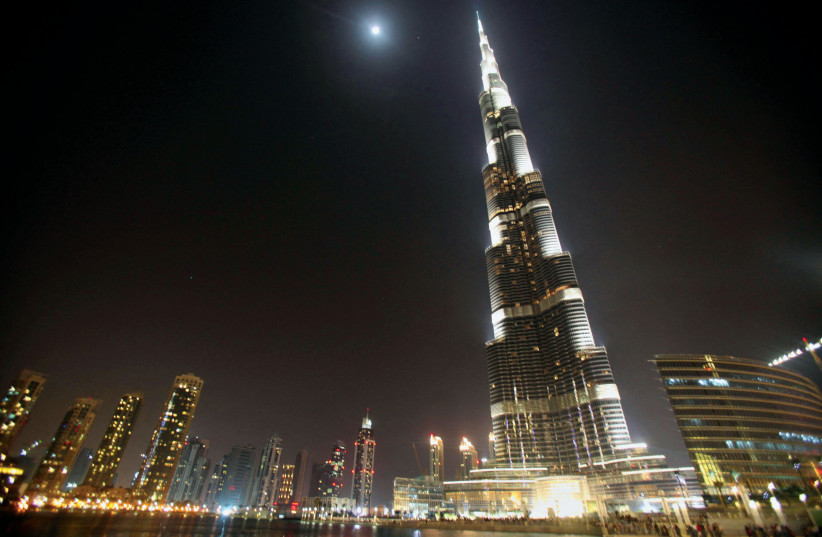
As such, the UAE is thinking about what comes next and hedging its ties to the West with ties to the East. This is also what India and other countries are doing.
The UAE is a key node on the route linking India and Europe, which is called the India-Middle East-Europe corridor, or IMEC.
The Hili Forum said on its website: “The 2nd edition of the Hili Forum will convene in Abu Dhabi under the theme ‘Global Reset: Trade, Tech and Governance.’ Co-organized by the Emirates Center for Strategic Studies and Research (ECSSR) and the Anwar Gargash Diplomatic Academy (AGDA), this year’s forum explores the profound shifts shaping the global landscape.”
“The theme reflects the urgent need to navigate a year marked by economic realignment, technological disruption, and evolving geopolitical dynamics,” it said. “As a nexus between East and West, the UAE offers a strategic platform for dialogue and collaboration among global stakeholders.”
Who's attending the Hill Forum?
In his opening remarks, Dr. Sultan Mohammed Al Nuaimi, chairman of the Emirates Center for Strategic Studies and Research, said the forum “constitutes a strategic platform for formulating innovative visions, helping decision-makers formulate realistic ideas,” Al Ain News, a UAE-based news site, reported.
“We meet today as the world is going through a critical phase,” he added.
The forum is focused on geopolitics, as well as economics and technology.
“The geopolitical axis addresses profound global transformations, in light of the intensifying competition between major powers, the rising influence of middle powers, and the uncertainties inherent in the ‘global restructuring,’” Al Ain News reported. “At the same time, it presents opportunities for new partnerships and promising potentials emerging in a multipolar world.”
Key speakers at the event include the former prime minister of Sudan, Abdalla Hamdok; and Hoshyar Zebari, a former Iraqi minister of foreign affairs who is also a key Kurdish politician.
Also present are a former minister of mines and development of Nigeria, former Jordanian defense minister Bisher al-Khasawneh, and former Jordanian minister of foreign affairs Nasser Judeh.
This illustrates the UAE’s posture in the region and also globally. These types of events are symbols along the road to a new world order and indicate where the world is going as regional powers recalibrate how they see their role in the world.
The Middle East was a site of Cold War competition. In recent decades, it has been torn apart by war and extremism.
Nevertheless, countries such as the UAE believe a new world order means the region must stabilize and prepare for how it can link East and West.
Wars, such as the one in Gaza, belong to the past in this concept of what comes next. Stabilizing countries and returning to eras of strong governance is seen as the future.