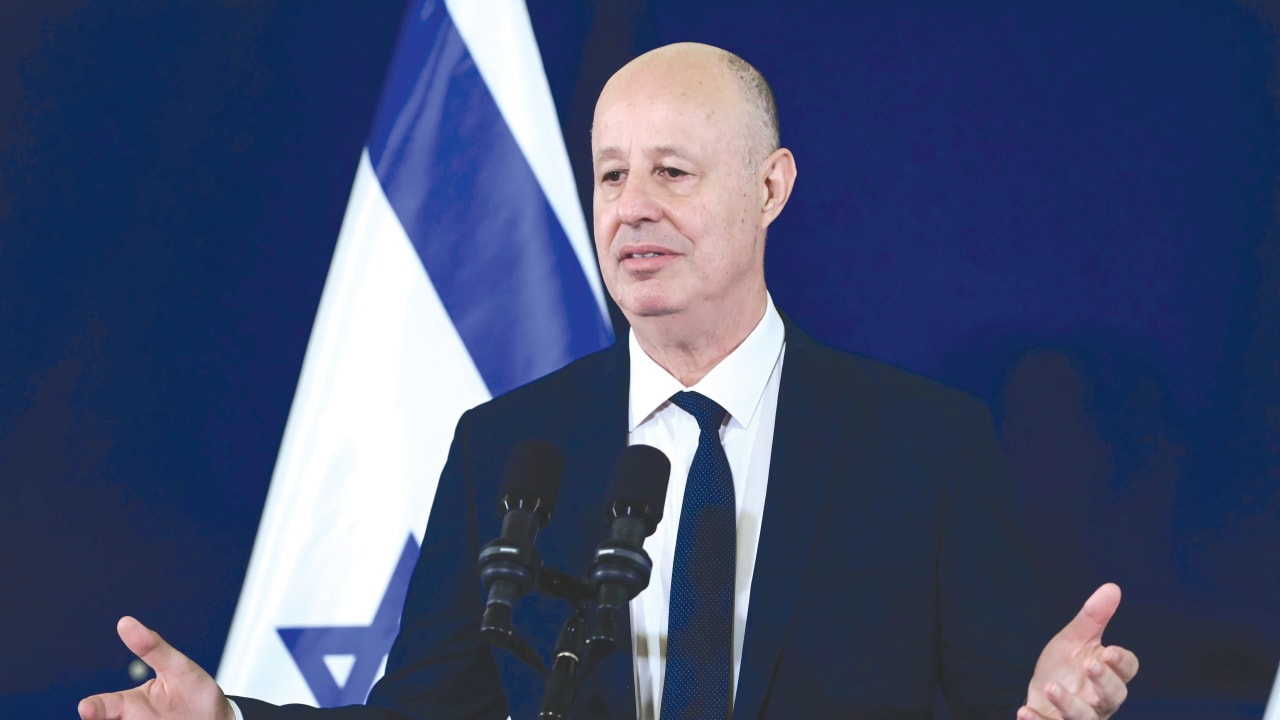
A report on Tuesday claimed that during a trip to the United Arab Emirates, Syrian President Ahmed al-Sharaa met with Israeli National Security Adviser Tzachi Hanegbi.
This information initially appeared in Al-Jumhuriya, but was later disputed by other reports that pointed out Hanegbi was in Washington during Prime Minister Benjamin Netanyahu’s visit to the US. Clearly, the Israeli official was not in two different places at the same time.
According to the first report, “Two sources confirmed to Al-Jumhuriya that transitional President Ahmed al-Sharaa met... Hanegbi in Abu Dhabi yesterday... a notable step in Syrian-Israeli negotiations.”
This kind of coverage is part of a larger context in the region where Israel-Syria talks have often been reported. The stories about Israel and Syria moving closer in terms of potential relations are essential.
The reports comprise several types. One type presents Israel-Syria normalization as part of the narrative of countries joining the Abraham Accords.
Over the last several weeks, basically, in late June and early July, reports have indicated that Syria-Israel ties could be on the agenda as part of a wider regional deal that ends the war in Gaza.
This depicts Syrian peace as a prize and a trade-off. These reports present this situation as something where the White House would push Syria to strike a deal with Israel because of all the help the Trump administration provided it in terms of ending the sanctions on Damascus.
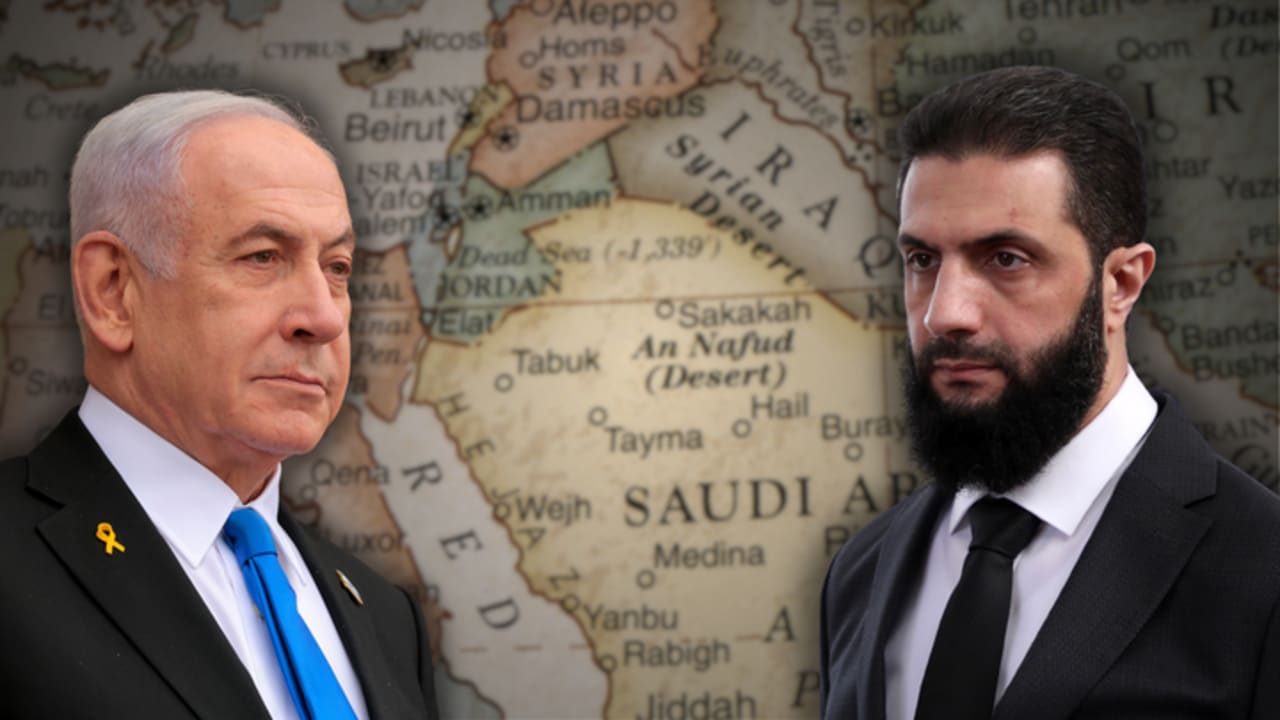
For instance, the US administration ended the sanctions on Hayʼat Tahrir al-Sham, the group that led the push to remove former president Bashar al-Assad from power in December 2024. It also led to the US State Department and Treasury ending the sanctions on Syria in general.
In essence, these stories make it seem like Israel’s current political leadership is stubborn in terms of ending the war in Gaza. The idea is that Syria can be dangled in front of Israel such that Israel will choose regional peace deals over an endless war in Gaza.
This is partly how the Abraham Accords took place in 2020. Israel’s government at the time was pushing to annex parts of the West Bank. In exchange for Israel backing down when it came to annexation, the UAE agreed to move toward normalization.
Will the state agree to end the Israel-Hamas War in exchange for peace with Syria? Will Syria’s new government really agree to normalization without some concession by Israel?
The road that transformed Syria's new Government from an enemy to a potential ally
ANOTHER TYPE of story about Israel-Syria ties paints the ties as increasing due to more coordination between Jerusalem and Damascus.
Essentially, Israel’s leadership has shifted from its initial concerns about the new government in Syria. After Sharaa and HTS rolled into Damascus on December 8, 2024, some Israeli officials took to bashing Sharaa as a “jihadist.”
This kind of terminology was used for several months. However, once US President Donald Trump decided to meet Sharaa in Saudi Arabia in May, it appears Jerusalem got the message to tone down the anti-Sharaa rhetoric and also stop bombing Syria.
On the whole, this illustrates that Israel’s strategy on Syria was short-sighted. Some officials wanted to move quickly to view the Sharaa government as an enemy, and they tried to destabilize southern Syria and continue the Campaign between the Wars by bombing the country in order to keep it as an enemy.
This policy is generally conducted by those short-sighted officials who want to have endless wars and see the entire Middle East as an enemy. Long-term visionaries tend to advocate for peace and the expansion of the Abraham Accords. Thus, when Trump made it clear Israel should embrace Damascus, there was a change in tone.
Syria’s new government has been careful not to provoke Israel. It has not been talking much about Israel at all. It does give off hints that it may be flexible about the Golan.
However, it does want Israel to move back into the status quo 1974 ceasefire lines on the Golan. Israel expanded its presence in Syria in December 2024, taking over the peak of Mount Hermon and also moving into some areas near the 1974 ceasefire buffer zone. Israel also conducts raids into Syria.

The new government in Damascus would likely prefer to coordinate with Israel. It opposes Hezbollah and Iran, so it likely has much in common with Israel’s views. It is also wary of the Iranian-backed militias in Iraq. Jerusalem and Damascus share many common policy goals. This does not mean that peace can suddenly emerge without a significant push.
The reports of the meeting in the UAE form part of the context of rumors and a desire to see Israel-Syria peace moving in the right direction.
As with all rumors, there is usually some element of truth. For instance, the UAE is a partner in the Abraham Accords. It is plausible that the UAE encouraged Sharaa to consider the next steps with Israel.
US envoy Tom Barrack was also recently in Lebanon discussing what might come next with Hezbollah. Emirati Lana Nusseibeh, the assistant minister for political affairs and envoy of the foreign minister of the UAE, was recently on CNN’s Connect the World, speaking to Becky Anderson.
“Nusseibeh emphasized that this moment will decide whether the Middle East remains a source of global conflict or becomes a cornerstone of generational peace and shared prosperity, fueled by the technologies of the future,” the UAE noted in a statement.
The UAE would clearly like to see an expansion of the Abraham Accords and peace in the Gaza Strip. Sharaa could play a key role in this.