Near the end of his life, Moses delivered one of the Torah’s most frightening passages: the tochachah, a warning of the devastation that could follow if we betrayed God. The Torah had sounded a similar warning earlier, but Moses returned to it now, as we prepared to enter the Land of Israel without him.
The scenes are grisly: starvation, sickness, military conquest, exile, dispersion, and crushing psychological uncertainty. Jewish history has brought us through many of these horrors. Twice we were banished from Jerusalem, and we endured suffering that often seemed to mirror Moses’s nightmare.
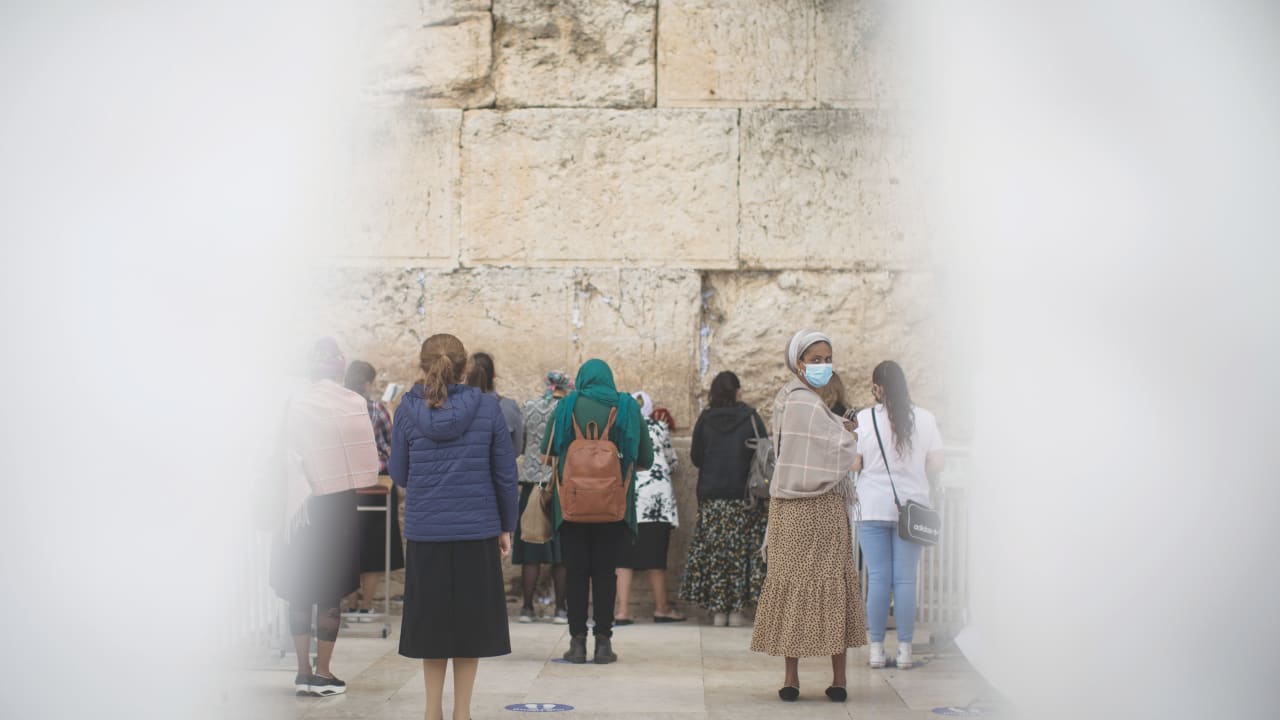
After delivering this warning, Moses worries that its terrifying images may leave us dispirited. This was especially dangerous for a nation exhausted by 40 years in the desert and the death of an entire generation. Aware of the fear his words had created, Moses reassures them: Atem nitzavim hayom – you are still standing. Despite everything you have heard and endured, you are still here.
Moses speaks across the centuries to every generation forced to endure suffering and upheaval. His words offer a message of recovery: how a wounded people can absorb tragedy without allowing it to define its future.
It feels as if Moses is speaking directly to our generation as we approach the end of a third year of a burdensome war that has taken so much from us. Rosh Hashanah invites us to look back and search for perspective.

This past year cannot easily be separated from the three-year odyssey we have traveled. The past three years have blurred together through war, loss, sacrifice, and uncertainty. After living through what at times has felt like our own small churban (catastrophe), what can Moses teach us about how to stand again?
Moving forward
The first message is that, despite everything we have endured, we have survived. Have all the threats been eliminated? Have we achieved a lasting victory? The answers remain uncertain and probably negative. Yet after nearly three years of relentless war, fought on the battlefield and absorbed on the home front, the country is still standing and thriving.
That recognition should not diminish our ambitions. Israel cannot define success as survival alone, and Jewish history cannot be reduced to an endless cycle of escaping destruction. However, sometimes the great achievement is simply that, after every blow, we are still standing and moving forward.
Confidence
Survival should also affect how we think about the future. Before October 7, many of us assumed a certain level of security and stability. That assumption has been shattered. We understand our vulnerability more clearly now, and we know how quickly circumstances can change. But surviving these years can also create a different kind of confidence.
It comes from having faced danger at close range, suffered painful losses, and still discovered that, with God’s help, we can defend ourselves, adapt, and move forward. This confidence is less comfortable than what we once possessed, but more durable.
Common bonds
Shared suffering also creates deep bonds. Moses gathers a diverse nation, from its most prominent figures to the woodchoppers and water carriers at the lowest rungs of ancient society. Their social and economic differences are real, yet they have all crossed the same wilderness and heard the same dark warnings about what may lie ahead. What they endured together has tied them to one another in ways that status and background cannot easily undo. They may stand on different rungs, but they are standing on the same ground.
That message matters as Israel enters a fractious election season, when campaigns inevitably sharpen differences to mobilize voters. The extraordinary achdut (unity) after Oct. 7 was bound to fade. As the war lengthened, old fissures resurfaced and new ones emerged.
Yet beneath those disparities lies an experience we have shared. We have lived through the same national emergency, followed the same casualty reports, and rushed to shelters under the same sirens. We remain bound by a common fate and by the historical future we are building together. Election seasons encourage us to sort ourselves into camps. Moses asks us to remember the bonds that common suffering creates.
Beyond our own generation
Moses also widens the horizon beyond the generation standing before him. He announces that this covenant is directed not only at “those who are here with us today,” but also “those who are not here with us today.” Jewish history is a mission shared across generations. One generation may be asked to make sacrifices whose full meaning becomes apparent only decades later.
King David yearned to build the Temple. He purchased the site, prepared materials, and laid the groundwork, yet he was not permitted to build it. That task was left to his son Solomon.
That intergenerational perspective can give us patience during our own difficult chapter. We may not resolve every threat, repair every fracture, or complete every national project in our lifetime. Much of what this generation is enduring may be laying foundations for a future that belongs to those who come after us. Covenant means accepting responsibility for a story whose next chapters will be written long after we are gone.
What are we standing for?
Moses also teaches that survival carries responsibility. To remain standing after catastrophe places demands upon us. There is a responsibility to learn from the failures that contributed to disaster, to honor those who lost their lives, and to ensure that their sacrifice shapes the future and doesn’t recede into memory.
Every Jew living in the aftermath of Oct. 7 should, in some form, articulate a personal doctrine of responsibility. We are living through a consequential period of Jewish history, and that raises an unavoidable question: what does this moment ask of me?
The answer will differ from person to person. For some, it may mean a more visible embrace of Jewish identity or deeper attachment to Israel. For religious Jews, it may demand greater seriousness about Torah and mitzvot.
It is hard to imagine living through a period that has altered Jewish history so profoundly and emerging with precisely the same sense of obligation we carried into it. If we are still standing, Moses implies, then we must ask what we are now standing for. Each of us must find a way to personalize this moment in history.
Standing before God
Finally, we should remember in front of whom we stand. Moses does not merely tell us that we are still standing. We are standing before God. Even after enduring the punishments he describes, we remain lifnei Hashem. We may not fully understand the divine logic of suffering, but we have walked through these dark years with Him. Gam ki elech b’gei tzalmavet lo ira ra, ki Atah imadi – even when I walk through the valley of death, I do not fear, because you (God) are with me. Even when we struggle to feel God’s help, there is comfort in knowing that we continue to walk with God.
For the past three years, we have walked with God through fear, grief, and uncertainty. We have cried out, prayed to, and questioned God. At times we have felt God’s presence clearly; at other times we have struggled to find it. But we have never stopped turning toward God.
As we approach the days when we once again stand before God in judgment, we should remember that we have already spent three years standing before Him in struggle. And after everything, we are still standing – before Him.■
The writer is a rabbi and educator at Yeshivat Har Etzion (Gush). Find his latest book, Reclaiming Redemption, Vol. II: Faith, Identity, Peoplehood, and the Storms of War, at mtaraginbooks.com.