
The haftarah for parashat “Re’eh,” drawn from Isaiah 54:11-55:5, is the third in the series of the Sheva Denehemta – the “Seven Haftarot of Consolation.” Each week after the anguish that was marked on Tisha B’Av, the prophet’s voice grows stronger, painting ever more vivid portraits of comfort rooted in redemption.
The haftarah’s opening words – Aniya so’ara, lo nuhama (“O afflicted, storm-tossed one, uncomforted”) – embody the image of a battered Jerusalem, reeling from devastation. The city is likened to a forlorn woman beset by so many troubles that she can find no solace.
And yet, as the Malbim (Rabbi Meir Leibush Weisser, 1809-1879) notes, at the center of last week’s haftarah was the ingathering of the exiles and the return of Jerusalem’s sons and daughters from all parts of the Earth. So why, he asks, does Zion still feel bereft? He answers by saying, “At that time, Zion will still not be rebuilt on her hill [a reference to the Holy Temple]. This poor one, who is Zion, will still storm in the rage of her spirit because she is still not comforted.”
A promise of renewal
God responds to this with immediacy and reassurance, promising to transform her fate: Zion’s foundations will be laid with sapphires, her gates with precious stones, her walls with jewels. The very ruins of old will be transformed into radiant and abundant glory.
This vivid image of physical renewal is immediately followed by spiritual restoration, as God further vows, “And all your children shall be students of God, and great shall be the peace of your children” (54:13).
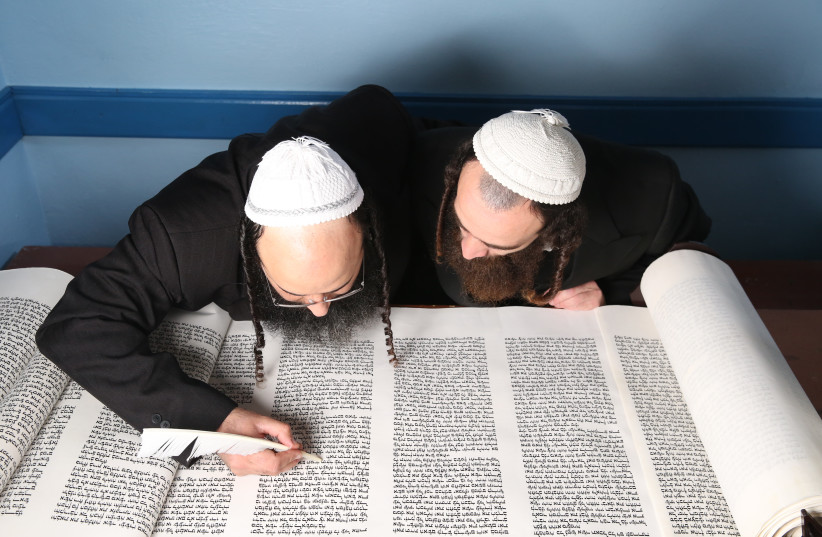
This, explains the Metzudat David (Rabbi David Altshuler, 1687-1769), means that Israel’s children will excel so greatly in wisdom that it will be as if they were God’s pupils, learning directly from Him.
The Malbim notes that the verse also establishes a direct link between Torah and peace. When Jewish children are steeped in Torah, they become guarantors of a society anchored in justice, compassion, and Jewish unity. In a generation where education has often lost its moral compass, this vision is strikingly relevant: The peace of the Jewish people is inseparable from the spiritual formation of its youth. And this, too, we might add, is essential to Zion’s ultimate comfort.
A universal message
The haftarah concludes with a vision that extends beyond Israel to all of humanity: “...a nation you do not know shall run to you for the sake of God your Lord and the Holy One of Israel, for He has glorified you” (55:5). The redemption is not insular but universal. Jerusalem’s renewal, and that of the Jewish people, will radiate outward, drawing the nations to recognize God as the one true God.
This is the balance the prophets often strike: Redemption begins with Israel but culminates in the moral and spiritual transformation of the entire world. In our haftarah, the Jewish people is charged not merely with surviving history but with illuminating it, thereby setting the stage for the redemption of all mankind.
Though relatively short, the haftarah of “Re’eh” conveys a profound theme of transformation: that of Jerusalem, the Jewish people, and ultimately all of humanity. It speaks to every generation that has felt storm-tossed and uncomforted, promising that affliction will give way to adornment, exile to covenant, and despair to peace. Its message is both intimate and universal: God comforts His people, raises up His city, and summons the nations to join in the radiance of redemption.
Isaiah cries out to us across the millennia: The time for consolation is now, and the path to redemption lies before us: through Torah and the unwavering faith that God has not and will never abandon His people, Israel.