
Israel’s Elite brand of dark coffee is Ahmed Qasrawi’s favorite. Every morning, he drinks a cup of the potent beverage with a splash of Israeli-made Tnuva milk. These aren’t the only Israeli products in the cabinets of his home in the West Bank city of Hebron.
“We also have Osem and Alma biscuits,” he told The Jerusalem Report in a recent interview, referring to two other Israeli brands widely sold in Palestinian towns and cities across the territory.
As global calls to boycott Israel over its actions in Gaza have grown increasingly loud over the past two years, some Palestinians, like Qasrawi, a father of six, reject the idea outright.
“What’s the point? It doesn’t help or do any good. I don’t see anyone around me boycotting Israeli items. Everything [between Israelis and Palestinians] is mixed together – the economy, our lives – it’s all connected,” he said.
“We live here together. We share a lot of things. We sell goods to Israelis; we buy goods from Israelis. I don’t really see any reason to boycott one another,” the 47-year-old continued. “If you walk around supermarkets here, you can see many Israeli brands.”

Intertwined economically
For decades, even as the Israeli–Palestinian conflict raged and wars erupted, daily life – and the economy – have remained deeply intertwined.
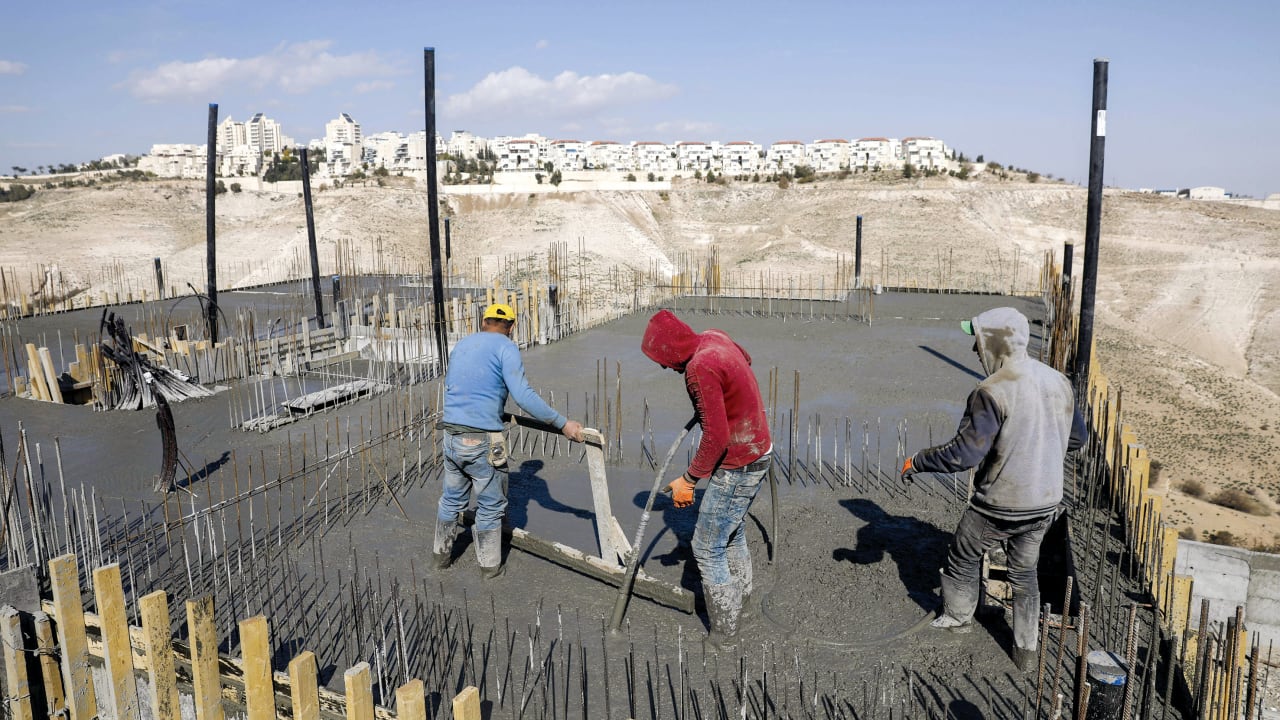
Qasrawi, who worked in construction in Beersheba before the war in Gaza erupted following Hamas’s October 7, 2023, terror attack, views any move to sever ties with Israel as both impractical and extremely damaging. Past boycott efforts targeting products made in Israeli settlements have already threatened thousands of Palestinians employed in West Bank industrial zones, placing their livelihoods in jeopardy.
Since October 7, Israel has barred Palestinian laborers like Qasrawi from entering the country for work.
For two years, he, like many other Palestinians, has struggled to find a stable income. Today, he earns just NIS 2,200 a month working part time in Hebron – far less than the NIS 14,000 he once made in Israel. The loss of income forced his daughter to drop out of university because he can no longer afford the tuition.
The boycott debate
The question of whether boycotting Israel helps or harms Palestinians remains deeply divisive across the West Bank.
Supporters view it as part of the struggle for rights and self-determination – a form of peaceful resistance aimed at ending what they call “the occupation.”
The Boycott, Divestment, and Sanctions (BDS) movement, co-founded in 2005 by Palestinian activist Omar Barghouti of Ramallah, took this concept further, expanding from consumer boycotts to targeting Israel in culture, academia, and investment.
Barghouti and other key Palestinian figures in the movement did not respond to The Jerusalem Report’s requests for comment.
Critics in Israel and abroad accuse BDS of fueling antisemitism – a charge activists deny – and of refusing to recognize Israel’s legitimacy as a Jewish state. During the Israel-Hamas War, the boycott movement gained unprecedented global traction, influencing politics, business, and culture. Some believe that it was influential in isolating Israel diplomatically and also in the recent wave of countries deciding to recognize a Palestinian state.
Applying pressure
They also say the boycott movement played a part in US President Donald Trump’s success in brokering a ceasefire between Israel and Hamas to end the fighting in Gaza. Khalil Abu Karsh, a Palestinian researcher from the West Bank, disagrees.
“We cannot say that the breakthrough was solely the result of pressure from the boycott movement. Its activities may have laid the groundwork over two decades, but in the end the game changer was the scenes coming out of Gaza,” he told the Report.
“The world saw the difficult images of children in the media, and that marked the turning point. Without the war in Gaza, their efforts wouldn’t have been that effective,” Abu Karsh said, adding, “What made Israel’s isolation grow were statements from far-right ministers in the Israeli government and the pressure European leaders felt from their constituencies.
“Public opinion in America has also changed in favor of ending the war, and it seems the administration has started to feel that Israel’s isolation may harm America’s interests in the Middle East,” he added.
Abu Karsh also rejects the boycott strategy, arguing that it has little resonance among ordinary Palestinians.
“I don’t see how it helps us. Israel controls the tax revenues and daily life of Palestinians,” he said.
“Boycotting is unwise. It has negative results because it makes it seem as if all Palestinians are radicals, just as some people assume all Israelis are far-right extremists,” Abu Karsh said. “There has to be dialogue between the two sides if we want real solutions.”
He added that “when workers are prevented from holding jobs in Israel and cannot provide for their families, some may be pushed to radical actions such as boycotting.”
No official policy
Former general Habis Al-Shrouf, director of the Palestine Institute for National Security Research, said boycotting Israeli products was not an official Palestinian Authority policy but rather a personal choice. “The boycott was a reaction to settlers’ conduct in the West Bank, and then to the war in Gaza. It was a means of soft power, not a goal – intended to urge Israel to change its policy toward the Palestinian people,” he said.
“I believe that boycott initiatives will simply go away if there is peace and a political solution based on two states.”
Economic data show that roughly half of Palestinian imports to the West Bank and Gaza come from Israel, and more than 80% of Palestinian exports go to Israeli markets. “There is interdependence, and Israel is the largest trading partner of the Palestinians, so boycotting doesn’t serve either side,” said Abu Mahmoud, a Palestinian labor activist.
“We would prefer to get our jobs back in Israel; but after two years of restrictions, many had to look for alternatives in the Palestinian local market,” he added. Responding to calls for greater economic independence from Israel, Abu Mahmoud said Palestinian authorities have begun offering easier loans for small business ventures. But, he cautioned, “It helps, but it’s not enough. For this to be stable, there needs to be international support.”
“It’s not our priority, but because of the difficult circumstances we’re in, I think that if this situation continues, there may be no choice but to try to build an independent economy.
“Some workers have started their own projects in the West Bank. So those involved in small businesses may not support importing from Israel the same products they now produce themselves,” Abu Mahmoud said, adding, “That’s why we have to strengthen ventures run by merchants and support local markets. I don’t call it [a] boycott; it’s about our survival.”■