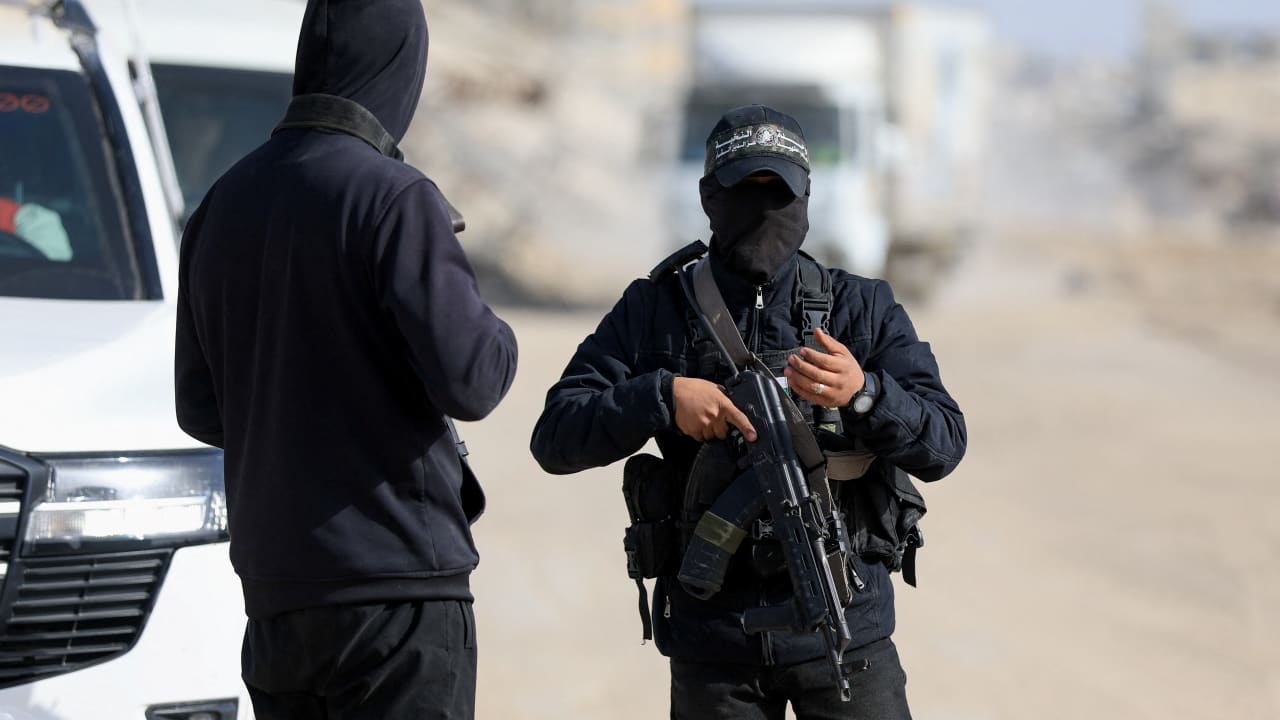
The IDF announced the capture of one of Hamas's top remaining commanders during Friday's operation in Rafah, where eight terrorists were identified by troops coming up from below the ground, and were then struck by the Israeli air force, successfully killing three of them.
After the strikes, the IDF performed searches in the area and apprehended one of the fleeing terrorists. He was later identified as a mid-level commander in Hamas’ Eastern Rafah Battalion.
"IDF troops, together with the ISA, continue searches and additional activities in the area in order to locate and eliminate the additional terrorists," the military said.
According to reports by Army Radio, the other four terrorists identified as leaving the tunnels were not captured, and their location remains unknown.

Former UN Middle East envoy Nickolay Mladenov wrote in a Sunday-morning post on X/Twitter that he is "deeply concerned" about the incident.
"Such developments risk the hard-won progress under UNSCR 2803 and President Trump's 20-Point Peace Plan," he wrote, urging all sides to "exercise restraint and uphold the ceasefire."
IDF strikes Hezbollah in southern Lebanon
Also on Friday, the IDF targeted a Hezbollah terrorist in the Seddiqin area in southern Lebanon, citing several ceasefire violations by the terror organization.
The IDF said in a statement that the terrorist took part in attempts to reestablish military infrastructure sites belonging to Hezbollah.
Strikes in southern Lebanon on Hezbollah infrastructure continued into Friday evening, according to IDF updates.
The IDF also identified four armed terrorists on Friday near the Yellow Line in Gaza, approaching IDF troops in a way that constituted an immediate threat. The troops alerted the Israeli Air Force, which struck and successfully killed the four terrorists.
On Saturday, the IDF announced that they additionally struck a site in the Markaba area of Lebanon, killing a terrorist who was involved in the attempted rebuilding of Hezbollah infrastructure.
IDF held back during Gaza war to protect hostages' intelligence
During the Israel-Hamas War, the IDF sometimes avoided killing certain Gazan terrorists who knew where Israeli hostages were being held, a senior IDF Intelligence Corps commander reported Thursday.
This disclosure resolved a two-year mystery of how Israel managed to kill Hamas’s leaders while not losing the ability to locate the hostages. At the start of the war, some officials worried that Hamas leaders Yahya Sinwar and Mohammed Deif might be immune from elimination because they could be the only ones who knew certain hostage information.
“There is always a dual dilemma” about whether to “let security forces kill terrorists to remove a threat” versus intentionally avoiding killing them to continue gaining intelligence from them, or in this case, use them to maintain updated intelligence and rescue possibilities regarding hostages, the IDF Intelligence officer said.
Yonah Jeremy Bob contributed to this report.