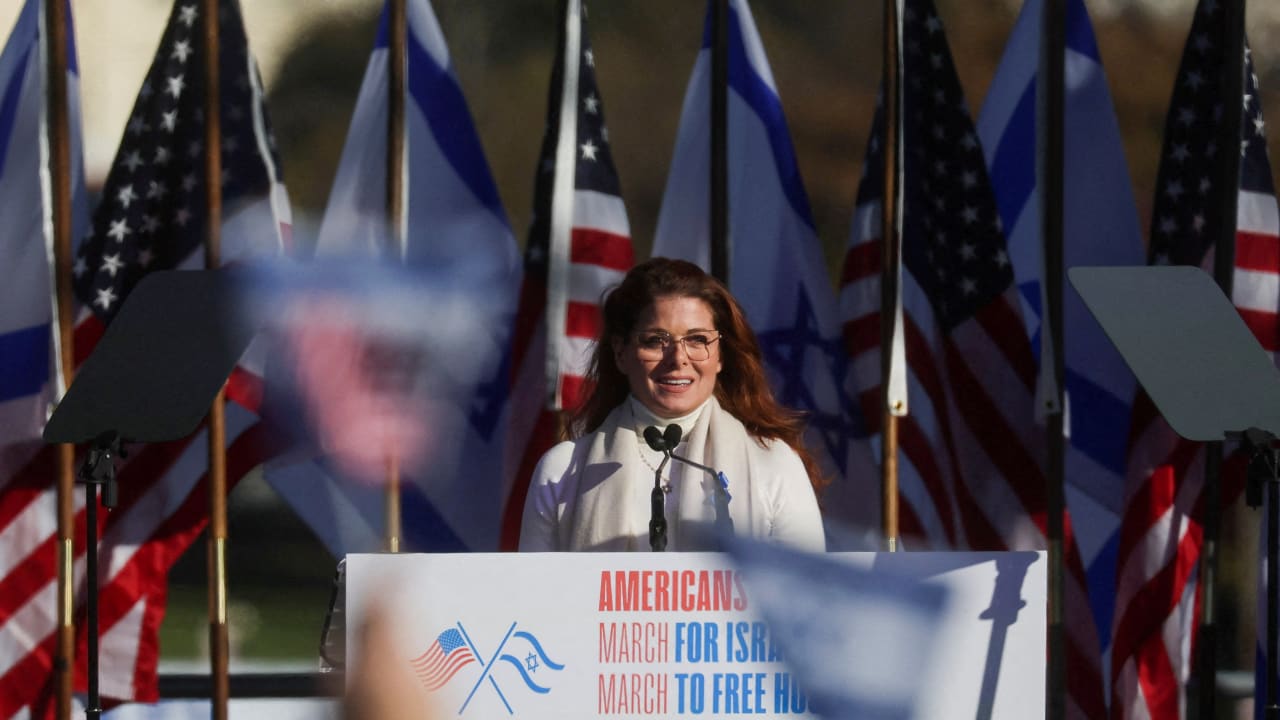
More than 1,200 entertainment leaders signed an open letter released by the non-profit entertainment industry organization Creative Community for Peace (CCFP), in partnership with the non-profit organization, The Brigade, rebuking the efforts of their colleagues to silence fellow entertainers and filmmakers in Israel.
The letter comes in response to a widely publicized call by many prominent entertainment professionals to boycott all Israeli film and television companies, productions, festivals, and institutions, which the CCFP calls “a de facto attempt to silence Jewish stories and ostracize Israeli filmmakers.”
Its release comes after Paramount Studios publicly stated its opposition to the boycott pledge, saying, “We need more engagement, not less,” and amid multiple calls to boycott Israeli cultural institutions.
This new open letter demonstrates an entertainment industry-wide opposition to chastising fellow artists and creatives in Israel.
Signatories include Liev Schreiber, Mayim Bialik, Gene Simmons, Debra Messing, Lawrence Bender, Howard Gordon, Gideon Raff, Sharon Osbourne, Greg Berlanti, Jerry O’Connell, Howie Mandel, Jennifer Jason Leigh, Lisa Edelstein, Michael Rapaport, Erin Foster, Ynon Kreiz, Anthony Edwards, Matthew Weiner, Rebecca De Mornay, David Draiman, Sherry Lansing, Matisyahu, and Haim Saban.

Chairman and CEO of Saban Entertainment, Saban, said: “Throughout my career, I’ve witnessed how storytelling can be an incredible tool to build understanding around our shared humanity. Excluding Israeli filmmakers because of their identity betrays that mission and undermines efforts for peace. True progress comes when we listen to one another, Israelis and Palestinians alike, and allow art to open doors that politics too often close.”
The boycott attempt coincides with an explosion of antisemitism and censorship of Israeli culture and artists around the world.
Just last month, at the Toronto International Film Festival (TIFF), the Israeli documentary, The Road Between Us: The Ultimate Rescue, was disinvited due to boycott pressure. After a public outcry, including a story on the front page of the New York Post, the film was reinstated and went on to win the People’s Choice Award – which showed that art can transcend political boundaries.
Actress Debra Messing, who has been an advocate for Israel since the October 7 massacre in which Hamas killed 1,200 people and kidnapped more than 250, said: “When artists boycott fellow artists based solely on their country of origin, it is blatant discrimination and a betrayal of our role as storytellers. History shows us that boycotts against Jews have long been a tool of authoritarian regimes, by joining this effort, these artists are knowingly or unknowingly aligning themselves with a dark legacy of antisemitism.”
Actress Mayim Bialik, who has been a strong and steadfast voice for Israel for many years, said: “Artists and creatives have a unique opportunity and responsibility to remind the world of our shared humanity. Boycotting filmmakers, studios, production companies and individuals simply because they are Israeli fuels division and contributes to a disturbing culture of marginalization. Additionally, this boycott pledge does nothing to end the war in Gaza, bring the hostages home, or help curb the alarming rise of antisemitism globally."
The open letter comes just weeks after The Sea, a film about a Palestinian boy on his way to visit the sea in Tel Aviv for the first time, won the Best Picture Ophir Award, a prize given by the Israeli Academy of Film and Television, and several other Ophir awards.
This story of Palestinian life was produced with support from the Israel Film Fund, which was specifically singled out for boycott. The Sea represents a collaboration between a Jewish director and an Arab producer and cast.
Will Israel boycott Palestinian, Arab-Israeli movies?
Members of the Israeli government, especially Culture Minister Miki Zohar, expressed anger at the film academy for choosing The Sea, which he termed pro-Palestinian and anti-Israel, and threatened to pull government money out of the awards ceremony.
Many Arab-Israelis are active in the Israeli film industry both in front of and behind the camera, and a boycott would mean that people abroad would not hear their stories.
In addition, Nadav Lapid’s extremely harsh critique of Israeli life and politics in the wake of the current war, Yes!, which won two Ophir Awards, received money from the Israeli Film Fund, so it could also face boycott calls, despite its condemnation of the government.
Many, if not most Israeli films are critical of the government to some degree. In addition, virtually all Israeli films – including The Sea and Yes!, which premiered this summer at the Jerusalem Film Festival – are shown at film festivals in Israel. So are many films of Jewish interest from around the world, meaning those films would be subject to boycotts as well.
Actress Rebecca De Mornay said: “Film institutions engage with countries all over the world, including those with serious controversies, yet Israel alone is singled out and condemned – for defending itself in a war it didn’t start, for trying to free hostages still being held, and for confronting an enemy still intent on its destruction. Boycotting Israeli film institutions isn't a stand for justice, it’s a thinly veiled double-standard for Jews, and a hypocritical, unjust punishment of Israeli artists and films."
CCFP Executive Director Ari Ingel stated, "While the Boycott, Divestment, and Sanctions (BDS) movement presents itself as a social justice movement to those in the west, it is actually a political movement that seeks the defamation, delegitimization, and eventual elimination of the state of Israel. The recent boycott pledge also contains blatant statements of misinformation, such as claiming that ICJ ruled that there was a plausible risk of genocide in Gaza, when they did no such thing.”
Ingel added, “The truth is that the film and television industry in Israel is a vibrant hub of collaboration between Jewish and Palestinian artists and filmmakers, who work closely together every single day to tell complex stories that entertain and inform both communities and the world – from Award winning series such as Our Boys, to the Ophir Best Picture winning The Sea, and to powerful documentaries such as Dead Sea Guardians."
"Silencing the voices of storytellers does nothing to advance peace. The very artists and filmmakers who work across divides, grapple with painful truths, and foster dialogue should be supported. The path to peace will not be paved by boycotts, censorship, or exclusion, but by supporting the courageous individuals who refuse to give up on coexistence. Because in the end, peace will be written not by those who divide, but by those who dare to create together,” they added.
The letter states: “We know the power of film. We know the power of story. That is why we cannot stay silent when a story is turned into a weapon, when lies are dressed up as justice, and when artists are misled into amplifying antisemitic propaganda.”
A representative for The Brigade stated, “As entertainment professionals and members of the creative community, it is our responsibility to preserve artistic freedom and access regardless of political leanings or origins. The ability to collaborate, to exchange ideas and highlight artists is the backbone of our industry."
"When people call for blacklists, it hurts the very foundation that has fought over-zealous government actions and the squashing of human rights. We adamantly oppose the current virulent and ill-informed boycott movement fomenting in our community," they added.
"The Israeli artistic community and businesses provide opportunities to elevate Jewish and Palestinian stories and voices. We are obligated to preserve this thriving community for artists and audiences around the world," they continued.
The letter concludes: “We call on all our colleagues in the entertainment industry to reject this discriminatory and antisemitic boycott call that only adds yet another roadblock on the path to peace.”
Other signatories to the letter
Other signatories include Gary Barber, Hollywood executive; Ynon Kreiz, chairman and CEO, Mattel, Inc.; Ben Silverman, chairman & Co-CEO, Propagate Content; Mare Winningham, actress; Patricia Heaton, actress; Regina Spektor, artist; Tracy Ann Oberman, actress; Rick Rosen, co-founder, Endeavor; Modi Wiczyk, co-founder, MRC; Michael Rotenberg, partner, 3 Arts Entertainment; and Susan Rovner, former chairman of NBCUniversal Television and Streaming.
Jonathan Baruch, president, Rain Management Group; Fred Toczek, partner, Felker Toczek Suddleson Abramson LLP; Patti Felker, Felker Toczek Suddleson Abramson McGinnis Ryan; Nina Tassler, CEO Kismet Creative Group; Jacob Fenton, partner, United Talent Agency; David Kohan, showrunner and executive producer; Bruce Resnikoff, president/CEO, Universal Music Enterprises; Blair Kohan, partner and board member, United Talent Agency; Ram Bergman, producer; and Fernando Szew, CEO, FOX Entertainment Global, also signed
Nancy Mendelson Gates, agent, partner, UTA; Julie Greenwald, former CEO/chairperson Atlantic Records Group; Danny Cohen, president, Access Entertainment; Orly Marley, president, Tuff Gong Worldwide; Noa Tishby, producer, actress and author; Kevin Yorn, attorney; Tara Strong, actress; Martin Singer, attorney, Lavely and Singer; Lisa Edelstein, actress; Allan Loeb, screenwriter; Amy Sherman-Palladino, writer; Joel Fields, writer/producer; Marc Guggenheim, writer and producer; David Shore, writer; Jan Harlan, producer; and Robert Lantos, producer also joined as signatories.