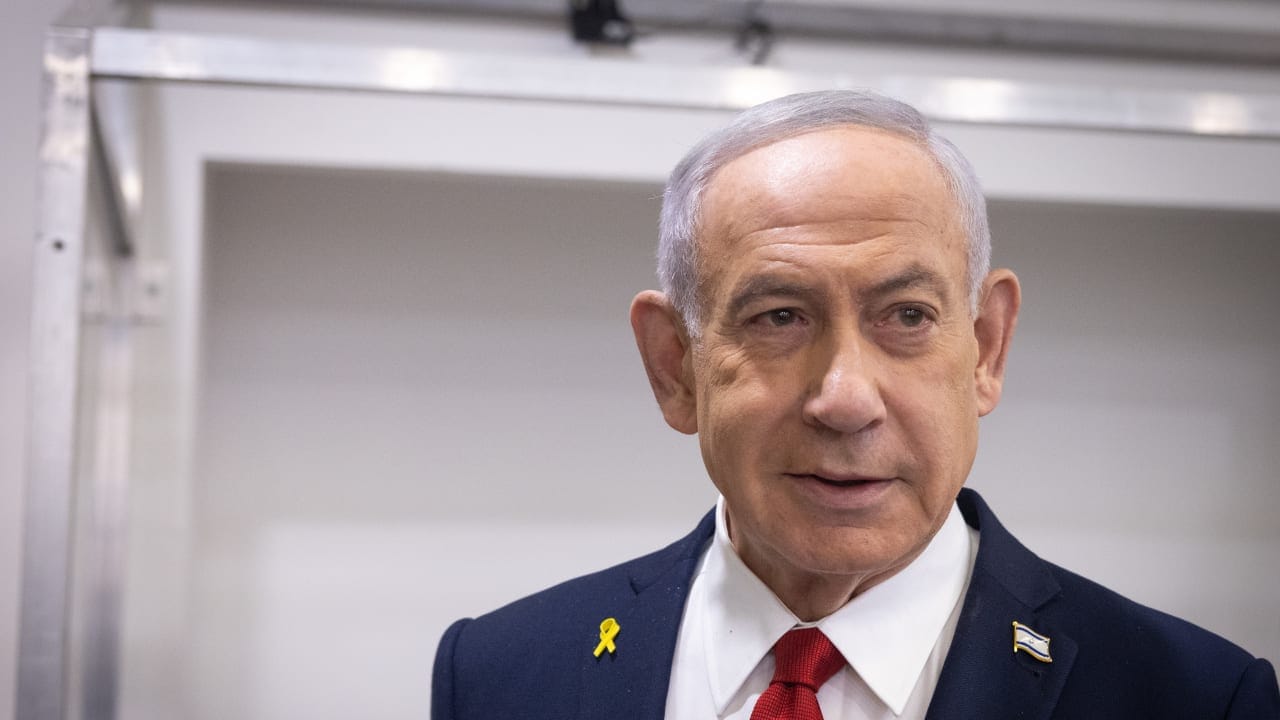
Prosecutors resumed cross-examination of Prime Minister Benjamin Netanyahu as his criminal trial on Wednesday at Tel Aviv District Court in Case 4000 and the Bezeq-Walla affair, pressing him on his role in regulatory decisions tied to the Bezeq-Yes merger, and whether his conduct conveyed messages to key witnesses.
Netanyahu is charged with bribery, fraud, and breach of trust and denies all wrongdoing.
Case 4000 centers on allegations that Netanyahu, while serving concurrently as prime minister and communications minister, advanced regulatory steps that benefited telecommunications giant Bezeq, while its controlling shareholder, Shaul Elovitch, ensured favorable and tailored coverage of Netanyahu and his family on the Walla news website.
Wednesday’s hearing again moved between two distinct, but intertwined timelines that have shaped the case from its outset: the regulatory events of 2015, when Bezeq sought approval to merge with home satellite broadcaster Yes, and the later investigative and courtroom record, including police interrogations in 2022-2023, and testimony given during the trial itself.
Prosecutor Yehudit Tirosh returned to the prosecution’s core claim that after Netanyahu took control of the Communications Ministry, professional resistance within the ministry to the Bezeq-Yes merger diminished, and that key steps toward approval were advanced at his behest. Central to that claim is the role of Eitan Tzafrir, who served as Netanyahu’s chief of staff at the ministry.
Tirosh referenced testimony by former Communications Ministry director-general Avi Berger, who said that Tzafrir instructed him on several issues, including adopting a generally favorable approach toward Bezeq and advancing the merger. Berger linked those instructions to the minister’s office, a point the prosecution has relied on to argue that Tzafrir acted as a conduit for Netanyahu’s preferences.

Netanyahu rejected that account outright and told the court that he did not speak with Tzafrir about the Bezeq-Yes deal “even once,” and denied issuing any instructions on the matters Berger described. Telecommunications policy, he said, did not interest him, and he was not substantively involved in the merger.
The prosecution sought to narrow that gap by focusing on whether the merger was, in fact, before Netanyahu in early 2015. Tirosh presented documents and correspondence, showing that the transaction was actively under review, including a formal request addressed directly to Netanyahu in his capacity as communications minister seeking approval to initiate the examination process for the merger. She also pointed to internal communications in which Elovitch urged Walla editor-in-chief Ilan Yeshua to remove coverage of the merger, warning that publication could jeopardize regulatory approval.
Those materials were used to challenge Netanyahu’s prior assertion that the merger “was not on the table” at the relevant time. Netanyahu responded that he routinely signed documents prepared by professional staff and that signatures alone did not indicate engagement or intent. He said the merger documents did not interest him, adding that the only issue he cared about in that period was expanding the number of satellite channels available to consumers.
A significant portion of the hearing focused on David Sharran, a former Netanyahu aide whose testimony has become a point of contention between the parties. Tirosh argued that Netanyahu’s conduct during Sharran’s testimony in 2022 created a unique and troubling situation: a criminal defendant publicly commenting while a witness was on the stand.
According to Tirosh, two Facebook posts Netanyahu published during Sharran’s testimony could have influenced Sharran’s later retreat from an incriminating version of events. She asked to submit the posts so the court could consider the full context when weighing Sharran’s credibility, particularly in light of the fact that he later received political backing and appointments from Netanyahu.
Defense attorney Amit Hadad objected sharply, saying the prosecution was effectively insinuating witness tampering without pursuing the matter through a criminal investigation. Raising such claims in the courtroom, he argued, risked contaminating the proceedings.
Presiding Judge Moshe Bar-Am questioned whether reliable conclusions could be drawn from social media posts and asked where the boundary would be set if such material were admitted. After further discussion, the judges ruled that the posts could not be admissible as evidence.
Tirosh nevertheless argued that the broader pattern should not be ignored, contending that witnesses who recanted, later received what she described as a “virtual hug,” while others were treated differently. In that context, she noted that several months after Sharran concluded his testimony, Netanyahu appointed him to a political advisory role and then to a senior position in the Likud party.
Netanyahu denied any connection to Sharran’s testimony
Netanyahu acknowledged the appointments but denied any connection to Sharran’s testimony. He said he valued Sharran’s abilities and accused investigators of having harmed him and his family, arguing that there was nothing improper in employing him once his testimony had ended. When asked why he did not similarly employ former aide Nir Hefetz, who testified against him, Netanyahu said he would not hire someone who secretly recorded him for years.
The hearing also touched on disputes over timing and intent. Tirosh referenced Hefetz’s account that Netanyahu would have had no interest in approving the Bezeq-Yes merger ahead of elections, a claim the prosecution has used to argue that Netanyahu tracked the deal’s progress and understood its political implications. Netanyahu rejected the premise that he was constrained during an election period, saying a prime minister’s authority is not suspended in the lead-up to a vote.
Prosecutors indicated that several additional sessions will be required to complete Netanyahu’s testimony in Case 4000.