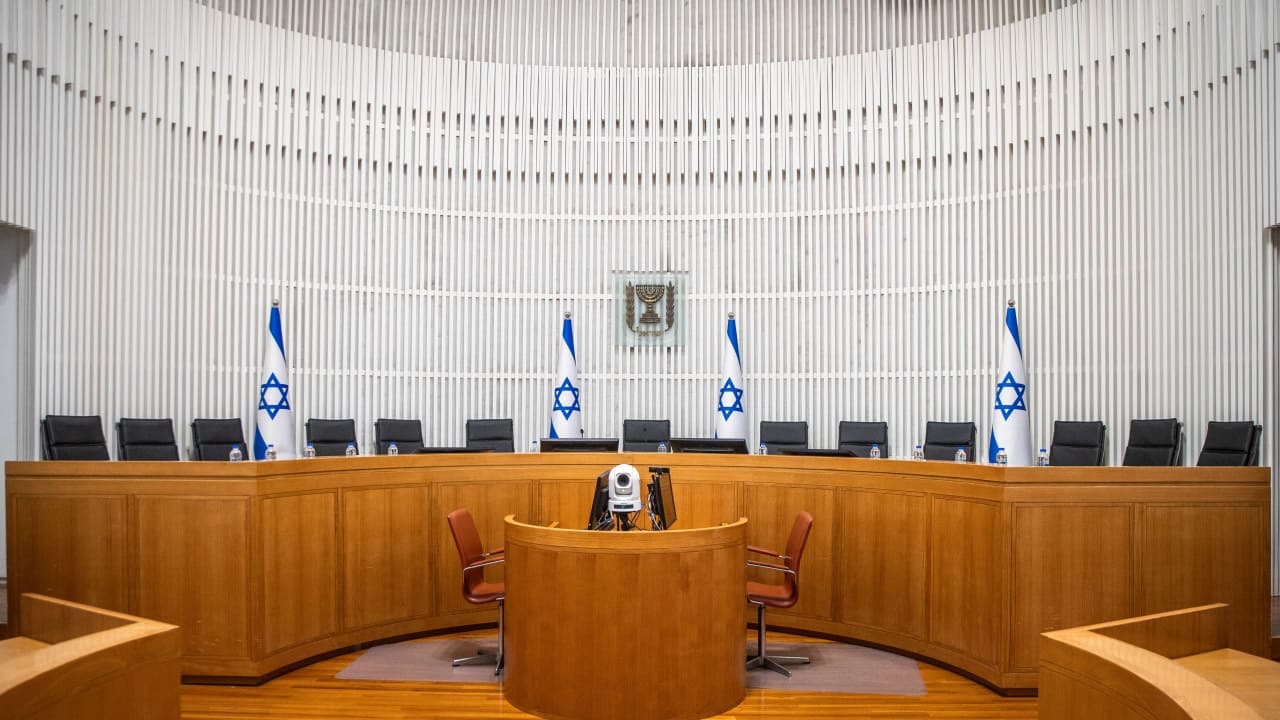
Palestinian legal aid group Adalah petitioned the High Court of Justice on Sunday to order the state to immediately return the bodies of six Arab citizens it has held for prolonged periods, arguing that the justification previously accepted by the court no longer applies following the return of every living and slain Israeli hostage over the past six months.
The petition, filed by Adalah attorney Salam Irsheid on behalf of first-degree relatives, asks the court to compel the state to release the bodies for burial in accordance with the families’ religious beliefs. The group argues that the continued withholding of the bodies is now unlawful, disproportionate, and carried out without authority.
At the center of the petition is a direct challenge to the state’s longstanding position that holding bodies can serve as leverage in negotiations over Israeli captives. That rationale, Adalah argues, collapsed after what it describes as a “total change in circumstances” following the implementation of a deal between Israel and Hamas, which significantly altered the framework under which such arguments had previously been accepted by the court.
“The purpose that formed the basis for the decision to hold the bodies no longer exists,” the petition states, arguing that cabinet decisions underpinning the policy are no longer relevant in these cases and cannot justify continued retention.
The six cases detailed in the petition span several years and involve Israeli Arab citizens whose bodies have been withheld for extended periods despite repeated requests by their families. According to the petition, some of the individuals were killed during confrontations with Israeli forces, while others died under different circumstances, but in all cases, the state has refused to release their bodies for burial.
Adalah argues case as a constitutional violation
Adalah frames the issue not only as an administrative or security matter, but as a constitutional violation. The right to a dignified burial, it argues, is an integral part of the constitutional right to human dignity, protected under Israeli law.
The ongoing withholding of the bodies, the petition states, constitutes a “severe and continuous” violation of the dignity of both the deceased and their families – one that fails to meet the required standards of legality and proportionality.
Beyond the individual cases, the petition situates the issue within a broader policy that has been the subject of sustained litigation in recent years. It notes that previous petitions brought on behalf of families were rejected after the state argued that the policy could assist in securing the return of Israeli hostages and missing persons. The current filing argues that those rulings were contingent on a factual and strategic reality that has since shifted.
The petition also points to what it describes as inconsistencies in the state’s own conduct, including cases in which bodies were returned under specific conditions, raising questions about the coherence and necessity of the policy as applied across different cases.
Adalah further argues that the continued withholding may rise to the level of inhuman or degrading treatment, citing both Israeli constitutional principles and international legal standards. It calls on the court to intervene urgently and order the immediate transfer of the bodies to their families.
The case comes amid a renewed wave of related petitions pending before the High Court, which together reflect a growing legal effort to challenge the broader policy as both circumstances and public scrutiny evolve.