
In the 52nd minute of a 56-minute press conference last Tuesday, Prime Minister Benjamin Netanyahu ignited a sharp dispute with veterans of the Biden administration when he said an arms embargo had cost Israeli lives.
He did not mention former US president Joe Biden by name, but his meaning was unmistakable when he said the embargo had ended only after President Donald Trump came to power.
Speaking at the press conference following the return of the body of the final hostage, Ran Gvili, Netanyahu said Israel had paid a very heavy price during the war. Part of that price, he argued, stemmed from a shortage of ammunition at a critical stage, which limited Israel’s ability to deal with booby-trapped homes.
“Part of this problem was because of ammunition, and it was also a result of the operation,” he said, adding, “Incidentally, this operational situation changed beyond recognition with the entry of President Trump’s administration.”
Coming as it did at the very end of the press conference – delivered in what appeared to be a deliberate and prepared manner – the remarks did not sound incidental at all. They seemed intended to underscore Trump’s role. But in doing so, they were widely interpreted as a rebuke of Biden.
Biden administration officials respond
The reaction from the Biden camp was swift. Within minutes, former Mideast envoy Amos Hochstein accused Netanyahu of “not telling the truth” and of being ungrateful to a president who, he said, “literally saved Israel at its most vulnerable moment.” Brett McGurk, a senior Biden adviser, said Netanyahu’s statement was “categorically false.”
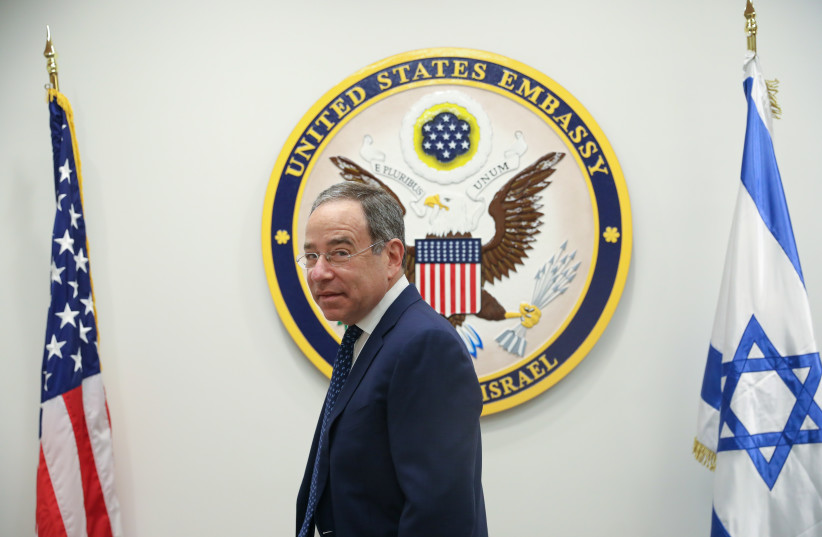
Former US ambassador to Israel Tom Nides soon joined in. “There was no arms embargo,” he told The Jerusalem Post. “He knows that. And if it’s not true – and it’s not true – then he [Netanyahu] knows it’s not true.”
The way these responses were framed in much of the Israeli media left the impression that the American officials were more credible than Israel’s prime minister. That, in itself, should give Netanyahu pause: A significant segment of the public appeared more inclined to accept the version of events offered by former US officials than by their own leader.
What makes this even more striking is that these same officials served in an administration that was not always fully transparent about Biden’s medical condition as he pursued – and later abandoned – a reelection bid.
Nides, McGurk, and Hochstein all took particular offense at what they considered a lack of gratitude. Hochstein wrote on X/Twitter: “Let me be clear to ‘journalists’ commenting. After more than $20 billion military support, largest in #Israel history, two aircraft carriers rushed to the region, deterring a massive regional war, defeating Iran missile/drone attack x2, defending Israel at most vulnerable moments, after SAVING countless lives of Israelis – only acceptable response to POTUS #Biden and American people is THANK YOU.”
Yet it is possible for two things to be true at the same time.
Biden deserves a profound debt of gratitude for the moral, diplomatic, and military support he provided Israel, particularly in the early stages of the war, when the country’s fate genuinely appeared to hang in the balance. As I wrote on October 11, 2023, Biden “just set a new standard of support for the Jewish state and the Jewish people in time of tragedy and war.”
That assessment stands.
But that was in the beginning. As the war dragged on, as the casualties mounted, as anti-Israel voices within the party – including from senior senators such as Bernie Sanders, Chris Van Hollen, and the progressive caucus – grew, as protests on campuses swelled, and as all this was impacting the early days of Biden’s reelection campaign, that support began to taper off.
By May 2024, as the IDF advanced toward Rafah, Biden said in a CNN interview that he had made clear to Netanyahu and the war cabinet that the US would withhold support – including weapons and artillery shells – if Israel entered densely populated areas.
Shortly thereafter, Washington paused shipments of heavy bombs out of concern that they would be used in Rafah. Other munitions were delayed as well, reinforcing, in real time, the strategic risks inherent in Israel’s dependence on others – even as great an ally as the US – for arms.
Nearly a year ago, Ynet reported that the embargo on 2,000-pound bombs and D9 bulldozers had been lifted. “This means that the shipment that the Biden administration had delayed, out of fear that Israel would use bombs in population centers in Gaza, will now arrive in the country,” the report said on January 25, 2025.
“The critical shipment that has now been unfrozen includes, among other things, 1,700 heavy bombs for the Air Force from Boeing, along with 134 D9 bulldozers from Caterpillar,” it added.
The absence of those munitions during the war had operational consequences. Without sufficient heavy bombs or functioning D9 bulldozers to neutralize booby-trapped buildings from a safer distance, Israel was forced, in some cases, to send ground troops in instead, increasing the risk to soldiers’ lives.
There is no contradiction here. It is true that Biden was highly supportive of Israel for much of the war and sent billions of dollars’ worth of weaponry to Israel after the October 7 massacre. But it is also true that certain weapons were embargoed or delayed at some point, and as a result, Israel had to fight differently in specific circumstances – and at greater risk to its soldiers – than it otherwise would have.
A separate, and no less salient question, lies elsewhere: Was it wise, or necessary, for Netanyahu to raise this issue now? To what end? For what purpose?
Given Trump’s ongoing efforts to disparage and belittle Biden, it is not inconceivable that this was something Trump wanted to hear. But considering the scale of support Israel is currently receiving from the Trump administration – particularly with Iran looming so large – the question becomes whether this was something Netanyahu could, or should, have declined to provide.