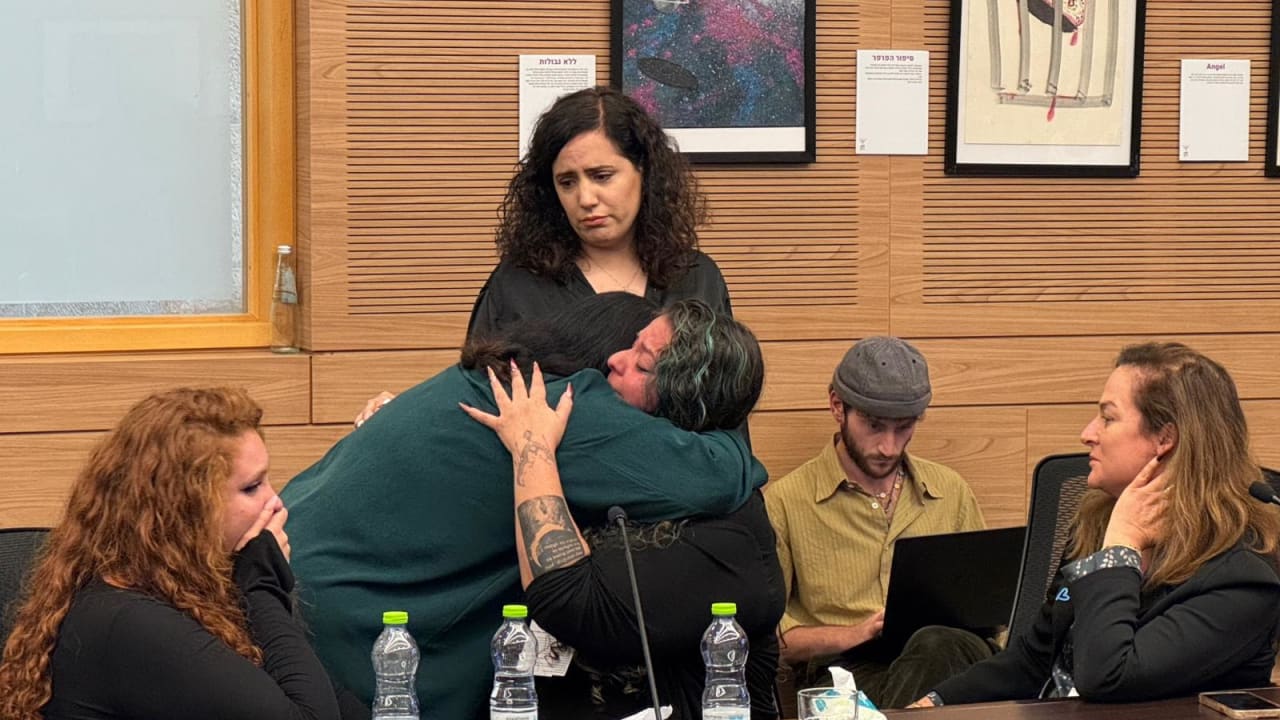
A series of profoundly distressing testimonies was delivered at the Knesset on Tuesday, as women described years of what they say were ritualized, organized sexual assaults they endured as children, including allegations of group rape, sadistic violence, and abuse that, in one case, was said to have occurred weekly in the office of a former MK.
The hearing, held jointly by the Committee for the Advancement of the Status of Women and the Special Committee on Youth, renewed urgent calls by lawmakers for law enforcement authorities to fully investigate the growing number of such accounts.
The testimonies, many of which have emerged publicly over the past several months, describe patterns of abuse that survivors say were organized, repeated, ideologically framed, and allegedly carried out by groups of adults, sometimes including figures in positions of authority.
Though the accounts differ, they share recurring motifs: multiple perpetrators, use of drugs or intoxicants, coercive “ceremonies,” and violence far beyond conventional patterns of childhood sexual abuse.

Knesset hears testimony on ritual sexual abuse
The Knesset Research and Information Center recently noted that Israel has no legal definition for “ritual abuse,” creating profound gaps in detection, data collection, and prosecution, and leaving the state with almost no reliable information on the scope of the phenomenon.
During the hearing on Tuesday, survivor Hadar Feldman recounted that from age seven to 21, she was repeatedly sold and raped by groups of men, often as part of what she described as cult-like ceremonies. She told MKs that beginning at age eight-and-a-half, her father brought her once a week to a room inside the Knesset where, she said, a then-serving MK abused her after giving her drinks that caused her to lose consciousness.
“He did whatever he wanted to me, every week, for a year and a half,” she testified, adding that the former MK is no longer alive.
“To hear that this place was used for such a thing is beyond comprehension,” Democratic MK Naama Lazimi responded.
Another survivor, identified as ‘S,’ described being kidnapped repeatedly as a child: “They tied me upside down. They electrocuted my intimate organs. They forced me to watch the murder of small babies. They made me dig my own grave. They are here among us.”
She said she gave the police detailed testimony, including names, places, and descriptions, but does not feel her account has been taken seriously.
A third woman, referred to as ‘M’ and whose testimony was read aloud, said she endured abuse by family members, a doctor, a psychiatrist, and rabbis throughout her childhood. She described what she called a “ritual assault” suffered while she was in advanced pregnancy and said she was forced to commit “horrific acts” to save her unborn child.
“They traded me. They traded my body,” she wrote, urging the state to ensure proper psychological and economic support for survivors.
Committee members expressed shock at the testimonies. Yesh Atid MK Matti Sarfati Harkavi said the stories “should keep every public official awake at night,” adding that the accounts point to “a mega-event” that authorities have long ignored.
Lazimi said several MKs are working jointly to press ministries to act. “We will not let this disappear,” she said.
Representatives of the Israel Police and prosecution said that in a closed, non-broadcast session, they could share investigative details withheld from the public hearing.
Police added that a unit within the Lahav 433 National Crime Unit – which specializes in sexual offenses involving minors and digital exploitation – is now handling the issue under direct senior oversight, acknowledging as well the complexity of cases involving decades-old allegations, multiple perpetrators, and victims who may struggle with fragmented memories due to trauma.
However, one survivor, identified as ‘A,’ sharply criticized the investigative process. She said she spent more than 100 hours giving statements to police, only to learn the investigator “didn’t know the case file” and told her she could not reopen or cross-reference past evidence.
According to A, officers warned her that if even “10%” of the case amounted to “word against word,” it would not be brought to court. MKs said her account of investigative failings was “deeply disturbing.”
A recent report by the Knesset Research Center, prepared ahead of the hearing, underscores the structural barriers.
Israel has no statutory definition of ritual or organized sexual abuse; ministries do not maintain data on such cases; police and prosecutors cannot reliably identify relevant files in their systems; and only four possibly relevant cases were found in a decade-long review, none of which included detailed information on victims, perpetrators, circumstances, or outcomes.
International research cited in the report notes similar difficulty worldwide in identifying and prosecuting organized or ritualized abuse, especially when victims were young, dissociation occurred during the assaults, or perpetrators operated within tight-knit communities.
Over recent months, a wave of testimonies flooded social media and news reports describing alleged ritualized patterns of abuse, some within insular communities, others in secular settings.
Experts from NGOs such as Lo Omdot Me’Negged (“not standing aside”) and the Association of Rape Crisis Centers in Israel (ARCCI) said they have been receiving increasing reports that include highly similar details: multiple offenders, use of drugs or sedation, enforced secrecy, and ritual framing meant to terrify children or bind them psychologically to abusers.
Clinicians interviewed by several outlets have said that even if not all accounts can be proven, the consistency of patterns across unrelated survivors warrants serious attention, not dismissal. Police and prosecutors told MKs on Tuesday that they are learning the field and are coordinating more closely, including reevaluating past files and considering legislative needs.
Officials from the Justice Ministry said all of the acts described are already serious criminal offenses, and that the ministry is examining the option of eliminating statutes of limitations for sexual crimes against minors more broadly. But they also acknowledged the lack of investigative tools tailored to cases involving complex trauma, dissociation, or alleged group abuse.
NGO leaders said that until the state builds specialized mechanisms and provides safe, confidential avenues for victims to come forward, the number of survivors willing to testify will remain small. “There is willingness,” said Dr. Naama Goldberg of Lo Omdot Me’Negged, “but no adequate tools to handle cases of this magnitude. Some women live under terror.”
As the hearing concluded, MKs repeated that the state must determine whether these accounts represent isolated incidents, multiple unrelated cases, or indications of more extensive organized abuse. Survivors, they said, cannot continue facing systems that doubt them by default.
The committees plan to reconvene once police and prosecutors present fuller findings in a closed session and emphasized that for the growing number of survivors willing to speak, systemic action cannot wait.