
IT’S NOT certain whether David Kroyanker, the celebrated Jerusalem architect, historian, and author of books about Jerusalem, died of a broken heart on September 20.
Admittedly, he was 86, had moved to Tel Aviv, and had been ill for some time, but there was a strange coincidence: he died only a few days after King George Avenue had been dug up to make way for the light rail, and the inner city, with wire fencing all over the place, looked more like a prison camp than the cradle of three monotheistic faiths.
While Kroyanker, who was born in Jerusalem and lived the majority of his life here, was not averse to urban renewal, he believed change should come in moderation and not in one big swoop as is currently underway. Landmark buildings have been torn down on the altar of super-high-rise towers, and in places where construction is in progress, huge boards surround the site. Parts of the inner city look like slums. Because so much that was familiar has been destroyed, it is difficult to get one’s bearings when traveling by public transport, especially at night because so little that was recognizable remains. Had Kroyanker lived to write another book, it might have been titled The Uglification of Jerusalem. In pushing for urban renewal, Mayor Moshe Lion has destroyed the city’s soul.
Jerusalem, the way it looks today, is not Koyanker’s city. Even when a project is completed, it is marred by other projects in the immediate vicinity. For instance, the recently opened Knesset Museum sits alongside Horse Park, which is undergoing extensive renewal.

Bus confusion
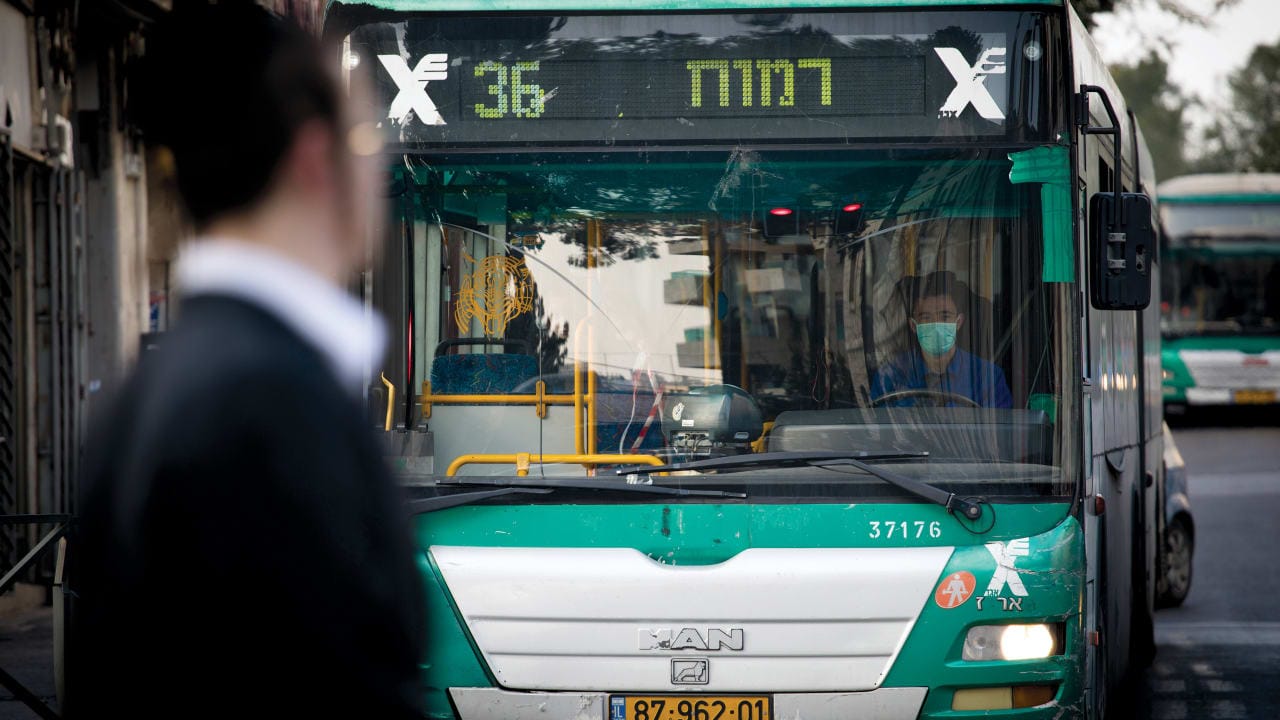
■ AFTER THE first ads appeared in local Jerusalem publications with maps of the restructured bus routes and the future light rail network, there was a complaint in this column that maps did not indicate where new stops would be. Notices placed at existing bus stops kept changing.
In addition, it seems that not all the drivers have been advised of the names of the streets on their new routes. Coming back from Mahaneh Yehuda market, a man on board a 78 bus was heavily laden with shopping bags. He asked if the bus traveled along Keren Hayesod, which was where he needed to go. Two female passengers assured him that it was.
But he wanted to be sure, so he asked the male bus driver, who told him that it didn’t. As it happened, it does, but it was the old story of male superiority. The sad thing is that he alighted at Davidka, a stop from which hardly any buses go through Keren Hayesod. He would have had a very long wait in the sun.
There was also mention in a previous “Grapevine” article that there was a time when pamphlets were available at bus terminals and provided information on bus routes. So it was a pleasant surprise on the morning before Rosh Hashanah to find a pile of pamphlets at a stop on the corner of Ahad Ha’am and Keren Hayesod.
The pamphlets were indeed very helpful but gave detailed information on only a few routes: 17, 19, 19a, 22, 72, 77, 77a, 75, 78, 92, 71, and 74 – all of which travel either along Keren Hayesod or Aza. But what if passengers are going elsewhere in the city, in other directions? Why was the pamphlet incomprehensible?
Also, why was it only in Hebrew? No thought was given to tourists or new immigrants.
This is strange because street signs and the screens in buses that indicate the street name of the next stop are in Hebrew, Arabic, and English. So why not the pamphlet? Still, it was a step in the right direction.
In memory of Murray Greenfield
■ ONE CAN’T help wondering whether US Ambassador Mike Huckabee ever refuses an invitation. No US ambassador has packed in so much in so short a time span. Huckabee honors requests from organizations and private individuals. Coming up soon is the Feast of Tabernacles hosted by the International Christian Embassy Jerusalem, followed by a tribute to the memory of Murray Greenfield on the first anniversary of his passing; and two nights after that, an evening of appreciation of the government of the United States, hosted by Huvy’s Gallery.
For those who may not be familiar with Greenfield, he was a New York-born writer, publisher, businessman, and social activist who served in the US Navy during World War II and was later involved in illegal immigration by bringing Holocaust survivors to the Land of Israel. In later years, he was also active in Soviet Jewry campaigns and in working on behalf of Ethiopian Jews.
His wife, Hana, was a Czech Holocaust survivor who had been imprisoned in Terezín. Years later, after she was married and a mother, she traveled from Israel to Prague to inaugurate educational programs about the Holocaust so that Czech children could understand that evil can spread like wildfire.
She was supported in these efforts by her husband. In 1981, Murray and Hana Greenfield opened a publishing house in Jerusalem, just behind the Central Bus Station, which was named Gefen Publishing House and is now owned and managed by their son Ilan.
greerfc@gmail.com