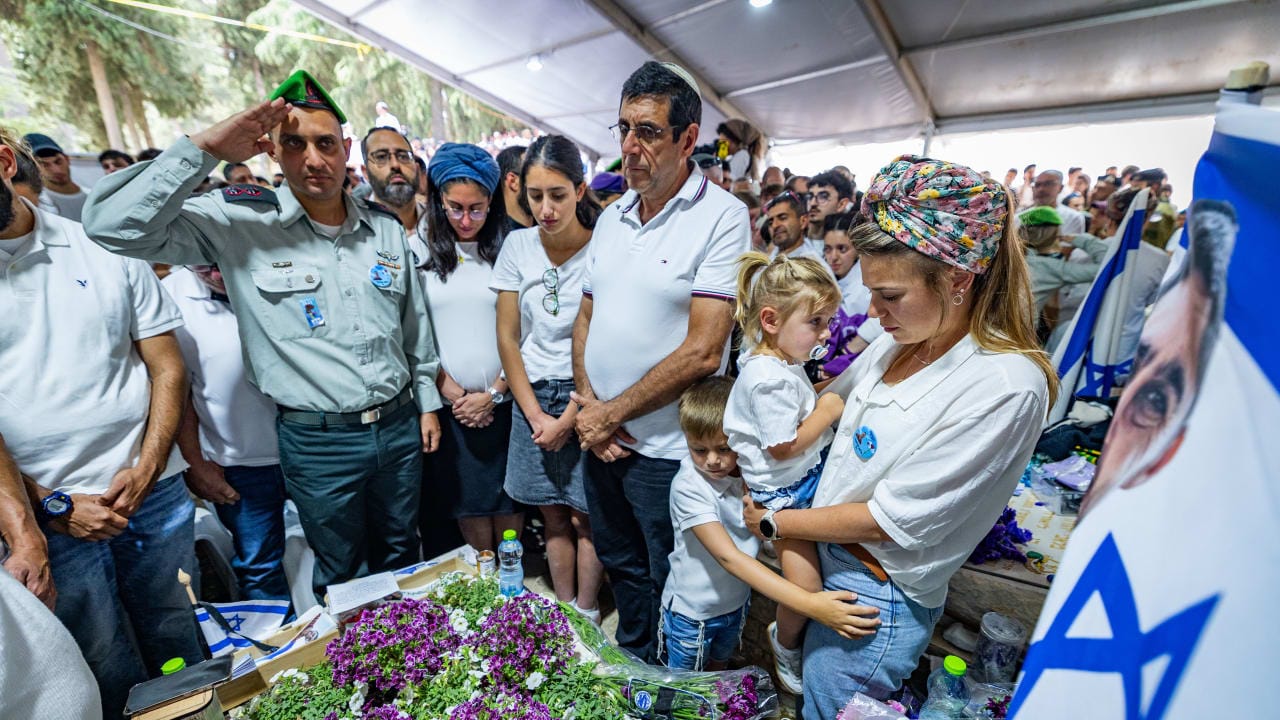
Siblings of fallen soldiers told a Thursday Knesset IDF Human Resources Subcommittee panel that they lacked government support amid a sharp rise in bereaved families since the start of the Israel-Hamas War.
Arie Moalem, the head of the Defense Ministry’s Families, Commemoration, and Heritage Department, discussed the impact that the war has had and the spike in bereaved family members in the country since.
“The last two years of the war are like 26 years of work and 26 years of funerals,” he said.
“We have added more than 6,500 people to the circle of bereavement. We reached a peak of 90 funerals in a single day.”
The meeting was led by MK Elazar Stern (Yesh Atid), where bereaved family members spoke about various issues they have struggled with since the loss of their loved ones.

Numerous siblings of fallen soldiers spoke on the complex situations they have found themselves in, expressing that they require further government support, similar to what widows or parents receive.
A sister who lost her brother in combat told those at the committee that siblings often fill in for their grieving parents, while still mourning the loss of their brother or sister themselves.
Speaking as a new olah to the country, the bereaved sister said that when her brother died, she was the one who had to translate for her mother as to whether his body was recognizable or not.
Bereaved siblings also need to take care of parents
She said that as a bereaved sibling, “we have no address to turn to,” noting that many who lose a brother or a sister in combat are often young, working, or students. They then find themselves having to help care for their grieving parents while receiving little government help in the process.
“I had to take care of my parents, but I would still need to go to work and study,” she told the panel, adding that “there is no government body to represent me as a bereaved sister.”
“We need such a body to represent us and push legislation for us,” she continued, calling on MKs to find a solution.
Another bereaved sibling lost his brother in combat, whom, he said, he was very close to. He told the committee about the challenge of navigating the needs of his parents while also grieving the loss of his brother and losing his job.
When his parents were grieving, he “was the one who had to run between [his] mother and father,” the bereaved brother told the committee.
The brother said that other than psychological help, no financial support was offered to him, and criticized that such aid was provided to parents or widows, but not to siblings.
“There was no government body to look out for me,” he said, “I would need to go to work every day and just cry there.”