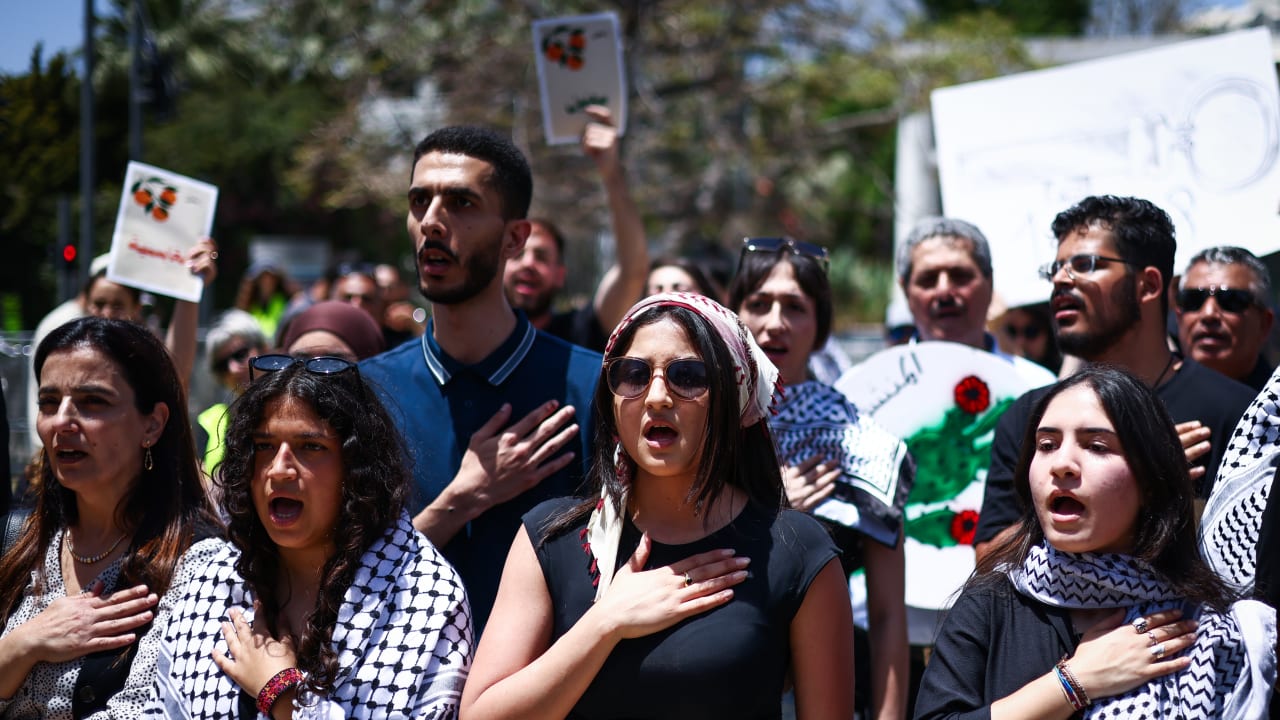
Abu Ghosh is an Arab town near Jerusalem. It sits on Highway 1, which navigates the hills that guard Jerusalem to the west of the city.
On Election Day this past Tuesday, a polling station in the center of the town was busy with people coming and going. Many of them said they were going to vote because they wanted to see a different government.
They were dismayed by the past several years. They described increasing racism since 2022 and specifically singled out National Security Minister Itamar Ben-Gvir as one of the negative influencers in Israeli politics.
I went to Abu Ghosh after having spent time at other polling stations. In fact, earlier in the day, Ben-Gvir was outside a polling station in Jerusalem’s Gilo neighborhood, speaking with people who were arriving to vote.
In many ways, the voting turnout in Abu Ghosh was similar to other neighborhoods. People were passionate about politics.
About 4,300 people voted in Abu Ghosh, or 78% of the population. In Gilo, about 15,000 people voted, or 65%-70%, depending on the various polling stations.
Therefore Abu Ghosh illustrates a trend in the vote in Israel among many Arab communities. Turnout was high.
In Ein Rafa, an Arab village on the other side of the highway from Abu Ghosh, turnout was also over 75%.
In 2022, the turnout in Abu Ghosh was only 55%. About half of the voters voted for Balad, 30% voted for Ra’am (United Arab List), and 10% voted for Hadash-Ta’al. Ra’am is seen as the Arab party most open to work with Jewish and Zionist parties in Israel.
Many passionate voters show up
This year, about 56% voted for the Joint List, and 35% voted for Ra’am. Voting in Ein Rafa was similar. In the past, some voters in Abu Ghosh had voted for Likud, including 7% in 2022. This time, that declined to around 1%.
What was clear on October 27 was that many people were passionate about their vote. They were eager to talk about why they voted.
They didn’t necessarily explain why they chose Ra’am or the Joint List, but they said they wanted to see a government that would be more into coexistence. They also wanted their parties to play a role in governance of the country.
The voting site in Abu Ghosh that I went to is in the center of town. Abu Ghosh is built on both sides of a small valley, and its shape resembles a large triangle.
On one side is a large mosque that dominates the landscape. It was built with support and donations from Chechen President Ramzan Kadyrov and completed in 2022. The reason he backed the mosque is because of a history that connects the people of Abu Ghosh to the Caucasus.
Abu Ghosh is well known among many people in Israel and also tourists. For tourists and locals, it is known as a welcoming village where there are many hummus restaurants.
The largest and most famous is the Lebanese restaurant at the entrance to the town. The restaurant spans several large open rooms and seems to go on forever.
The waiters are quick to seat anyone who arrives. Small cups of strong coffee come at the end of the meal.
The town was also known in the history of Israel and Zionism. Abu Ghosh’s clans had frequent fights with their neighbors. The village played a major role due to dominating the road to Jerusalem. This seems to have inclined it to see Jews favorably.
Residents of the village assisted Geula Cohen when she escaped a Jerusalem prison during the British Mandate in 1947. A member of the Jewish underground organization Lehi, Cohen had been arrested in 1946.
“Just last week she visited her friends in Abu Ghosh – family members of Yusuf Abu Ghosh, who helped her escape from the British jail,” The Jerusalem Post reported in 2013 after an interview with Cohen. She died in 2019, but her legacy lives on in Abu Ghosh’s welcoming feeling.
Towns such as Abu Ghosh could provide a model for Jewish-Arab coexistence. There are also Christian sites in the town, including an ancient Crusader church and a monastery.
Across the road, near the village of Ein Rafah, there is also a historic Crusader site. This is the kind of unique landscape that underpins the unique identities of people in Israel.
People were genuinely interested in participating in this election. They appeared to do so without a lot of electioneering. There were very few signs for the Arab parties, for instance.
Unlike in Jerusalem, there were no cars driving around with loudspeakers urging people to vote, and there were no booths set up outside the polling station with campaign workers handing out fliers. In fact, unless you knew it was Election Day, there was no outward appearance of an election.
Israeli politics uses Arab voter narratives to drive elections
There is a trend to exploit the Arabs voting in Israel for political purposes. Some have done so by warning that large numbers of Arabs are voting as a way to galvanize right-wing voters. Others see the vote as evidence that Israel is not “apartheid.”
Neither of these narratives seems to see the Arabs as anything other than a symbol. For instance, on Election Day, some social-media accounts posted photos, claiming to show Arab women lined up at polling stations. The photos showed them all in black body-covering abayas with only a slit for their eyes.
This dress, with an extremely conservative niqab face covering, is not common among Arabs in Israel. Many Arab women in Abu Ghosh, for instance, do not appear to cover their hair. This illustrates the major difference between the perception of “the Arabs” in Israel and the Arab voters themselves.
It remains to be seen what comes. The unprecedented turnout of the Arab communities to vote appeared to illustrate that many want to take part in Israeli coalition politics.
Historically, the Arab parties didn’t take part in Israel’s government. Early attempts by the Labor Party to work with local Arab politicians in the 1950s and ’60s shifted later. The most popular Arab party in Israel for years was the Communist Party. Later, voters trended toward Arab nationalism and even Islamist parties.
The Islamic Movement in Israel has its roots in the ’70s and ’80s. It moved toward participation in politics in the ’90s, a global trend for Islamic political parties, some of which had ties to the Muslim Brotherhood.
In Israel, this trend has seen the Arab parties shift their politics. The Joint List was a response to fears they would not pass the electoral threshold. In 2015, Ayman Odeh led the Joint List to 13 seats, the third-largest party in the Knesset. He did not capitalize on this, however, and opportunities to work with the opposition were missed.
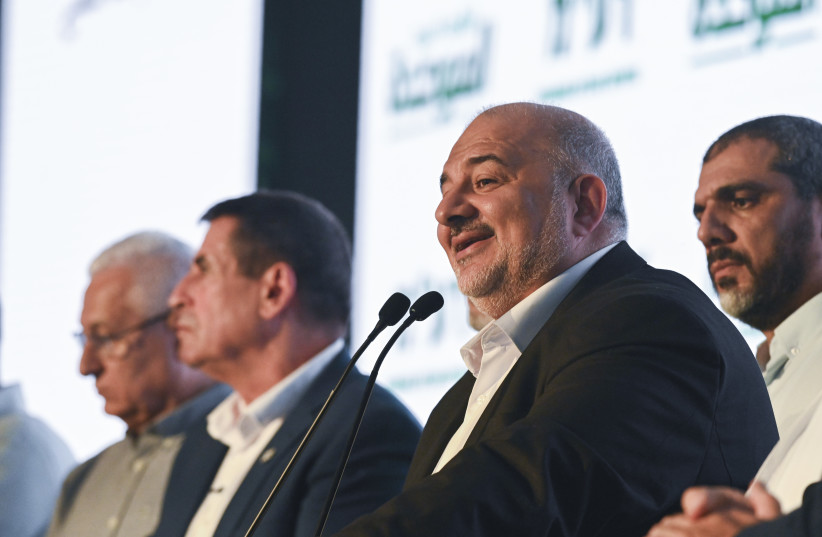
Ra’am under Mansour Abbas chose to break with the Joint List and seek to back a new government in 2021. This trend has now increased and changed perceptions in the Arab community about participation in Israeli politics.
Many of those I spoke to said they wanted to play a role, even with Likud, as long as the more far-right parties were excluded. This appears to be a sea change.
The desire for coexistence among many Arab voters, however, may be questioned now. Israeli officials are investigating claims that there were outside donations funneled into the country to encourage turnout in the Arab sector.
Supreme Court Justice Noam Sohlberg, chairman of the Central Elections Committee, has issued an order to investigate suspected foreign funding and election interference.