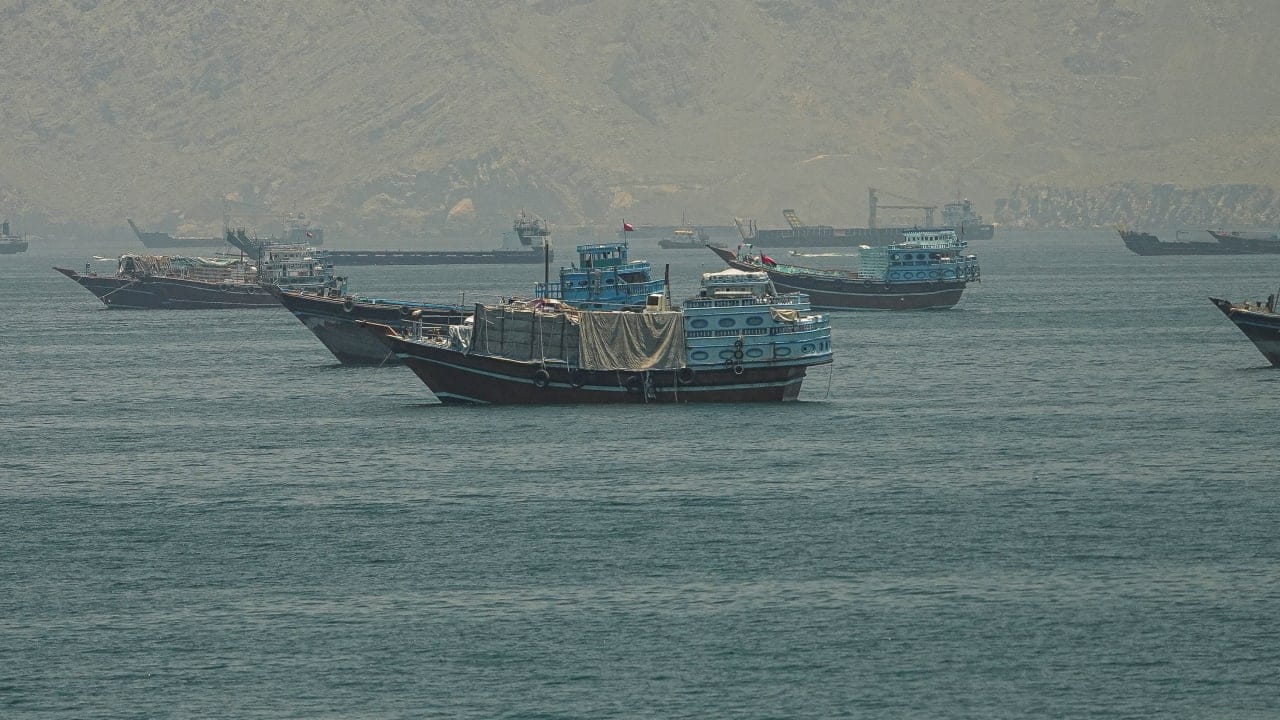
The Islamic Republic of Iran is unlikely to discontinue its attacks on Persian Gulf states as its leverage in negotiations with the US depends heavily on the continued instability of the Strait of Hormuz, international relations expert Arman Mahmoudian, a research associate at the University of South Florida’s Center for Strategic and Diplomatic Studies, explained to The Jerusalem Post on Sunday.
Although Axios, citing a US official, reported on Sunday that Washington and Tehran had mutually agreed to halt their attacks during the first round of talks, Mahmoudian said Iran’s actions suggest it remains willing to escalate the conflict.
Special envoys Steve Witkoff and Jared Kushner are expected to attend the talks in Doha on Tuesday, initially intended to be held in Switzerland, after Iran refused to participate in technical talks on Sunday over allegedly unfulfilled commitments promised by Washington as part of the memorandum of understanding (MoU).
The diplomatic hold-off comes after the Islamic regime initiated renewed kinetic military action by launching a drone at a Panama-flagged vessel in the Strait on Saturday, which led to the US striking Iran and Iran attacking Kuwait and Bahrain on Sunday.
“I would say that the primary reason Iran has decided to renew attacks on the Persian Gulf states has to do with the balance of leverage in the ongoing negotiations between Iran and the United States,” Mahmoudian explained. “Tehran is very much aware that its main leverage - if not its only real leverage - against the United States is the Strait of Hormuz.”

Strait of Hormuz stability only benefits Iran post final treaty
Stability, or “normal operations” in Hormuz won’t serve Iranian interests until a final treaty is completed, Mahmoudian said. “Otherwise, if the Strait of Hormuz reopens fully before the conclusion of an agreement, Iran’s ability to minimize US demands and extract greater concessions from Washington would likely diminish.”
Attacks on the Gulf are more about signaling to Washington that Tehran is more than willing to “expand both the domain and scope of escalation, including by targeting Gulf states that are US allies and major producers of oil and gas,” to maintain control of Hormuz as leverage.
Though the MoU calls on Washington to remove its blockade of Hormuz and on Tehran to make efforts to ensure the safe and free passage of commercial ships from the Persian Gulf to the Sea of Oman, it fails to tackle the operational aspects of reopening the strait, Mahmoudian highlighted.
There are three pathways through the waterway: the middle route, the Omani route, and the Iranian route.
“Both parties seem to agree that the middle route is not functional because of mines and other explosives. However, Iran appears interested in keeping maritime navigation through its own route rather than the Omani route. The ships that were attacked earlier were reportedly traveling through the Omani route,” he noted.
Repeating comments earlier made to the Post, Mahmoudian asserted that the MoU lacks clear language because it is not in itself a solution to the conflict. Rather, he said, it was intended to define a framework within which both parties could pursue a diplomatic and political settlement.
Military historian Lynette Nusbacher noted that the issue of Hormuz, the current source of Iran’s power, comes amid a lack of ability or willingness to “exert power” over Iran.
“The Americans are pulling power out of the region as fast as they can. China isn’t interested in risking or projecting combat power in this corner of the world, though they’ll cheerfully sell missiles to the Saudis to let them flex their muscles,” she said.
“Keeping petrochemicals flowing out of the Persian Gulf is going to mean keeping the Iranians happy - or bringing in local power to do it.”
Though she named Turkey, Israel, Egypt, and Pakistan as potential powers, Nusbacher said that only the US has sufficient combat strength to control Hormuz. “But they appear to lack the will,” she noted.
“President Trump has been told, truthfully, by the US military planners that they can’t do it without compulsory mobilization of reserves and [the] National Guard,” she said, explaining that was a sacrifice that the president was unwilling to make.
With the US’s willingness being what it is, Nusbacher said, “The best the regional powers could do is deny or contest” Iran’s hold.
“Iran’s power here comes from denying the [attempts by others to control the] Strait... Anyone with good targeting and long-range precision attack [ability] can deny or contest the Strait,” she said.
“They [the Islamic Republic] can deny [control attempts] from anywhere in Iran as long as they have good enough surveillance of the Strait to target big slow-moving ships. Right now, Russia is happy to provide targeting intelligence.”