British interior minister Shabana Mahmood said on Wednesday she no longer had confidence in one of Britain's top police officers after his force recommended Israeli soccer fans be barred from attending a match in England last year.
The ban caused a diplomatic dispute shortly after an antisemitic attack that killed two men at a synagogue in the northwestern English city of Manchester, when tensions were high because of Israel's war against Hamas in Gaza.
The decision was condemned by both the British and Israeli governments, and Jewish community leaders accused the force of misrepresenting intelligence and undermining public confidence.
"We have witnessed a failure of leadership that has harmed the reputation and eroded public confidence in West Midlands Police and policing more broadly," Mahmood told parliament.
"I must declare today that the chief constable of West Midlands Police no longer has my confidence," she said, referring to Chief Constable Craig Guildford.

Mahmood cannot directly sack police chiefs - only police and crime commissioners can formally remove them - but said the government would bring forward legislation to give her that power in future cases of "significant or persistent failings."
In 2022, London Mayor Sadiq Khan lost confidence in the then-city police chief Cressida Dick, which prompted her to step down after Khan said he was not satisfied she could deliver the changes needed to restore trust in the force.
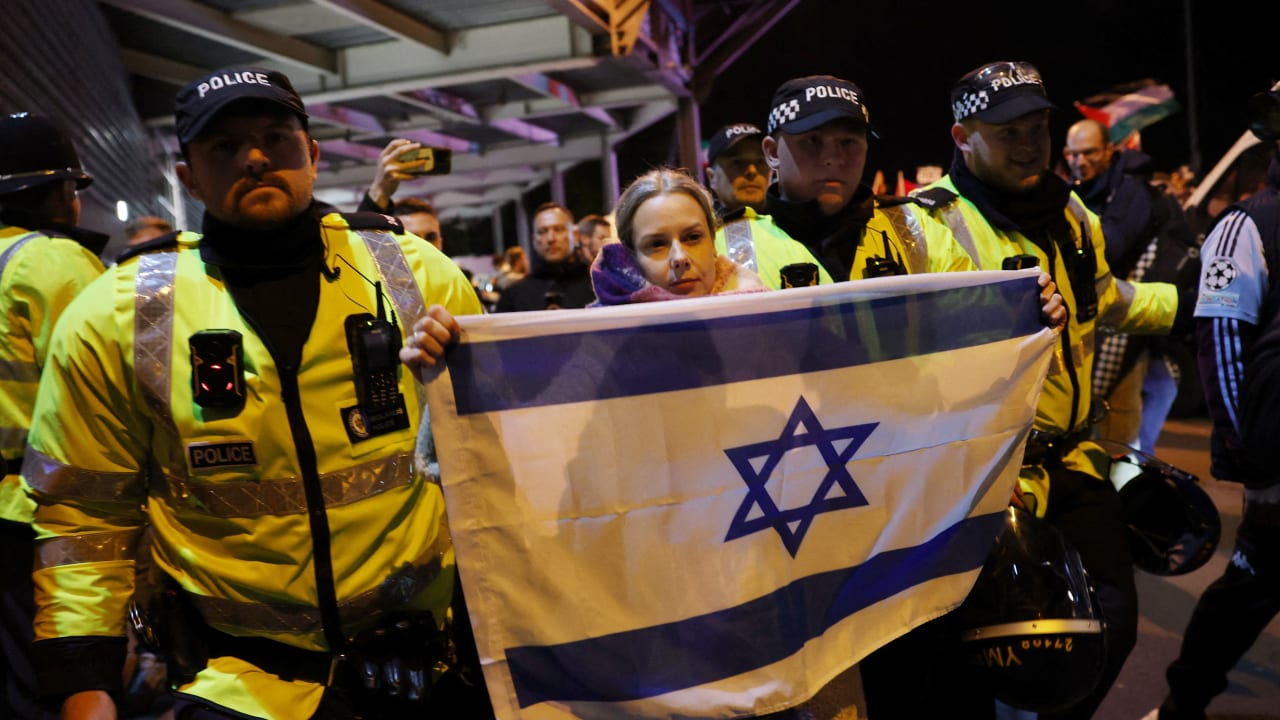
The game against Aston Villa was played without major disruption, although police made 11 arrests when pro-Palestinian and pro-Israeli supporters demonstrated outside the stadium.
In November 2024, more than 60 people were arrested in Amsterdam after clashes following a match between Maccabi and Ajax.
Report finds police overstated threat
An independent inquiry commissioned by Mahmood's office found that police overstated the threat from Israeli fans, relied on inaccurate intelligence, and missed opportunities to engage with the local Jewish community.
West Midlands Police used “intelligence,” supposedly from a meeting with Dutch police commanders, to support their claims of Israeli violence. However, the Dutch police inspectorate wrote a letter in December that entirely contradicted claims made by West Midlands Police about Maccabi fans’ previous behavior.
During a Home Affairs Select Committee recall hearing, West Midlands Police confirmed no minutes were kept during the discussion with Dutch police. Furthermore, when asked why the intelligence about a potential armed threat to Israeli fans was kept secret and was only reported then, the chief constable replied that he had not been asked for it.
“I think it’s the first time you’ve asked for that detail,” said Chief Constable Craig Guilford. Following this, several members of the committee could be heard saying, “absolutely outrageous.”
Guilford then said he still stands by the evidence he gave at the previous committee hearing in December regarding what happened in Amsterdam during the Ajax vs Maccabi game in 2024, despite subsequent contradictions from Dutch police and The Sunday Times.
“There was a lot of intelligence that people would actively seek out Maccabi fans and seek violence toward them,” Assistant Chief Constable Mike O’Hara said, adding, however, that there were also fears that the Maccabi fans would target the community. He therefore said the police did what was necessary to “protect the public” and stressed there was no conspiracy.
Guilford added he didn’t think there was any “political interference” in the decision.
Despite reporting by The Jerusalem Post and other media that the police had consulted with several mosques that hosted antisemitic preachers prior to the ban, O’Hara told the committee, “We didn’t.” This is despite the fact that the list of mosques was provided by the police last month and that the links between the mosques and extremist figures are easily accessible.
But the report found no evidence of antisemitism, political interference, or malign intent in the force's decision.
Guildford said on January 6 that the recommendation was based on information provided to his officers and that he had no doubt about their integrity.
In a letter on Monday, Guildford apologized after acknowledging a fictitious reference to a West Ham-Maccabi Tel Aviv match in a report about the force's decision had been generated by Microsoft's Copilot AI tool.
He had previously said artificial intelligence was not used in preparing the document.