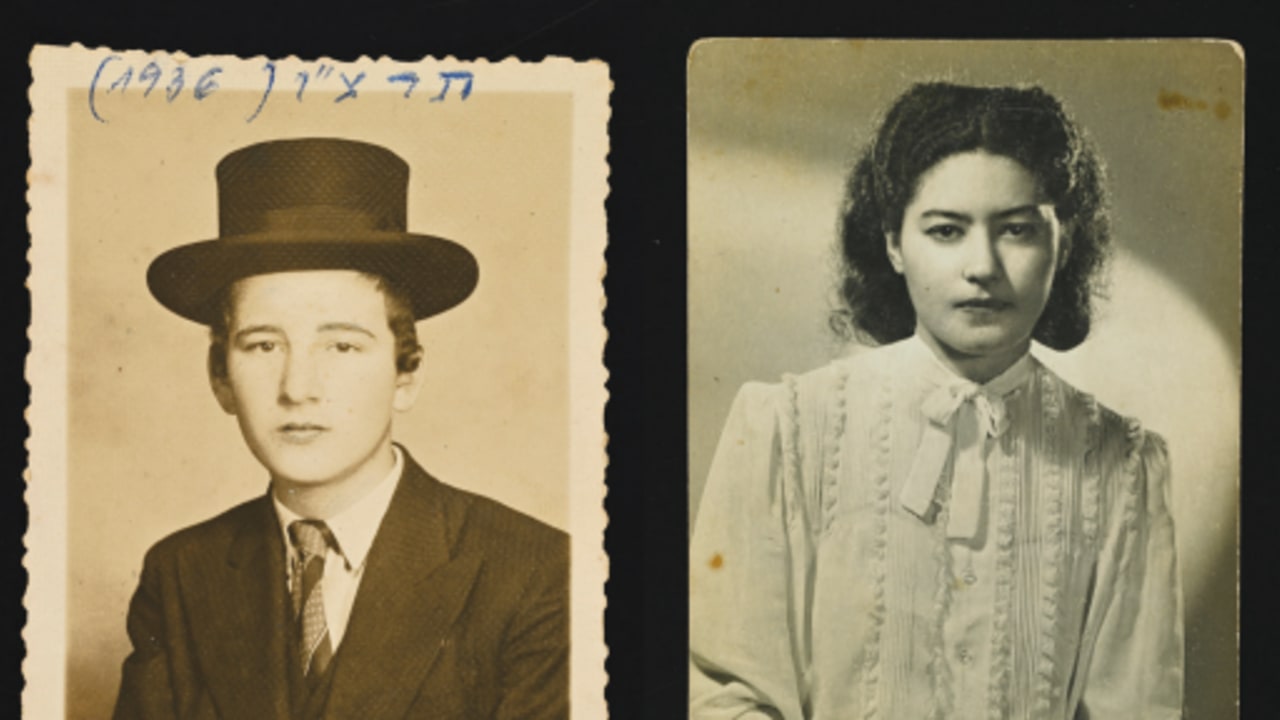
On frail paper, with faded ink, the letters of Idit Papa and Meir Hirschfeld trace a remarkable, untold journey of love and survival during the Holocaust. The young Orthodox couple in Hungary exchanged messages that sustained them through forced labor, ghettos, brazen escapes, and months in hiding. Against all odds, they survived, married, and eventually built a life in Israel.
Today, Idit, at 101 years old, and the couple’s children, Zvi and Dvora, have donated to Yad Vashem this extraordinary archive of roughly 100 wartime letters.
Monday evening marks the start of Holocaust Remembrance Day, more than eight decades since the end of World War II. As the number of Holocaust survivors dwindles, stories like Idit and Meir’s – told in their own words through letters, photographs, and memoirs – are being collected by Yad Vashem. There they are being restored and conserved to ensure they can be preserved.
“This was a special correspondence that stemmed from a deep love,” said the couple’s daughter, Dvora Avikam, 76. “The very act of writing to each other during that terrible period gave my parents hope and strength. It kept them informed about each other’s condition, and thanks to it, they managed to meet despite the risks – and ultimately to reunite.”
Idit was a teenager when they met, taking care of seven younger siblings after her mother’s death and her father’s arrest. Meir, a Torah scholar, entered her life as a tutor to the children once Jews were barred from attending school. They fell in love, and in 1942 they got engaged. But their plans were shattered when Meir was sent to a forced labor battalion.

The situation deteriorated when the German army invaded Hungary in 1944. However, through couriers, Idit and Meir managed to continue their correspondence, which became a lifeline of hope and determination.
In a letter dated June 30, 1944, Meir wrote:
“The separation is so hard for lovers like us, but I will always thank God for assigning you to me – there is something that ties me to life!”
A few days later, on July 4, he described the life-giving power of a single postcard from Idit: “You are my king! I cannot describe what your postcard of the first of this month did for me… It restored my will to live, which had been extinguished completely over the past three days. They were three terrible days!”
During this period, Idit and her family were forced into the Vác ghetto in Hungary. When the ghetto was liquidated, spelling almost certain death, Idit jumped off a deportation train with one of her sisters and escaped. She sent a postcard to Meir telling him she was still devoted to him.
She fled to Budapest and was eventually reunited with Meir, after he escaped forced labor. Together, they survived the final months of the war in hiding, including at the “Glass House,” a safe haven for Jews in the city.
After liberation, they married and immigrated to Israel, where they raised two children. Over the years, they preserved the letters that had carried them through the darkest times, along with photographs, postcards, and Meir’s Hebrew poetry notebook. Meir also translated their wartime correspondence into Hebrew, arranging it chronologically and annotating key moments of survival. In 2004, Meir died at the age of 83.
Inside Yad Vashem's Gathering the Fragments project
THEIR ARCHIVE was donated to Yad Vashem as part of the project Gathering the Fragments, an initiative to collect items from the Holocaust that commemorates the stories of the individuals, families, or communities behind them.
“These letters reveal not only a profound and enduring love between Idit and Meir but also a rare beauty and personal vulnerability. Through their words, we see how they sustained each other in the harshest of circumstances, offering strength, comfort, and hope, and how they encouraged each other to find a way to reshape their reality and ultimately survive,” said Orit Noiman, head of Documentation and Collection from the Private Sector at Yad Vashem.
“Preserving and gathering such personal items is essential for remembrance, as they allow future generations to connect with history through intimate human stories, ensuring that these voices – and what they endured – are never forgotten.”