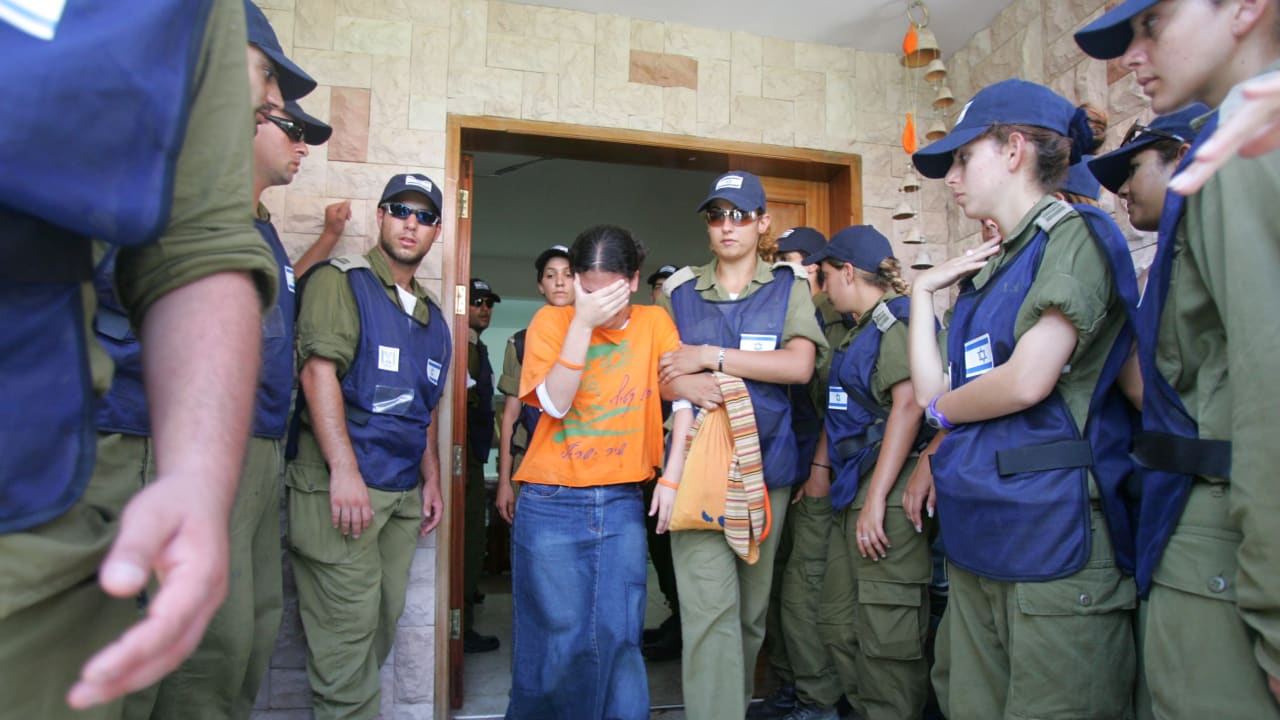
Dim light came through the tall windows of Neveh Dekalim’s Great Synagogue, as hundreds of girls in bright orange shirts filled every aisle. They rocked back and forth, whispering Psalms that swelled into one pleading chorus. Some hugged tight; others wiped away tears. Outside, bus engines rumbled and soldiers’ voices echoed, an ominous reminder that the evacuation of Gush Katif could begin at any minute. Yet inside, the girls’ prayer grew louder, each note holding equal parts fear and stubborn hope.
When the first soldiers stepped through the doorway, they paused, helmets in hand, caught off guard by the wall of song and emotion crashing over them. For a few breaths, everyone – settlers, soldiers, even onlookers – stood suspended in a raw mix of panic, faith, and love for a home about to vanish. Nobody with a heart or conscience could ignore this phenomenon.
That hour became “The Girls’ Prayer,” a 48-minute documentary by veteran filmmaker Rino Tsror. Shot on August 17, 2005, and aired five years later, the film still haunts me. I saw it from a rented sofa in Miami, where I was on a year of shlichut (outreach as an emissary). Twenty-three and supposedly tough, I found myself sobbing. I recognized friends’ sisters and camp counselors, singing the very melodies I had belted out in yeshiva only days earlier. Rabbis had promised this nightmare would never arrive. They were wrong, and they have never truly apologized.
The disengagement emptied 21 settlements and four northern Samaria outposts, but it also cracked Israel’s national-religious worldview. For Religious Zionists, who link Torah, people, and land, the state’s bulldozers felt like a theological betrayal. A 2010 survey found that 96% of evacuees felt “hurt and disappointed” by political leaders; more than half reported depression or anxiety. Even those who were never uprooted shared the trauma. A Guttman Center poll later showed that 40% of Religious Zionists (and an eye-catching 57% of their 18-24-year-olds) said soldiers should refuse any future orders to evacuate settlements.
At first, many believers simply froze. Teens who had painted sidewalks orange suddenly watched their childhood rabbis fumble for explanations. Some students stopped reciting the traditional prayer for the welfare of the state; a handful of yeshivas debated whether to celebrate Independence Day at all. For a movement long taught that the state itself was a divine vessel, the shattering was almost existential.

Yet Religious Zionism did not retreat. It spread into elite combat units, universities, and law schools. The number of national-religious cadets in officer training jumped by a third within five years. In other words, while faith in the system cracked, the impulse to shape it only grew stronger.
Orange ribbons and override clauses
Three young activists embody that pivot. Simcha Rothman spent the summer of 2005 blocking roads and filing petitions; he now chairs the Knesset’s Constitution, Law and Justice Committee. Bezalel Smotrich was arrested with jerry cans of gasoline, suspected of plotting to block Tel Aviv’s Ayalon Highway; today he controls the Finance Ministry and, unofficially, the settlement file. Yariv Levin, then a Likud lawyer, organized the party’s internal revolt against the pull-out; as justice minister, he unveiled the judicial-reform blueprint that shook Israel in 2023.
Ask each one what forged his mission, and he will point to Gush Katif. Rothman still calls the High Court’s 10–1 ruling upholding the evacuation law “the day the robe tore.” Smotrich traces his crusade against what he labels “legal tyranny” to the weeks he spent in a jail cell, never formally charged. Levin says he learned in 2005 that if unelected judges can overrule elected leaders, “democracy is hollow.”
Their answer to that wound is well known: override clauses, a heavier political hand on judicial appointments, and laws requiring super-majorities, or referendums, before any future territorial pull-back. Critics warn that these proposals threaten Israel’s checks and balances; the architects counter that the disengagement proved that checks without balances can bulldoze citizens’ rights.
The pull-out also rewired alliance maps. Many Religious Zionists walked away from Likud, furious that Ariel Sharon had flipped on his base. They eventually returned, under Benjamin Netanyahu (though he actually supported the disengagement), after Kadima, the centrist and liberal political party, collapsed – but they did so warily, setting tougher litmus tests on land concessions. In 2022, when the hard-right Religious Zionist Party surged to 14 seats, pollsters traced that growth to voters who first learned to distrust in August 2005.
Economically, scars linger. Three years after the evacuation, 80% of former Gaza settlers were still in prefab homes; unemployment among them was three times the national average; average family income had fallen nearly 40%. Even today, a quarter of those families remain below their pre-pull-out earnings. The State Comptroller twice blasted ministers for “serial failure” in resettlement, reinforcing the evacuees’ belief that promises mean little once TV cameras fade.
I keep replaying that hour of prayer because it froze a generation at the seam between faith and state power. Some of those girls went on to teach Hebrew in makeshift schools, others to infantry units, and some to therapy. A few now sit in the Knesset gallery, nodding as ministers argue about the very court that upheld their exile.
The disengagement’s architects said the pull-out would ease conflict. Instead, it sparked a quieter war over who decides Israel’s future: the ballot box, nine justices on King George Street, or, perhaps, a referendum. The orange ribbons have faded, but the legislative fire they sparked now burns on the Knesset floor.
I learned that lesson in Miami, tears blurring a borrowed TV screen. Twenty years on, the tune from Neveh Dekalim still lingers, half lament, half anthem. The question is whether we will keep singing together or drown one another out with the sound of our unfinished prayers.