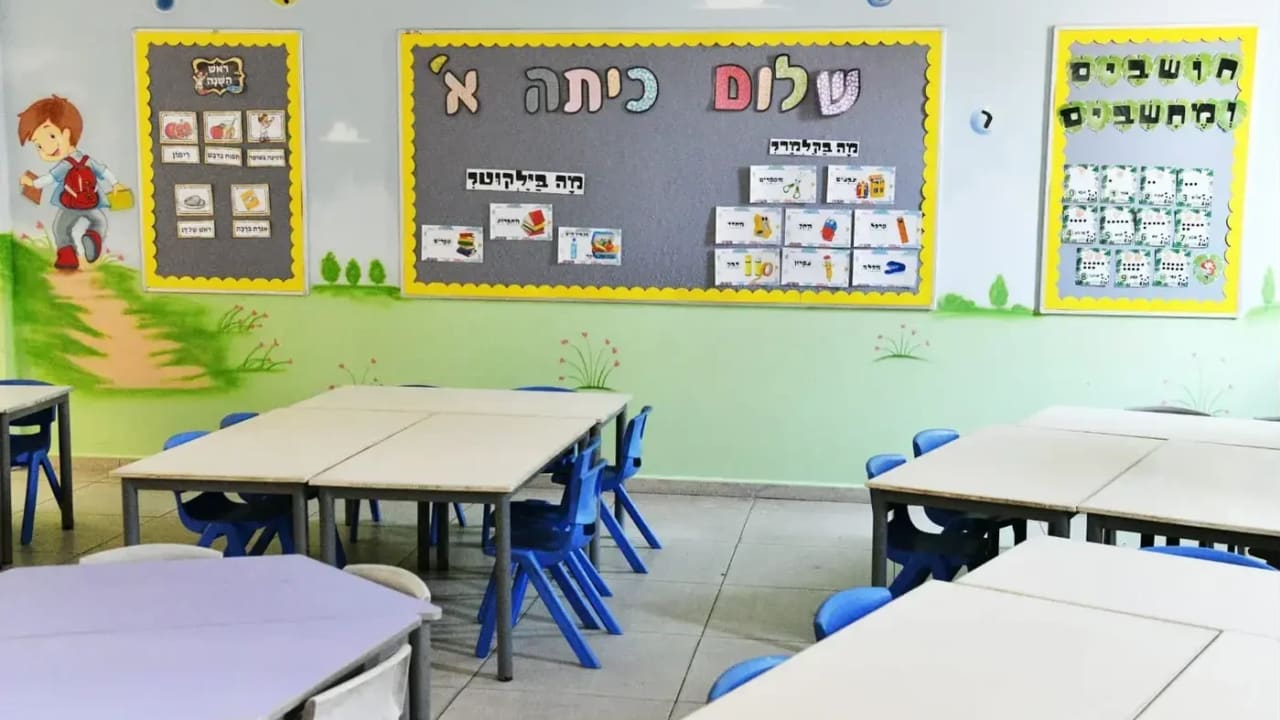
Most parents reach the end of August exhausted, counting the minutes until the return to routine. But even if it seems you’ve used up all your patience reserves in the past month, on September 1 you’ll need to take a deep breath and contain the storm of returning to school.
And yes, there will be a storm. And it’s completely natural.
Imagine you’re coming back from a long vacation. Two months in Thailand, let’s say. How will the first day back at work look? Lots of fun? Probably not. It’s likely to take you a few days to get back into rhythm. It’s exactly the same for our children.
We love to promise our kids that “it will be fun” and confidently tell them how much they missed their friends, but the truth is that it’s hard to come back from vacation, hard to adjust back to routine, and especially hard for the many children starting new settings who need to find their social place.
So despite the excitement of new backpacks and white shirts, September 1 is usually a particularly tense morning. Many children will be irritable, anxious, dissatisfied, and you’ll have to contain that. And if your children are starting a new preschool or first grade, the excitement and stress are even greater – both in morning goodbyes and in the afternoons. The children will have to hold in all their emotions throughout the day, and it’s likely that when they get home everything will come out on turbo.

So how do you get through it?
Understand them
Just before we return to the race of routine, take a deep breath and prepare yourself for it. Try to remember that your children are reacting naturally to all this excitement. Try also to recall how it felt when you moved up a grade or started a new preschool, or just how much of a bummer it was when summer vacation ended. Connect with the child you once were to summon empathy and patience.
Talk about it
It’s very worthwhile to ask children how they feel about going back to school. Some will say they’re excited or happy, some will say they’re scared or disappointed – all answers are valid. In any case, it’s very important to allow emotional conversation on the subject so that our children aren’t left alone with this wave of feelings.
For children who are excited or scared, it’s good to say you understand them, that you felt that way too when you were in school, and that even today it’s a little hard to start a new job or return from vacation. Validate your children’s feelings – it’s much more calming than hearing “it will be fun.” Children who feel understood, who feel someone is holding their excitement with them, are less anxious and more available for the social task ahead.
You can also ask what would help them – children sometimes have surprising answers. You can also suggest things that might soften the separation – walking them to the gate, a special hug, a note in the lunchbox, or anything else that will help your child feel a little calmer.
Worry less
Yes, the beginning of the year can be challenging, but that’s no reason to worry. Try not to attach too much meaning to the drama of the first week of school, because it’s not representative. Even if your children have a hard time going back to school, even if they cry at the gate and refuse to go in – that’s perfectly fine. Every such event in which a child manages to overcome (and they will overcome) strengthens their resilience and their belief in themselves that they can handle difficulties. Be there to listen and contain, but also convey belief in their ability to cope.
More home time
Many parents start the year with a frenzy of after-school activities, playgrounds, and playdates, but not every child is suited for that. In fact, most children need a moment to adjust to the new routine before adding more elements to it. In the first week or two, try to lighten the schedule a bit. Right now it will be wonderful for the children to come home and have some quiet time in their safe place, where they can slow down or even fall apart if they need to.
Encourage them
Whether the return to school goes smoothly or you arrive at work with a shirt soaked in tears, your children need your encouragement. They need you to look them in the eyes with faith and reflect their progress, even if it’s small. For example:
“I saw it was hard for you and yet you overcame it, I’m proud of you.”
“This morning you were a little sad, and yet you left preschool with a smile. You’re such a mature and strong child.”
“You know, last year it took you a long time to get into preschool, and this morning you went in so quickly. What an independent and mature girl you are. I’m proud of you.”
The more our children hear from us that they are kids who know how to overcome, the easier it will be for them to overcome.
And what about kids who really struggle?
The beginning of the year challenges almost all children, but for some it’s harder – children who have difficulty with transitions.
A child who struggles with transitions is usually the one who takes time to let go of you at the playground and play alone, the one who needs time to warm up at family meals, who sticks to the parents’ chair at birthday parties, who struggles with separation and doesn’t like change.
If your child is one who struggles with transitions, the beginning of the year will require greater effort from them. These children will cry at the gate and cling to their parents, say from the moment they open their eyes in the morning that they don’t want to go, and do everything to stall. Some may even burst into tears mid-route or refuse to get out of the car.
And that’s completely fine. Just as some adults have a harder time with changes than others, there are also children who find transitions and new beginnings more difficult. These children need time to warm up, but eventually they will adjust.
To help them, you mainly need to remember that everything will be okay, and worry less. Children who see worried eyes or pitying eyes may conclude that there’s reason to worry or feel sorry for themselves. If you can remind yourself that your children are simply the type who need more time with transitions, who warm up slowly, you’ll be able to look at them differently – with a gaze full of confidence in their ability to overcome and empathy for their challenge.
It’s also good to have a short expectations-setting conversation about how they’d like to say goodbye in the morning and ask what would help them. At separation time, try to be short and efficient. If the child cries or struggles, give a strong hug, remind them how much you believe in them and exactly when you’ll come to pick them up. Try not to prolong the separation – it won’t help.
Bottom line: The beginning of the year is a challenging time for almost all children, and each one needs their own pace to adjust to the new routine. Our role is to be there for them – with empathy, encouragement, and belief in their abilities. When we convey confidence and patience, they discover that even if it’s hard at first, they’re capable of overcoming. And that’s a lesson they’ll carry far beyond September 1.
Yifat Sani is a certified parenting coach from the Adler Institute. She specializes in early childhood and adolescence.