When your child is diagnosed with cancer, your world becomes very small. It shrinks to hospital corridors, waiting rooms, and test results. Plans dissolve into a blur of scans and surgeries. For families facing neuroblastoma, a rare and aggressive childhood cancer, this narrow world can also feel impossibly isolated.
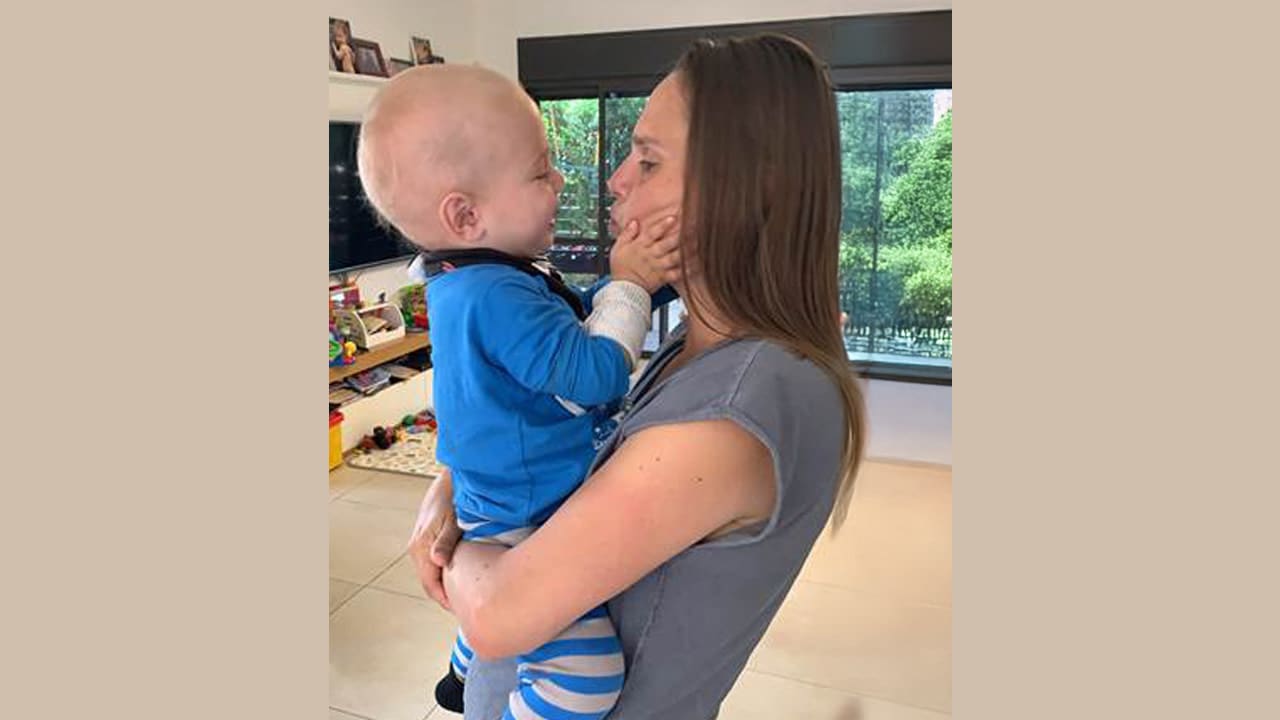
I know this world all too well. I am the mother of Shir, a little boy whose neuroblastoma diagnosis turned our family’s life upside down, and the founder of Shir for Life, a nonprofit born from that experience. In those early days, I felt what so many parents feel: that we were fighting alone.

But if you zoom out far enough, you see something else entirely: families, doctors, and scientists on different continents, in different time zones, working on the very same problem at the very same time. Parents in London joining a Zoom support group with parents in Tel Aviv. A child in São Paulo receiving a treatment first tested in a trial that enrolled children from Chicago to Paris. None of these stories is possible without one thing: collaboration.
This is the spirit behind International Neuroblastoma Awareness Day, which Shir for Life helped launch and which is now marked each year on December 5 in more than 50 countries. The day’s theme, “Together We Can,” is more than a slogan—it’s a survival strategy, born from hard lessons about what does and doesn’t work when you’re trying to cure a rare disease.
Neuroblastoma begins in immature nerve cells, most often in the adrenal glands that sit on top of the kidneys. It mainly affects babies and very young children, and is rarely seen after the age of 10. Though it is considered “rare”, neuroblastoma accounts for a significant share of childhood cancers, and an even larger share of childhood cancer deaths, an outsized burden for a disease many people have never heard of. Each year, only a few hundred children in any one country are diagnosed; globally, the numbers remain small.
On paper, “rare” doesn’t sound frightening. To a parent, it’s terrifying. Rarity means that no single hospital, or even single country, sees enough children to answer the biggest questions quickly: Which treatments really work? Which children are most at risk of relapse? Who can safely receive less treatment and be spared life‑altering side effects?
For decades, pediatric oncology tried to answer those questions in parallel rather than together. Different regions designed different protocols. Research groups competed for the same grants and the same small pool of patients. Hospitals guarded their data because prestige, and future funding often depended on publishing first. The result was duplication instead of synergy, and progress that felt painfully slow for families who don’t have time to wait.
Meanwhile, childhood cancer itself does not respect borders. Around 400,000 children and adolescents worldwide are diagnosed with cancer each year. In high‑income countries, more than 80% can now be cured, but in many low‑ and middle‑income countries, fewer than 30% survive. When knowledge, medicines, and data stay locked in silos, those inequities deepen.

A quiet revolution is now underway.
On December 5, the presidents of the world’s major neuroblastoma research networks: Children’s Oncology Group (COG) in North America, the International Society of Paediatric Oncology Europe–Neuroblastoma (SIOPEN), and the New Approaches to Neuroblastoma Therapy (NANT) consortium, will share one stage at the 2nd Annual International Neuroblastoma Summit: Breaking Boundaries in Research. Shir for Life helped convene this summit precisely because no one network, no one country, and no one family can do this alone.
If you’ve never heard of these acronyms, that’s okay. What matters is what they represent: thousands of clinicians and scientists at hundreds of hospitals, choosing to pool their knowledge and patients so they can ask better questions, and get answers sooner.
We already have proof that this kind of collaboration saves lives.
Despite this progress, families know we are far from done. For those labeled “high‑risk”, long‑term survival still hovers around 50%, and the treatments are brutal. Cure should not come at the cost of a lifetime of hearing loss, heart problems, growth issues, and secondary cancers if we can possibly avoid it.
That’s where another kind of collaboration becomes essential: listening to the people who live this disease every day.
International Neuroblastoma Awareness Day itself grew out of this kind of grass‑roots advocacy. Through Shir for Life, I began reaching out to parent groups and charities in other countries with a simple idea: what if, instead of dozens of small, isolated efforts, we had a single day when we all spoke in unison? No one organization owns this day. It belongs to every family touched by neuroblastoma. But building it, country by country, group by group, has shown me how powerful we can be when we choose to move in the same direction.
Shir for Life’s role is not to stand in the spotlight, but to build the stage. We help connect organizations, coordinate the global campaign, and bring families and experts into the same rooms, virtual and physical. The International Neuroblastoma Summit grew out of that same instinct: to take the connections that happened quietly behind the scenes and turn them into a visible, structured collaboration that accelerates progress for everyone.
Collaboration, in other words, is no longer just something scientists do with each other. It’s something they do with families, and something families do with one another.
So what does it actually look like to choose collaboration over competition?
It looks like research groups aligning their protocols so a child in Sydney and a child in Rome can enroll on comparable studies and their data can be pooled. It looks like shared biobanks where tumor samples and DNA are stored not behind institutional walls but in global repositories accessible to vetted researchers. It looks like harmonizing how we define “response” and “relapse,” so results from a trial in Brazil can be meaningfully compared to a trial in Canada.
It also looks like transparency: publishing negative trial results so other teams don’t repeat dead ends, and designing studies together from the outset instead of rushing to be first.
For policymakers and funders, collaboration means changing how we measure success. Instead of asking, “Which institution will get the credit?” we should be asking, “Which structure will get children answers fastest?” Grants and philanthropy should reward cross‑border projects, shared data platforms, and multi‑group trials, not one‑off efforts that live and die within a single hospital’s walls.
For tech companies, it means investing in secure, interoperable systems so hospitals in different countries can share data safely and in real time. A child in a small clinic should benefit from the same knowledge base as a child treated at a flagship cancer center.
And for families, collaboration can start with a simple question in the clinic: Is my child’s information helping other children too? Asking whether your hospital contributes to international trials, registries, or biobanks is a quiet but powerful form of advocacy.
On December 5, as landmarks light up in blue and gold and timelines fill with stories tagged #NeuroblastomaDay, the world will see the human face of this movement. We’ll see children in treatment, survivors starting school, and the heartbreaking photos of those who should still be here. We’ll see clinicians logging in from busy wards to join a global summit because they know that where you practice medicine shouldn’t determine whether a child lives.
Collaboration doesn’t make the science easier. It makes it stronger. It doesn’t spare every family from grief, but it ensures that no child’s struggle is wasted, that every data point, every biopsy, every hard‑won remission is used to spare the next child.
For me, as Shir’s mother and as the founder of Shir for Life, this is not an abstract belief. It is the difference between despair and hope.
Rare cancers like neuroblastoma won’t be cured by one “genius breakthrough” in a single lab. They’ll be cured by thousands of people, in many countries, agreeing again and again that together is more important than first.
On International Neuroblastoma Awareness Day, that’s the promise we make to our children: that we will choose collaboration over competition, every time, until rare diseases are not deadly, but history.