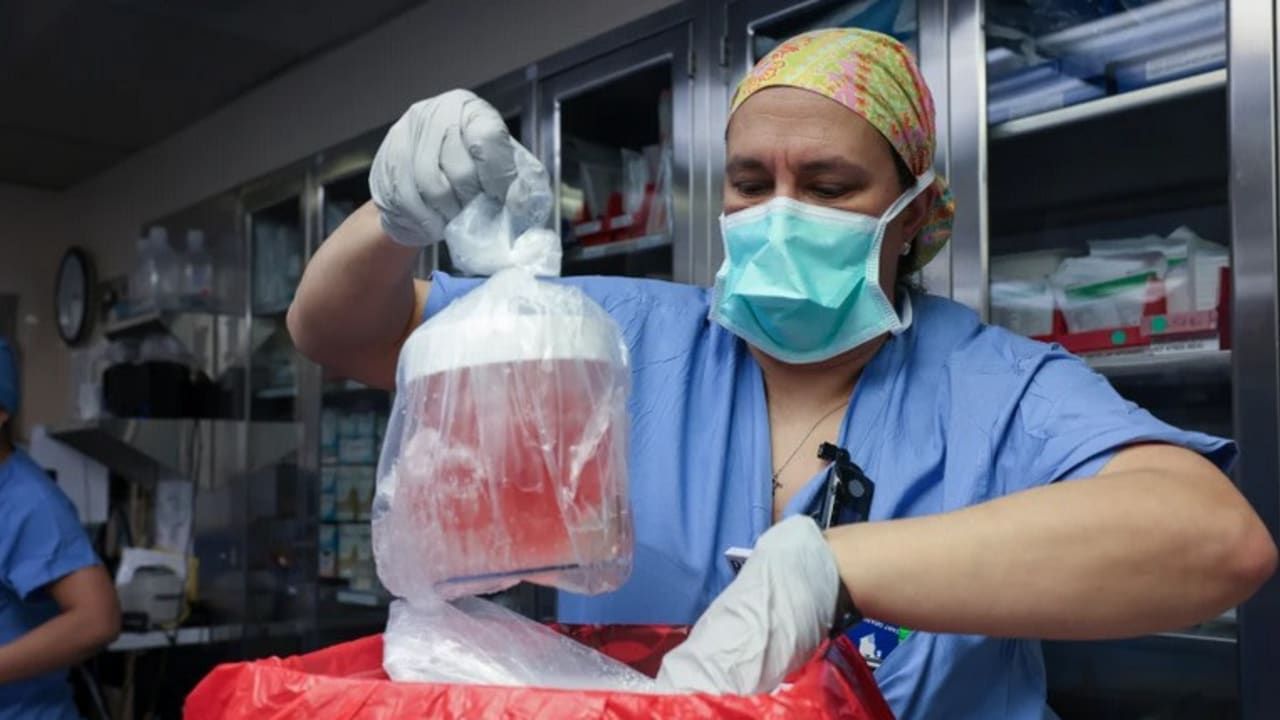
Jews can’t eat pig, it’s forbidden by the laws of kashrut, but can they have a porcine organ transplant?
A recently published, peer-reviewed study called "Jewish Perspectives on Porcine Xenotransplantation: Balancing Religious Ethics and Medical Necessity in Israel,” published in the Journal of Religion and Health, surveyed over 900 Jewish participants on their religious knowledge.
The goal was to assess their understanding of porcine transplants in Judaism to determine whether they knew the answer.
Given the critical shortage of donated organs, pig xenotransplantation offers a promising solution.
The Torah teaches that pigs “are unclean for you. You shall not eat their flesh, and you shall not touch their carcasses; they are unclean for you.” This might seem conclusive that pig organ transplantation is not allowed; however, investigations into religious law have discovered that it is actually permitted in Judaism.
Does Tanach permit porcine transplantation?
Judaism teaches that saving/preserving a life comes above almost every other requirement in the Torah; a doctor can work on Shabbat to save a life, a fast can be broken if someone is seriously ill, and non-kosher food can be eaten if it’s the only way to survive.

Xenotransplantation doesn’t violate the rule against consuming pork; however, the concerns arise from the concept of ritual impurity, caused by contact with a pig, which most rabbis believe doesn’t apply in life or death situations. Therefore, to save a life, a porcine organ transplantation is permitted.
It says in the Talmud that “whoever saves one life, it is as if they have saved an entire world.” Therefore, Rabbis Moshe Feinstein, Mordechai Halperin, and other rabbinic authorities have said porcine transplants are allowed when there is no viable alternative and the patient’s life is at risk.
After an organ is transplanted into a human, it begins to function as part of the recipient's body. Over time, it becomes physiologically integrated and is medically considered part of the recipient.
As noted by many researchers, including D.K. Cooper, it no longer functions as “pig tissue” in isolation; it is maintained only through incorporation into the living human. Similarly, according to Halacha (the Jewish law code), it stops functioning as “pig tissue” and instead is considered to be functionally part of the body.
But do Jews know they can get porcine transplants?
While Halacha appears to permit pig xenotransplants in life-threatening cases, the study found that many Jews are unaware of this ruling, and that this misunderstanding can have life or death consequences.
The survey found that Jewish patients often experience distress when their doctor recommends an organ transplant from a pig due to the prohibition against consuming pork.
The research was carried out in Israel, targeting Jewish Israeli adults with varying religious observance, age, socioeconomic status, and education levels. The questionnaire had three sections: demographic data, knowledge level about whether Judaism allows pig organ transplantation, and opinion from a religious perspective as to whether it is permissible.
The mean age of those surveyed was 51, 50.1% were female, and 49% considered themselves religious.
The survey found that participants were more confident in their personal opinions than in their religious knowledge items. It showed that religious people were more assured in both knowledge and opinion than their secular counterparts.
The study also found that people in relationships were more certain of their opinion on xenotransplants than those who weren’t, but less confident in their religious knowledge.
The study notes that “our findings indicate that the respondents’ perceived knowledge was limited and often inaccurate, yet nevertheless, remained a strong influence on their attitude toward using porcine organ transplants for medical purposes.”
The researchers saw that Jewish patients were willing to refuse life-saving treatments with porcine organs even when that would likely result in death. It highlights the importance of religious consultation in medical contexts, which could empower patients to make informed decisions.
They hope to bridge the knowledge gap among Jews in Israel regarding porcine xenotransplants, trying to fix the misinformation about the permissibility of using pig organs for transplantation.
The researchers concluded that collaboration between doctors and religious authorities could help save lives by ensuring patients understand that, according to Halacha, a pig’s heart may indeed beat for them.