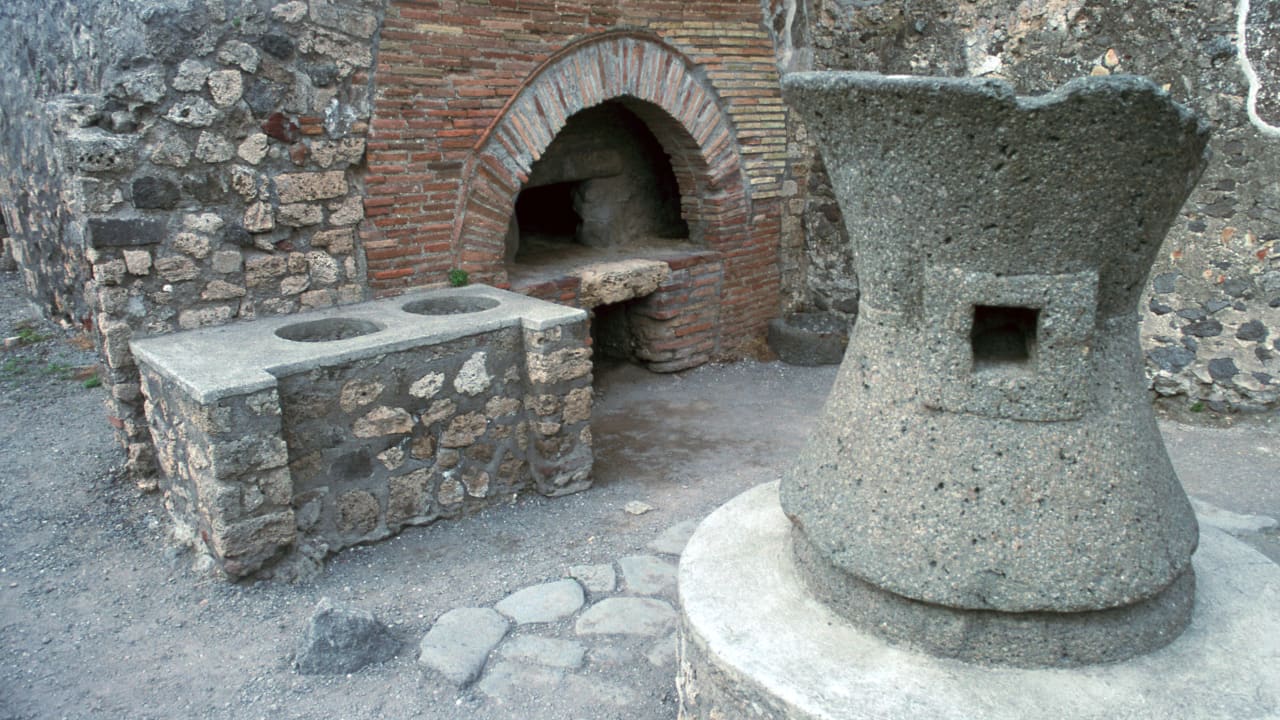
Bread baked according to an ancient Roman recipe was sold for the first time in 2,000 years at Pompeii, during the archaeological park’s first ever “Made in Italy” agricultural fair last week.
After a decade of studying carbonised loaves in labs and eight years of experimental baking, Canadian-British Roman bread archaeologist Farrell Monaco brought hundreds of her recreated panis quadratus loaves to the fair.
"I was interested in Roman food and diet,” Monaco explained to The Telegraph, “and as soon as I saw there was a gap in the research, I decided I was going to try to fill in the bread blank.”
She noted that the recipe for the bread she brought was an approximation based on “on the available research about grains, leavens, milling and extraction methods, some of which were first written down by Pliny the Elder.”
According to archaeologists and historians, there were three popular types of bread in Pompeii: a sacrificial cake used as offerings to the gods, sweet bread rings called Arculata, and the common panis quadratus sectioned bread.
Panis quadratus was simple, made of water, flour, and salt, and carefully divided into eight sections with a reed and bound with rope.
Some 80 carbonised loaves discovered in 1862
In 1862, archaeololgists found 81 loaves of panis quadratus preserved in a sealed oven in one of the 35 found bakeries of Pompeii. According to Monaco, they are still unsure as to whether the loaves were baking at the time of the city’s destruction or stored inside the oven for safekeeping.
Fingerprints were still visible in some of the loaves.
“Did they cut and run as the bread was baking or were they lobbed in there by bakers expecting to come back, maybe to protect them from looting?” Monaco said to The Telegraph. “We may never know, but it is a mystery that obsesses me.”