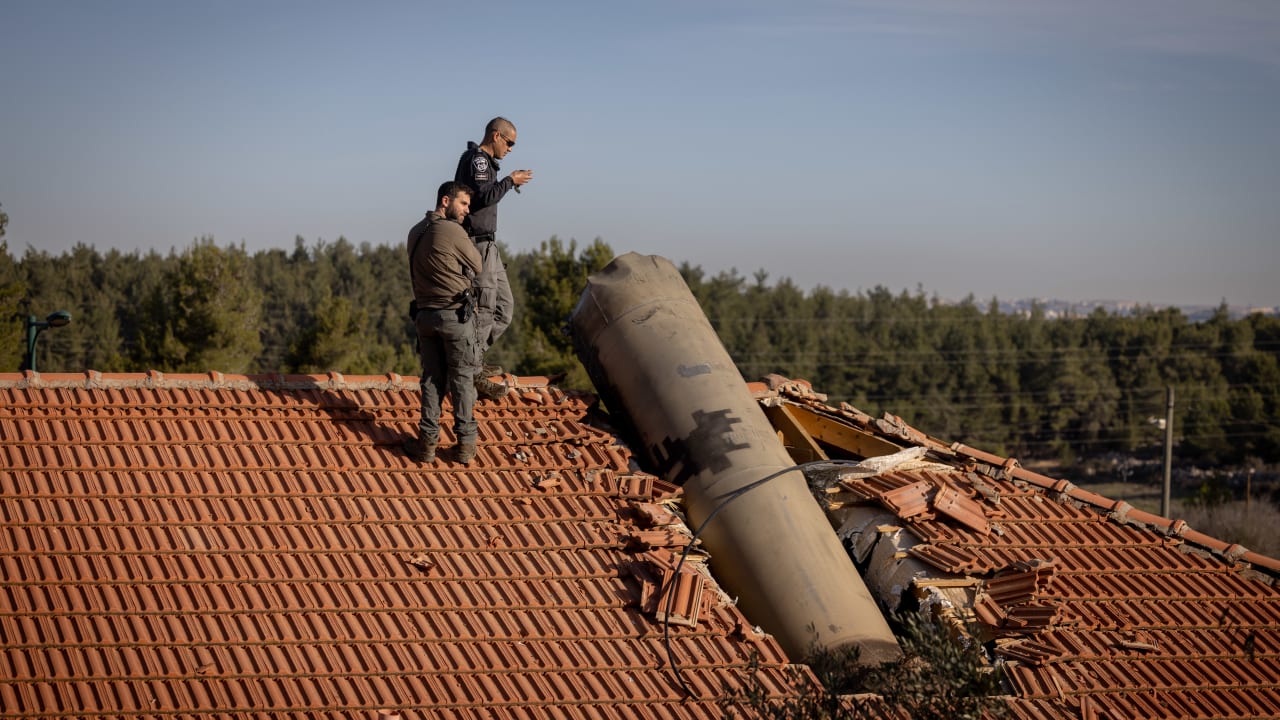
Forty-two years ago, US President Ronald Reagan launched the Strategic Defense Initiative, commonly known as the Star Wars initiative, marking the beginning of a global race to develop long-range ballistic missile interception capabilities. At the time, the United States was confronting the threat posed by intercontinental ballistic missiles from the Soviet Union.
Meanwhile, Israel was just beginning its own journey to counter missile threats from the East. Early on, it shifted its focus toward emerging dangers from Iran, anticipating future challenges well before the 1991 Gulf War, during which Iraq fired Scud missiles into Israeli territory.
In the beginning, the idea seemed almost unimaginable: orchestrating a collision at altitudes of tens or even hundreds of kilometers in space, between two small, supersonic objects traveling at extreme speeds, requiring an extraordinary level of precision.
The Arrow system paved the way in 2000, and was soon followed by American systems like the THAAD and the AEGIS BMD equipped with SM-3 interceptors. In less than two decades, what once seemed like science fiction has become reality, with a growing arsenal of sophisticated systems and technologies. Among them are Israel’s own Iron Dome and David’s Sling systems, and these are just part of a global surge in missile defense technology around the world.
This is what a race born from vision looks like, where the future that once seemed very distant and uncertain. But once you cross the threshold of capability, the race to advance capabilities and increase competition begins.
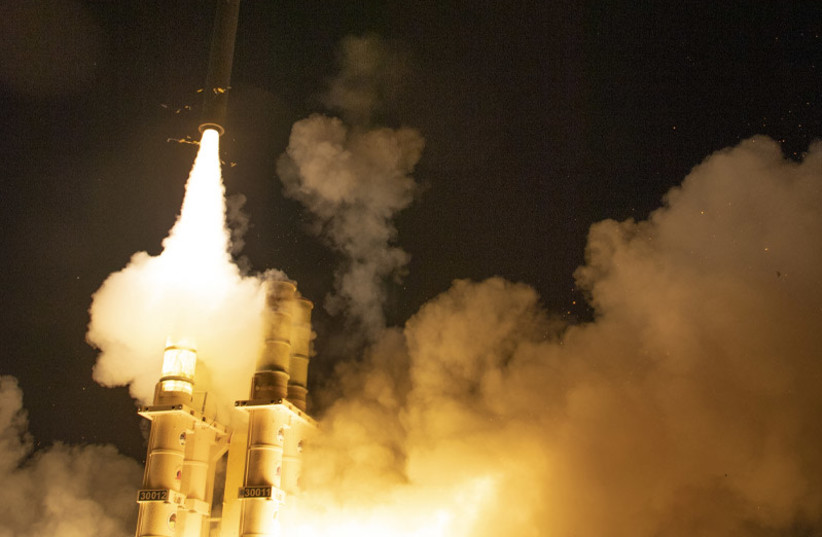
The Challenge of Intercepting Ballistic Missiles
Intercepting long-range ballistic missiles involves several processes, all of which must occur with great precision. A failure in even one of the components will result in a missed interception, and allowing the threat to reach its target.
The interception process always begins with the early detection of the threatening missile. The sooner the system identifies the threat, the faster the three critical processes can begin in parallel, each of which will later be connected to the success of the mission. At the same time, it formulates a defense strategy—selecting the optimal interception point, choosing the appropriate interceptor, and determining the best launch site to ensure a precise response.
First, the system begins to generate a prediction of the ballistic trajectory and gradually refines (within seconds) it to pinpoint the Ground Impact Point (GIP). Secondly, immediately upon detection of the target, the system will begin to formulate plans to intercept the threatening missile by selecting the optimal interception point, choosing the appropriate interceptor, and determining the best launch position to ensure a precision hit.
Finally, based on the initial detection and trajectory analysis, the system estimates the missile’s flight time and projected impact zone, translating that data into a timely warning for the civilian population through sirens and other protective alerts.
Why is detection so complex and complicated?
Since early detection is critical, ideally as close to the missile’s launch as possible, a tightly integrated network of sensors is essential. These sensors must operate on a unified system, sharing common protocols and seamlessly connecting to form a single, coherent picture. This fused image generates a unified target trajectory, built from the contributions of multiple sensors, each capturing a segment of the missile’s path and collectively constructing the full trajectory.
Once continuous detection establishes the missile’s trajectory with maximum accuracy as possible, the interception of a hostile missile in space (at extremely high speeds and altitude) begins. It is an intricate operation involving many components.
At its core is seamless communication between all system elements: radar, launcher, interceptor, and the command-and-control center. This communication must be maintained throughout every phase of interception, from initial preparation and launch, through mid-course navigation, to the final engagement in space at extreme speeds and altitudes.
The interceptor itself consists of tens of thousands of electronic and mechanical components. Each plays a vital role in the interception process, from propulsion systems and thrusters to navigation, guidance systems, and the warhead mechanism (which is not always explosive).
The final stage lies within the command and control center, the heart of the system. Here, all incoming data is processed, sensor inputs are fused, and operational decisions are made. It’s where technical precision meets human judgment, enabling operators to distinguish between different parts of the missile-such as the warhead, engine, or fuel tank-and determine the correct target for interception. A misidentification at this stage can result in the interceptor striking the wrong part of the target.
During its flight, the threatening missile can break into multiple parts—engine, fuel tank, body, and warhead. As it exits and re-enters the atmosphere, the intense forces involved may cause these parts to break down even further. This presents a major challenge for the interceptor and the command team, who must rapidly analyze and distinguish among numerous objects, (sometimes ten or more) when in reality, only one is the actual warhead that must be intercepted.
This is a very big challenge for the system, but it is an even bigger one for the fighters and commanders responsible for the defensive mission.
The learning competition and the arms race
The advancement of defense capabilities has not deterred adversaries from launching missiles, on the contrary, it has motivated them to advance, improve and challenge missile defense systems even more. As a result, the modern battlefield is increasingly saturated with a wider variety of ballistic threats across multiple ranges.
But these are not the main challenges that the world of air defense against ballistic threats is facing and will face in the future.
What directions in defense development are we expected to encounter because of the recent wars, such as the war between Russia and Ukraine and Israel’s wars against Iran and the other organizations in the Middle East? As we have seen in these wars, missiles and air defense systems have become the main component of the modern battlefield.
Some examples include:
- More accurate missiles and not just statistical missiles
- Splitting and cluster missiles: missiles that at a release sub-missiles at a pre-programmed altitude making the interceptor systems instead of having to handle one threatening missile, it must suddenly have to deal with dozens of threatening threats.
- Maneuvering missiles: if a ballistic missile produces a predictable ballistic trajectory, then with a maneuvering missile you will not be able to estimate its final ballistic trajectory. As a result, defense systems may construct interception plans based on incorrect assumptions, issue alerts to the wrong areas, and ultimately fail to neutralize the threat, allowing the missile to reach its intended target.
- Hypersonic missiles: these are much faster missiles, with speeds of Mach 5 and above, and hence also with high maneuverability capabilities that will challenge most existing systems.
- Use of stealth technologies: Just as there are stealth aircraft (like the F-35) that are able to fly without being detected by radar systems, we should expect to encounter ballistic missiles whose warheads will be coated with materials that reduce radar detection.
Summary
The threat posed by ballistic missiles is growing increasingly complex – faster, enhanced stealth capabilities, greater precision and with multiple warheads. Future confrontations will require greater technological innovation for defense systems, all while simultaneously protecting the population against existing threats.
The next time we witness the interception of a missile launched from Yemen by the Houthis or from Iran, we will understand how complex it is. Behind every announcement by the IDF spokesperson about a successful interception reflects this complex process, and above all, the people behind it.
Meanwhile, in a parallel arms race, the competition between the two sides continues- with the enemy continuously seeking to challenge the existing systems while we are always trying to stay one step ahead of the enemy with our sophisticated defense capabilities.
Brig. Gen. (Ret) Zvika Haimovich is a former Israel Air Defense Forces Commander