
As retirement savers rethink their strategies amid inflation and uncertain markets, Morgan Stanley's Chief Investment Officer, Mike Wilson, is challenging one of Wall Street's oldest formulas.
For decades, the traditional 60/40 portfolio - 60% stocks and 40% bonds - has been the cornerstone of retirement planning. The logic was simple: when stocks stumble, bonds typically rise, providing balance. But in today's high-inflation, low-yield world, that relationship has weakened - and according to Wilson, the modern retirement saver must adapt.
A New Approach: The 60/20/20 Portfolio
Wilson now favors what he calls a "60/20/20" strategy:
60% equities
20% fixed income
20% gold
This allocation, he says, offers a more resilient hedge against inflation and a better balance between growth and protection.
"Gold is now the anti-fragile asset to own, rather than Treasuries," Wilson said in a recent Reuters Global Markets Forum discussion. "High-quality equities and gold are the best hedges."
As U.S. equities continue to trade near record highs and long-term Treasury yields climb, Wilson believes that gold has become a core stabilizer in diversified portfolios - especially for investors planning for retirement income over the next 10 to 20 years.
Why Gold Matters More Than Ever for Retirees
For retirement savers, the challenge isn't just growth - it's preservation.Inflation quietly erodes purchasing power, and bond yields no longer offer the same comfort they once did. Gold, by contrast, has historically maintained its value through every economic cycle.
With spot gold prices recently breaking past $4,000 an ounce, the metal continues to prove its role as a safe haven in uncertain times. For retirees relying on fixed income, this stability can mean the difference between sustaining wealth and watching it slowly diminish.
Gold IRA: A Modern Tool for Retirement Protection
One increasingly popular way retirees are integrating gold into their portfolios is through a Gold IRA (Individual Retirement Account). Unlike traditional IRAs, which hold paper assets like stocks and bonds, a Gold IRA allows investors to own physical gold and silver within their retirement account - all with the same tax advantages.
Here's how it works:
Investors can roll over funds from an existing IRA or 401(k) into a self-directed Gold IRA.
The gold is stored securely in an IRS-approved depository.
When the investor reaches retirement age, they can choose to take distributions in cash or physical metal.
This approach helps protect retirement savings from market volatility, inflation, and currency decline, while maintaining the tax benefits retirees are used to.
Don't miss out on the opportunity to invest in Gold & Silver. Check out our featured companies today: (Ad)

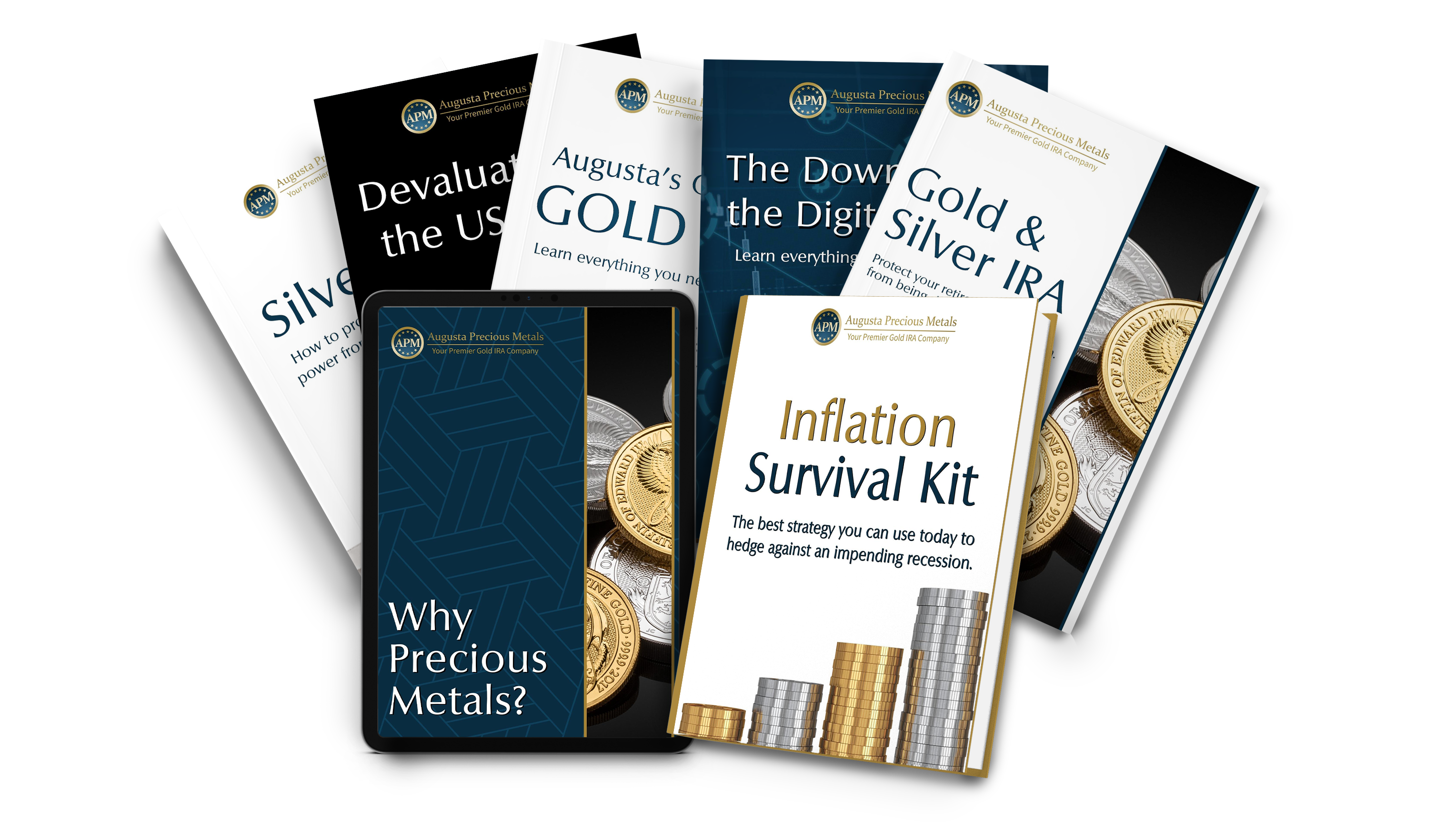
Augusta Precious Metals — Named “Best Overall” by Money Magazine and trusted by high-net-worth investors. Augusta specializes in premium IRA and 401(k) rollovers, offering direct access to educational 1:1 web conferences and IRA approved gold and silver.
- Minimum Investment: $50,000
- Fees: $0 storage up to 10 years
- Rating: ★★★★★ (A+ BBB, AAA BCA)

Goldco — With over $2 billion in precious metals placed for customers, Goldco is a leading name in Gold & Silver IRAs and direct bullion purchases. Known for its strong buyback program and industry awards, Goldco offers both IRA and non-IRA investments.
- Minimum Investment: $25,000
- Buyback Guarantee: Yes
- Rating: ★★★★☆ (A+ BBB, AAA BCA)

American Hartford Gold — Ranked #1 Gold Company on Inc. 5000, endorsed by Bill O’Reilly and Rick Harrison. AHG offers flexible IRA rollovers and direct gold & silver purchases, serving over $2B in precious metals to clients nationwide.
- Minimum Investment: $10,000
- Endorsements: Bill O’Reilly, Rick Harrison
- Rating: ★★★★☆ (A+ BBB)
Rethinking 401(k) and IRA Allocations
For those nearing retirement or already retired, now may be the time to revisit allocations.A 401(k) heavily invested in equities and long-term bonds could be vulnerable in a rising-rate environment. Allocating even a modest 15-20% to precious metals - whether through a Gold IRA or gold-backed ETFs - may significantly improve overall portfolio resilience.
As Wilson put it, "The strength of a dual hedge lies in the contrast: both hedge inflation, but equities are growth-linked, while gold rallies as a safe haven."
The Bottom Line
Retirement planning in 2025 is no longer about chasing returns - it's about defending purchasing power and preserving legacy. Morgan Stanley's 60/20/20 model underscores a simple but powerful truth: gold is no longer just a hedge; it's a core component of a balanced, future-proof retirement strategy.
For those preparing to retire, integrating gold - whether through a Gold IRA rollover or direct purchase - may be one of the smartest moves to ensure stability, independence, and peace of mind in the years ahead.
Featured Partners (Ad)
Content quality approved by JPost. JPost oversees the native, paid, and sponsored content on this website and guarantees quality, relevance, and value for the audience. However, articles attributed to this byline are provided by paying advertisers and the opinions expressed in the content do not necessarily express the opinions of JPost.The sponsor retains the responsibility of this content and has the copyright of the material. For all health concerns, it is best to seek the advice of your doctor or a legal practitioner.