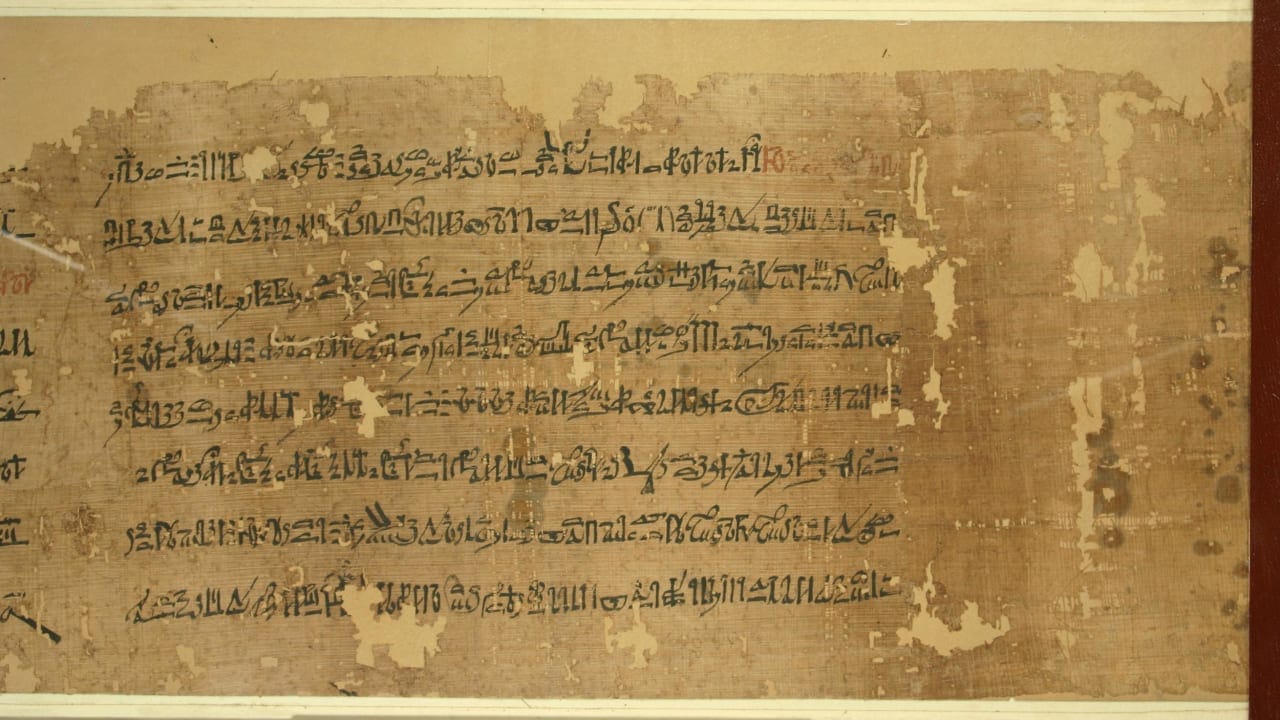
A 3,300-year-old Egyptian papyrus displayed at the British Museum since 1839 has recently been cited by the Associates for Biblical Research (ABR) as evidence proving the existence of biblical giants.
The papyrus, known as Anastasi I, or “The Satirical Letter,” is viewed by most as a somewhat mocking letter written between two army scribes, detailing an ancient Egyptian military excursion into Canaan.
According to a 1911 translation of the letter done by Alan Henderson Gardiner, it references the Shashu people, believed by researchers to be a nomadic Canaanite tribe, who were about four to five Royal Egyptian cubits tall.
“This would mean that the height of those encountered varied from at least six feet eight inches to eight feet six inches,” ABR wrote in a recent analysis of the letter. “This is particularly interesting when you consider that a main point in the letter regards the need for accuracy.”
ABR backed up its claim of the letter being truthful rather than satire, citing a relief depicting two Shashu spies being beaten by ancient Egyptians during the 13th century BC Battle of Kadesh between the Egyptian and Hittite Empires.

“It is one thing for Egyptian carvings to represent their Pharaohs with almost superhuman size. It is quite another for them to depict their enemies as such,” ABR said.
“Again, the Egyptians seem to be encountering forces of unusual height in their exploits in and around Canaan.”
Alleged biblical evidence for the existence of giants
In addition, ABR noted that there are ancient Egyptian pottery shards on display at the Berlin Museum referencing “Iy Aneq,” theorized by some to be the biblical anakim referred to in Numbers 13:33.
ABR also claimed that Goliath (from the story of David in Samuel I), Og, the King of Bashan (Deuteronomy), and a third giant who allegedly appears in Samuel II are further evidence of biblical references to the existence of giants.