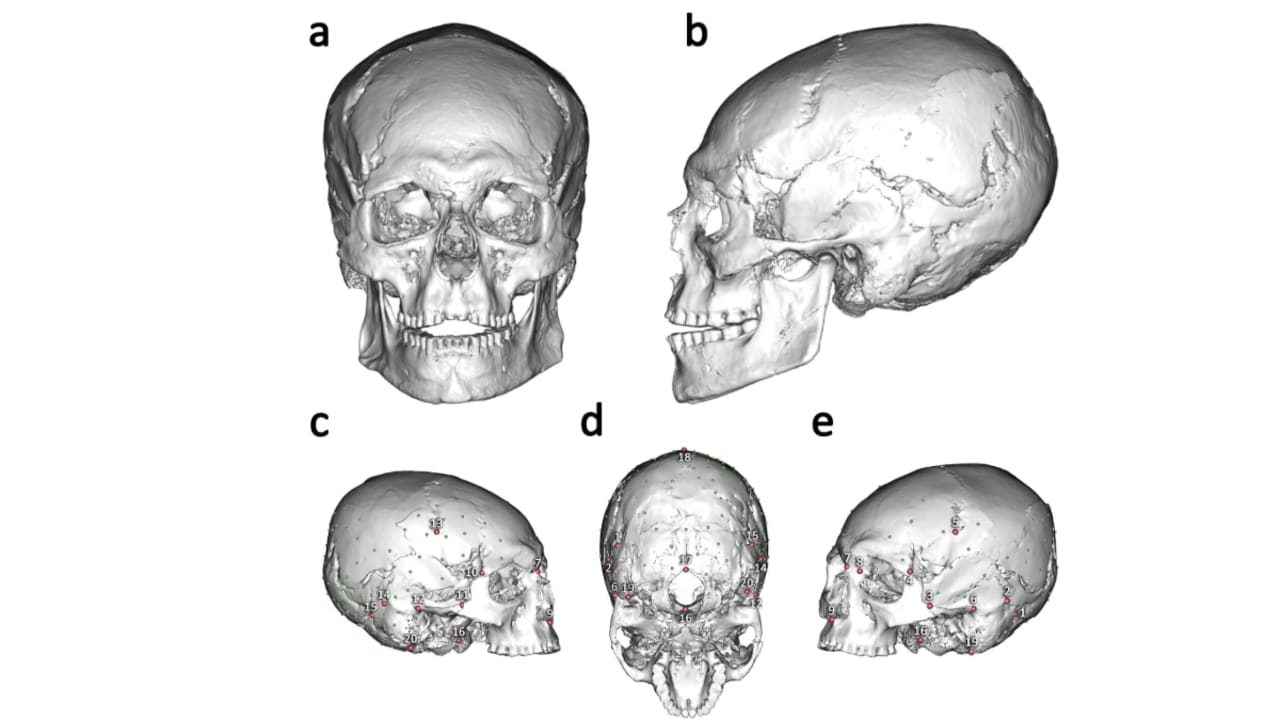
A recent analysis by Irene Dori, a bioarchaeologist at the University of Florence, and her team reveals a prehistoric skull found in Arene Candide Cave, Italy, as the oldest example of artificial cranial modification (ACM) in Europe, with radiocarbon dates ranging from 12,620 to 12,190 years ago. This skull, known as AC12, belonged to an adult male.
Excavations conducted in the 1940s at Arene Candide Cave uncovered a legacy of ancient practices. The site contained dozens of skeletons, many of which had been deliberately rearranged after death, likely as part of religious rituals, with at least 22 individuals buried in the necropolis. Researchers discovered that the cranium of individual AC12 had been intentionally placed atop burial AC15 within a stone niche, with other parts of the skeleton in a nearby secondary cluster.
One of the most fascinating elements of this research is the method of artificial cranial modification, which involved applying controlled pressure to an infant's head over a prolonged period, thereby altering its shape permanently. In the case of the AC12 skull, recent analyses suggest its distinct elongated shape was likely due to tightly wrapping cloth around the head during early childhood.
In the 1980s, the elongated morphology of the AC12 skull was initially attributed to childhood disease or accident. However, new insights have emerged through the application of digital reconstruction and geometric morphometry, allowing researchers to compare its shape with other ACM cases worldwide.
"What we can say is that the skull of AC12 shows that strategies of body transformation and the construction of social identity were already part of the human experience in Europe more than twelve thousand years ago," said Dori. Furthermore, she asserted that this practice "likely arose independently in different regions," as a practice "rooted in shared human tendencies to use the body as a medium of expression."
Despite its historical prevalence across continents, the exact reasoning behind artificial cranial modification remains elusive. Whether as an expression of identity, status, or societal belonging, its meaning likely differed among the cultures that practiced it. Although best known from Central and South America, artificial cranial modification has its roots in the Paleolithic era and is documented across continents, spanning millennia from the end of the Pleistocene to recent times.
In Arene Candide, there is also evidence of other body modifications, such as facial decoration, adding another layer to the understanding of cultural practices in this region. The team's innovative methodology encompassed virtual anthropological methods, producing multiple reconstructions alongside the original restoration of AC12, providing a comprehensive understanding of ACM within this community.
Written with the help of a news-analysis system.