Excavations at Tepe Chalu, a Bronze Age mound in northeastern Iran, uncovered Tomb 12, the richest burial yet found at the site and in the region. The grave held a young woman estimated at no older than 18 and contained thirty-four luxury items that indicated elite status.
After four excavation seasons that revealed thirty-eight graves, archaeologists found Tomb 12 in excellent preservation. The body lay in a crouched position on the right side, hands near the face, oriented southeast. Pottery vessels were arranged behind the back, above the head, and beneath the feet in a three-tiered pattern seen in other graves at Tepe Chalu but on a larger scale here.
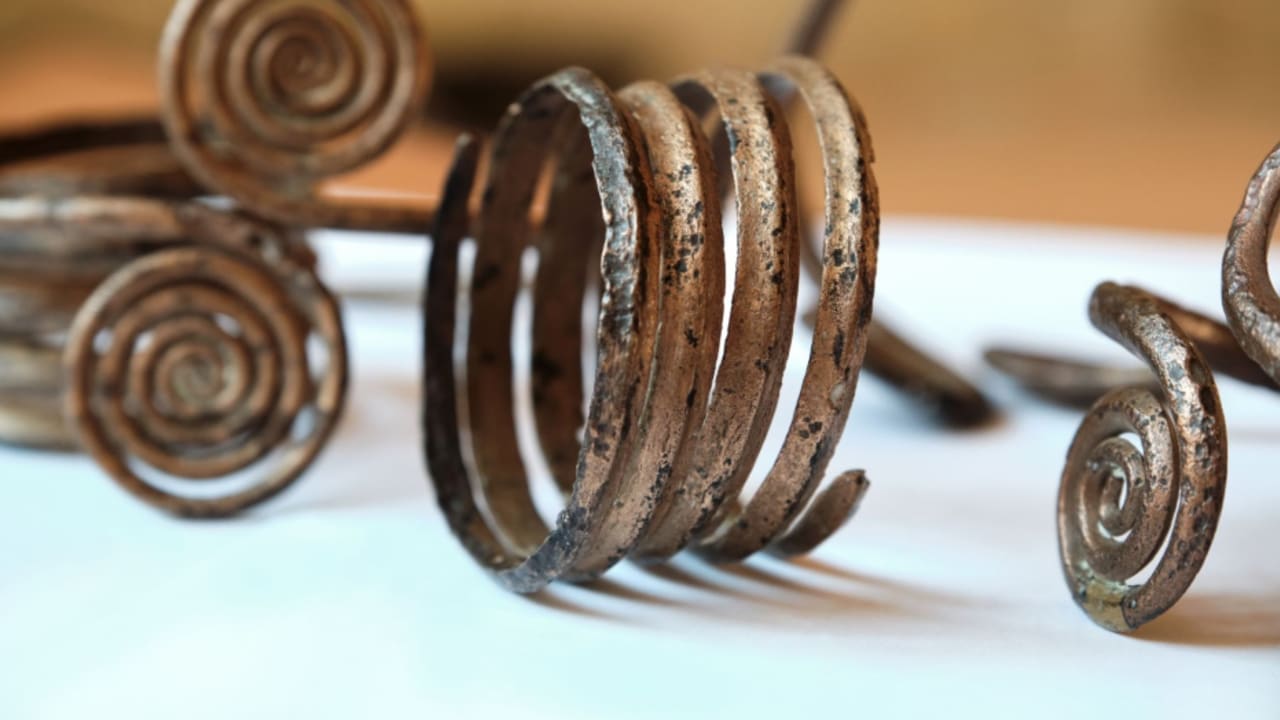
Objects retrieved included gold rings and earrings, ivory inlays, lapis-lazuli beads, three chlorite cosmetic containers—one decorated with snakes and a scorpion—painted ceramics, decorated bronzes, and a seal engraved with symbolic motifs. “Seals in this context symbolize ownership and participation in trade networks,” said Ali Vahdati. The seal suggested that the woman or her family took part in the administrative and commercial life of the Greater Khorasan Civilization, which emerged in the late third millennium BCE and extended into modern Turkmenistan, northern Afghanistan, and northeastern Iran.
A bronze pin shaped as a hand grasping a rosette drew particular scholarly interest. Together with the chlorite vessels, the pin attested to skilled metalwork and stone carving in the early phase of the Khorasan civilization, a culture that rivaled contemporary powers in Mesopotamia and the Indus Valley.
Materials in the grave offered evidence of long-distance trade: gold likely from distant mines, lapis from Afghanistan, chlorite from local quarries, and ceramics bearing stylistic influences from neighboring cultures. Tepe Chalu’s location on the Khorasan Plain would have allowed it to serve as a hub linking Central Asia to Persian Gulf ports.
With thirty-eight graves documented, some interpreted as family tombs, the site has provided data on Bronze Age social hierarchy, craft specialization, and interregional exchange. Yet Tomb 12 stands out for the opulence of its contents and the insight it gives into how power, wealth, and gender intersected at the dawn of the second millennium BCE.
Written with the help of a news-analysis system.