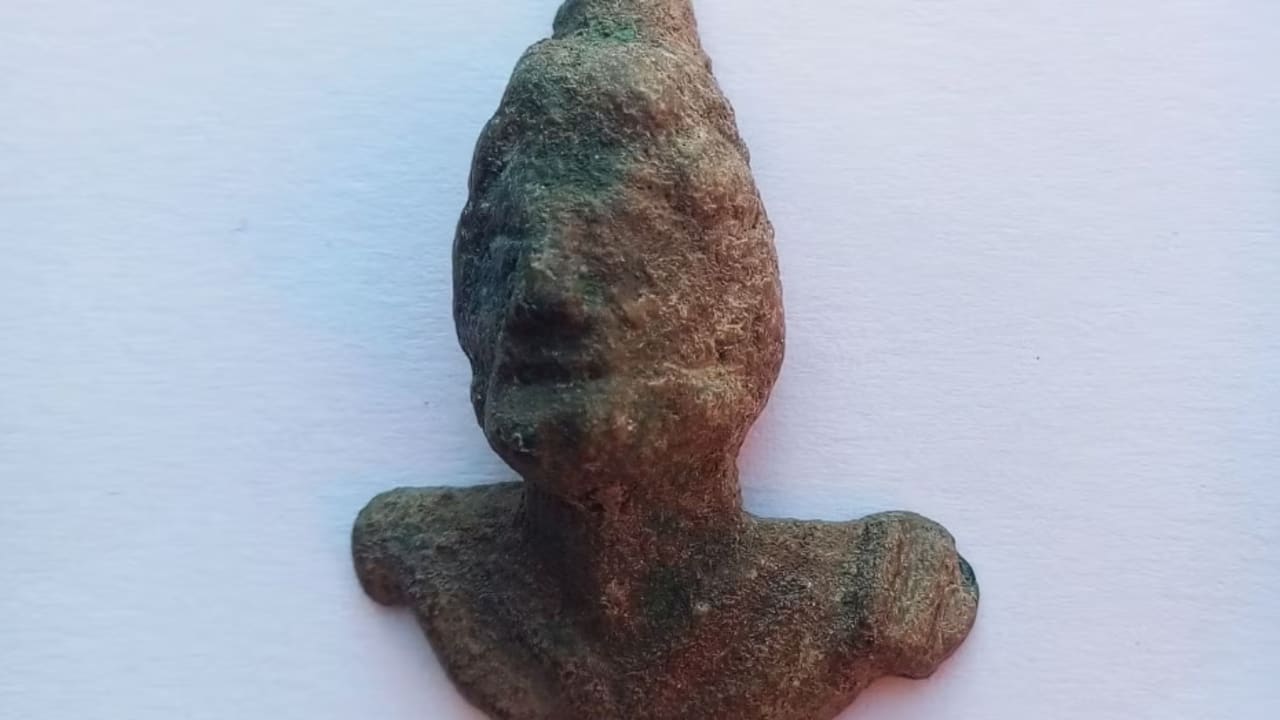
Excavations conducted by the University of Ioannina at the archaeological site of Agios Athanasios, known as "Homer's School," in northern Ithaca revealed artifacts bearing Odysseus's name and a small bronze statue of the hero, suggesting the presence of a sanctuary dedicated to him.
The Greek Ministry of Culture announced the discovery of a rare underground spring cistern dating to the 14th-13th centuries BCE, during the Mycenaean palatial period, which attracted great interest from archaeologists and visitors. According to Popular Science, the cistern's age and architectural features support the site's significance during the Mycenaean era.
Archaeologists from the University of Ioannina identified the location of Odysseus's sanctuary at the site of Homer's School in the northern part of Ithaca. This sanctuary is part of a network of sites that define the major urban center described by Homer in The Odyssey. They believe that the new findings confirm the long-standing theory of a cult worshiping the hero Odysseus that existed on Ithaca.
Among the finds are 34 clay votive offerings, weights for looms, and gold and bronze jewelry, which indicate the ritual significance of the area.
More than 100 coins from ancient cities, minted in different ancient Greek city-states and dated from the 3rd century BCE to the 2nd century CE, were found at the excavation site. These coins indicate a continuous flow of visitors and suggest that the temple of Odysseus was visited by pilgrims from different corners of the ancient world.
Archaeologists discovered inscriptions bearing the name "Odysseus" at the site. One such inscription, "ODYCCEOC," was found on a tile, while another, "ODYCCEI," is a dedicatory inscription possibly created by a visiting pilgrim. These inscriptions provide new evidence about the cult of Odysseus in Ithaca.
A miniature bronze bust of Odysseus was also found, carrying attributes associated with him in Greco-Roman art, indicating the area was a major sanctuary dedicated to him for centuries. The beard and the pilos, a pointed headgear, were typical attributes of Odysseus.
The Agios Athanasios archaeological site, located at the foothills of Exogi village in a green area surrounded by water sources, has been known as "Homer's School" since the early 19th century. Recent finds at the site indicate human activity dating back to the late Neolithic period. Flint tools and pottery shards dating to the late fifth and fourth millennia BCE have been found, indicating Final Neolithic activity.
The site features two mounds connected by hewn staircases in a region centered around a large rock formation. This likely functioned as a hub for supervising surrounding ports and lands while protecting the area's rich water resources. An underground fountain with side walls built from layers of large blocks was also found at the site, along with remains of cultically used water basins known as perirrantheria.
Dating the fountain to the Mycenaean palace period seems highly probable, as researchers previously suggested. The shape, architectural features, and Late Mycenaean cylinder fragments found inside the underground spring tank support this dating.
"This discovery, which came after decades of excavation, strengthens the links between myth and history, underscoring the importance of this area in ancient times," noted Popular Science. Archaeologists have been exploring the historical origins behind Homer's The Odyssey for decades, seeking evidence of the legendary hero's existence.
Odysseus is the hero in Homer's epic poem The Odyssey. While he is considered a mythological character and a participant in the Trojan War, archaeologists still cannot definitively point to his existence. However, additional discoveries illustrate his importance in ancient Greek culture.
Written with the help of a news-analysis system.