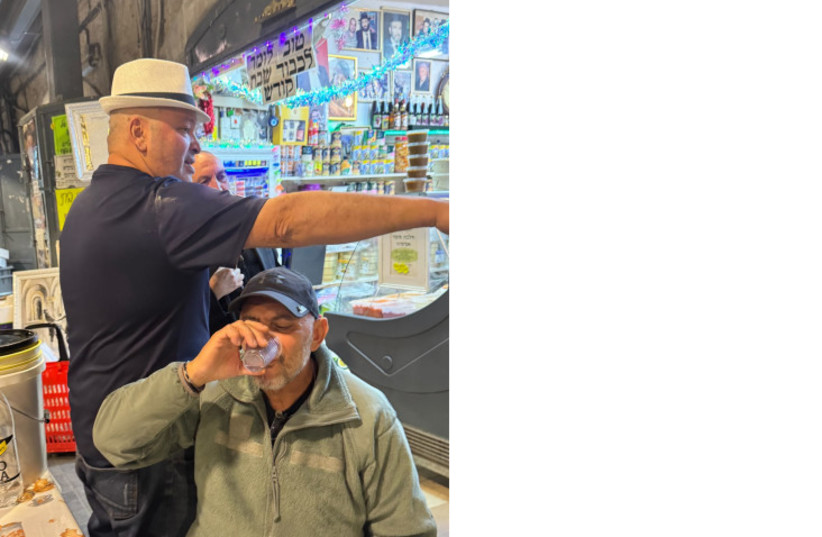
For thirty years, David, 67, from Tel Aviv, has been riding his motorcycle to Jerusalem’s Bukharan Quarter market every week. The destination is the special atmosphere of Thursday night: The gathering, the food, and the singing. He talks about sitting together, the Mawwal, and the waterpipe, and sums up the place in four words: "A market of love."
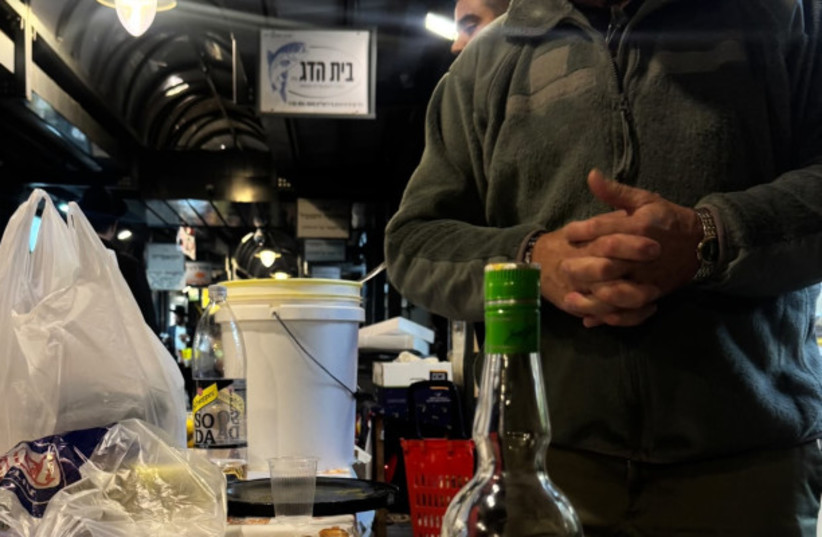
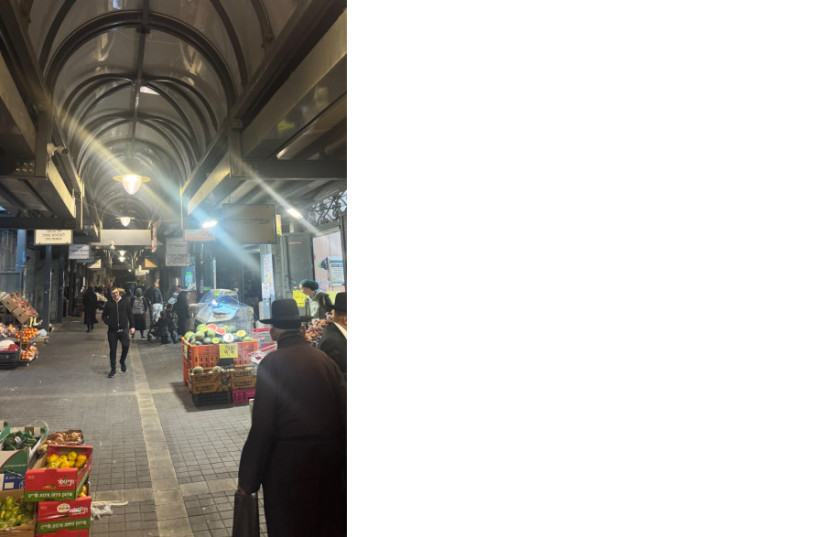
In the covered passageway of the market, fruit and vegetable crates stand on both sides. Customers choose produce and fill bags. Outside the pickle shop, on a table covered with flyers, sit a bottle of arak, small glasses, and a container of pickled vegetables. Shabbat shopping and leisure meet here at the same table.
A fifty-year family tradition
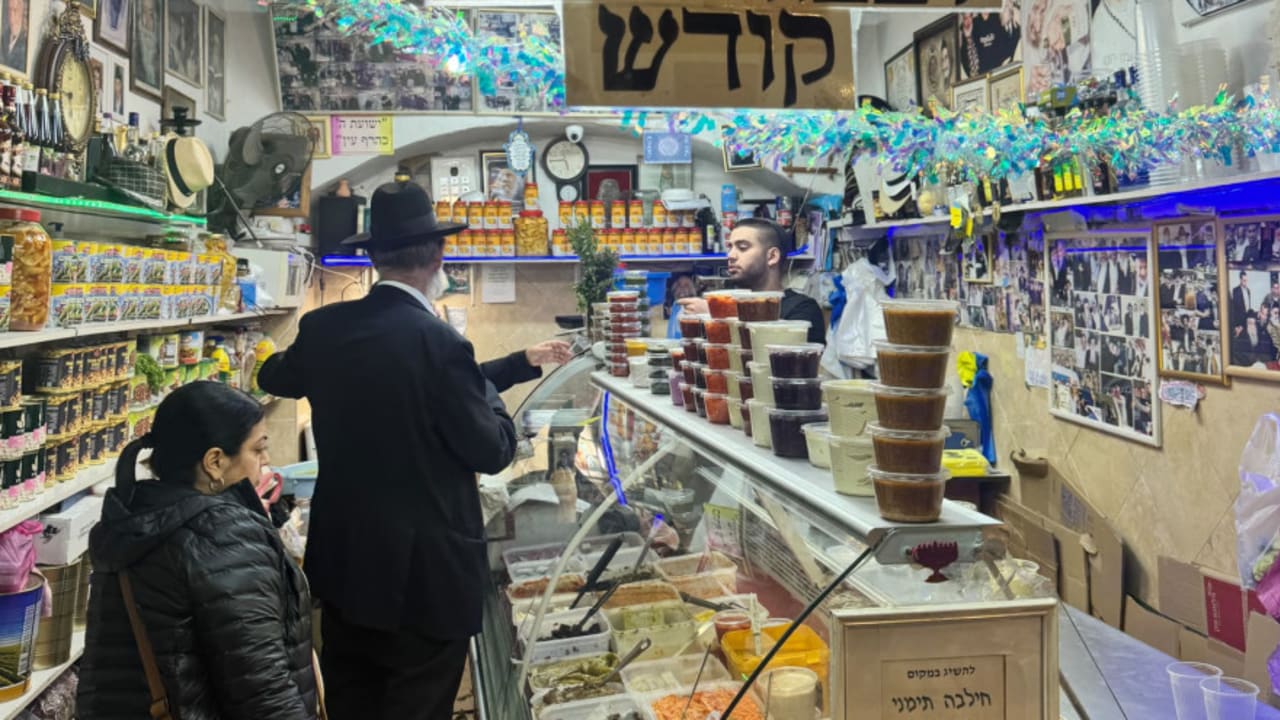
At Eliyahu Pickles, boxes of salads are piled high above the food display case. On the walls and at the entrance to the shop hang photographs of people hugging, smiling, and singing. Among the pictures and colorful decorations appears a sign: "It is good to give thanks to the holy Shabbat." At the entrance, a notice about the "Mawwal of the week" is surrounded by photos from previous gatherings. The family business has been around for fifty years. The family says that the grandfather established it, and today Eliyahu, 55, and his son Lior, 22, work there. The shop is open on Thursdays and Fridays, and closes at 14:00 on Friday. Pickles, hilbe, and salads for Shabbat wait on the counter and in the refrigerators.
We also tasted the pickles and salads. It is damn tasty, to put it plainly. It is easy to understand why David is willing to get on his motorcycle and ride all the way here every week. "This market is everyone's market. Tourists come here, neighborhood residents come here, we do things for everyone here," Eliyahu says. The composition of merchants has also changed over the years. According to Eliyahu, most of the merchants in the market today are no longer Bukharan, and include many Ashkenazim and Persians. The name remains, and traditions and families from various ethnic communities meet among the shops.
A community where everyone knows everyone
David is one of the people who gives a face to the phrase "everyone's market." Alongside neighborhood residents who shop close to home, he makes the trip from Tel Aviv every week. For three decades, the visit to the market has become a regular part of his week. On Thursday night, there is also a place here for those who want to sit, eat, and sing.
At the veteran Mizrahi Spices business, Danny, 45, describes the familiarity that accompanies work in the market. "In this market, time stands still. The 1980s are right here," he says. "Everyone knows everyone, everyone knows everyone's families. Most of our buyers are neighborhood residents." In the shop, spice containers are arranged in long rows on the shelves. Sacks and crates stand next to the counter. The familiarity Danny speaks of is built through repeated visits over years: The buyers are also the neighbors, and each of them has a family the merchants know. When we ask at Mizrahi Spices about recent years and the complexity in the country, the response is optimistic: "Of course we feel it, but it doesn't matter to us, we are strong."
A culinary stop off the beaten path
For those seeking to get to know Jerusalem through its people and food, the Bukharan Quarter market offers a stop worth incorporating into a stroll through the city. One can walk among the fruit and vegetable stalls, enter the spice shop, choose pickles and salads for Shabbat, and also taste goshtgizhda, a particularly tasty meat-filled Bukharan pastry that can be found in the small market. It is also worth leaving time for a conversation by the counter. According to David, Thursday night is the time to come for the gathering, the food, and the singing; at Eliyahu Pickles, one can also stock up on Friday until 14:00.
Despite the feeling that time has stopped, the market itself has undergone a makeover. In March 2021, a renovation costing approximately NIS 8 million was completed there, carried out by the Jerusalem Municipality through the municipal company Eden. The work included renewing the roofing and flooring, cleaning facades, and upgrading infrastructure and lighting. The hope presented at the time was to attract additional visitors while preserving the historical character of the place.
Looking ahead without changing the formula
Even now, there are attempts to expose it to a broader audience. A tour guide seminar planned for November 19 by The Menachem Begin Heritage Center includes a visit and tastings in the market, along with an introduction to the stories behind the shops and merchants. The question is whether exposure to visitors will also bring back repeat customers, and help the veteran businesses continue in the coming years.
And what about the future? The merchants we met sum up their approach simply: "You don't change a winning horse."