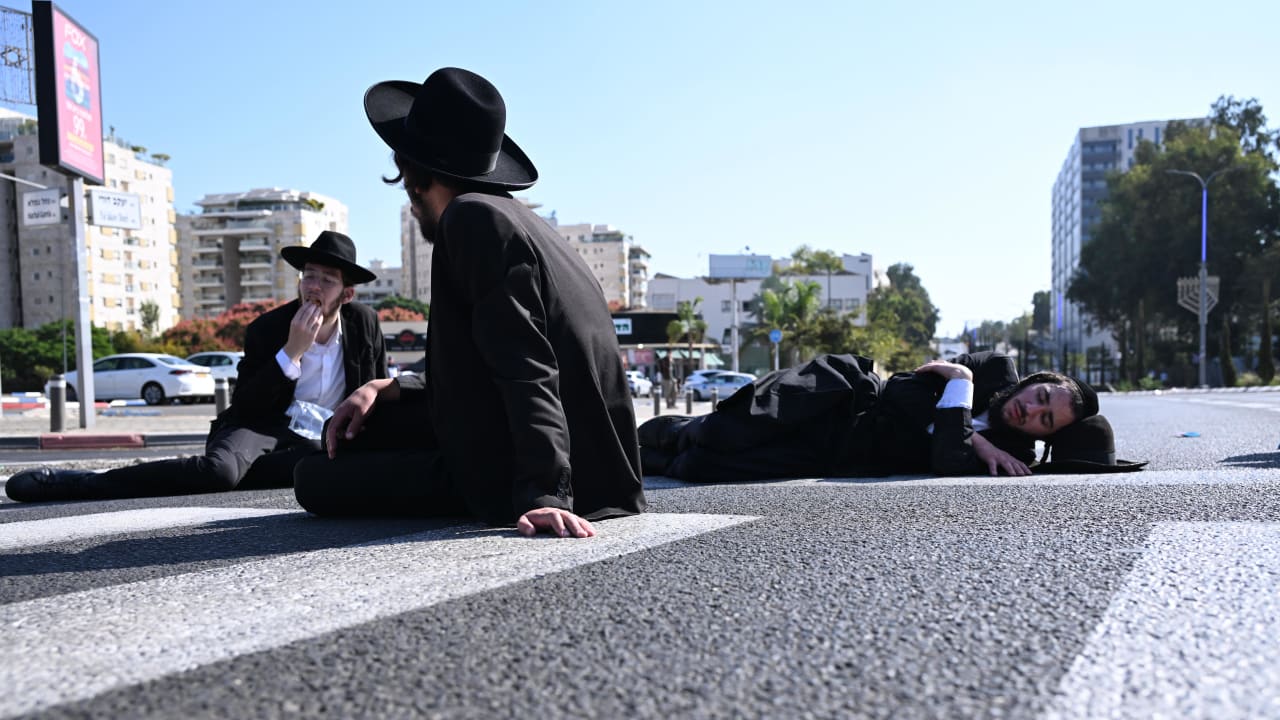
The Yashar political party has four stated principles that any party or Knesset member must accept in order to join a prospective national-emergency government under their leadership. The third of these four key principles states service for all (“Every Israeli citizen must perform some form of service: military, national, or civilian”). This principle is most directly aimed at reversing haredi (ultra-Orthodox) draft exemptions, though it also applies to Arab citizens who are generally exempt from IDF conscription.
But, focusing on reversing haredi draft exemptions, how can or should it be executed?
Between combat and noncombat
There are an increasing number of haredi-focused army units from combat (kravi) to noncombat support roles. And their importance cannot be ignored as combat service members can’t do their job without noncombat support. This ranges from food services to logistics to building drones, and more. Plus, skills picked up in these noncombat units can be invaluable to finding jobs, once military service is ended.
While the focus, and need, is first and foremost on army service, National Service (Sherut Leumi) also qualifies and should be explored. This raises the question: What about increasing the value of Sherut Leumi in place of army service, which now mostly includes religious women, to include also haredi and religious men?
Currently, there are approximately 20,000 haredim or religious volunteers staffing first-aid squads like Magen David Adom (MDA) and United Hatzalah. Additionally, there is also the ZAKA rescue and recovery organization (often associated with haredi and religious volunteers) and Yedidim – Roadside Assistance with about 24,000-39,000 haredim or religious volunteers.

Creating a Sherut Leumi program for haredim
Why not create a Sherut Leumi program structure within these important volunteer organizations?
The government could readily create a viable haredi military exception with an approved Sherut Leumi program. This program would, of course, have to meet existing criteria such as length of service, supervision, structure, etc.
Therefore, a haredi man with religious haredi military exception who completes a registered Sherut Leumi length of service would be recognized as having completed his National Service and could receive approved benefits after service. This could also include the hesder program of combined yeshiva study and military service.
Any rabbinic objection to National Service for one’s country can be quickly squashed as these organizations already have a strong haredi involvement.
This option of expanding Sherut Leumi could be one of the necessary stages to induct haredim into military and non-military National Service that is already acceptable to haredi rabbinic leadership without overwhelming the existing infrastructure. Additionally, it would utilize the already existing volunteering spirit of the haredi community.