A nationwide halt to US flight departures on November 13, a series of cyberattacks against European supermarket refrigeration systems, and renewed Iranian drone activity in Bahrain have raised concerns about the vulnerability of critical infrastructure as tensions between Washington and Tehran intensify.
For more stories from The Media Line go to themedialine.org
The incidents have unfolded within weeks of one another, but their causes and circumstances differ. American authorities have found no evidence that the aviation disruption was a cyberattack, France has formally attributed attacks on its refrigeration systems to an Iranian military cyber unit, and Tehran’s latest claims of strikes against US radar installations in Bahrain remain unconfirmed.
Security specialists warn that the incidents illustrate how technical failures and deliberate attacks can produce similar consequences, potentially disrupting essential services far beyond their immediate locations.
FAA shutdown exposes aging infrastructure
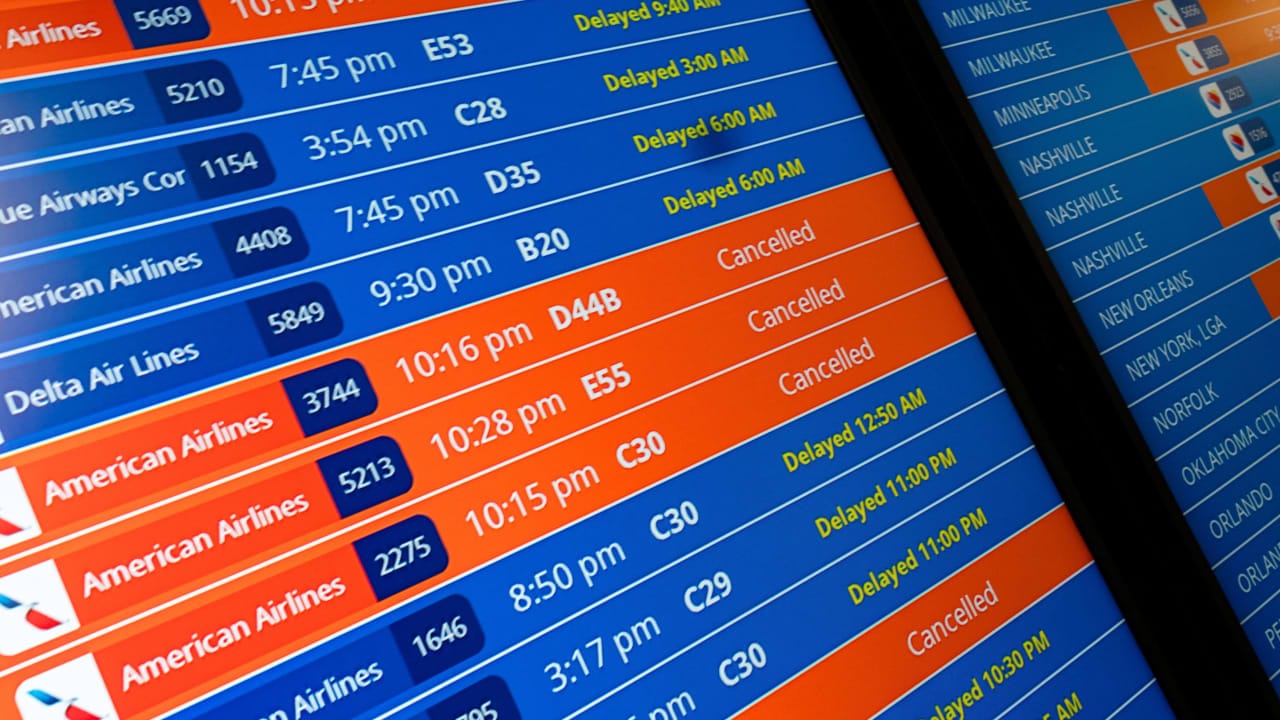
On November 13, the Federal Aviation Administration (FAA) ordered a nationwide ground stop after a telecommunications failure disrupted communications between aircraft and air traffic controllers and interfered with radar information.
The shutdown began at approximately 3:30 p.m. Eastern time and lasted until 8:15 p.m., forcing thousands of flights to remain on the ground. According to the FAA, approximately 12,462 flights were canceled that day, although not all cancellations were directly attributable to the ground stop. Disruptions continued through the weekend.

Transportation Secretary Sean Duffy attributed the incident to problems arising during routine telecommunications maintenance by contractor L3Harris, which was replacing aging copper connections with fiber-optic infrastructure.
Investigators identified problems involving equipment at facilities in El Dorado, Arkansas, and Amarillo, Texas. A router installed during the modernization work apparently generated excessive network traffic, overwhelming older equipment and destabilizing communications and radar feeds.
The FAA reported that 17 of its 22 air route traffic control centers experienced instability. Although the network was restored, investigators are still determining whether faulty equipment, installation errors, or another technical problem caused the malfunction.
Officials have emphasized that the available evidence does not indicate a cyberattack, sabotage, or foreign involvement.
John Keith King, founder of Q Advisory, told The Media Line that the failure illustrates how interconnected infrastructure can allow a localized problem to spread across an entire national system.
“The November 13 FAA disruption illustrates how a failure in shared communications infrastructure can spread across a national system,” King said.
He cautioned against drawing conclusions about deliberate interference without supporting evidence.
“It is therefore premature to describe this as hostile action. The nationwide ground stop was a protective response to degraded communications and radar information.”
The disruption has also revived political disagreements over federal oversight and the modernization of America’s aging air traffic control infrastructure.
Luis Miranda, who served as principal deputy assistant secretary for communications at the Department of Homeland Security during the Biden administration, sharply criticized the Trump administration’s handling of the incident.
Miranda argued that the administration’s credibility problems had encouraged speculation about the shutdown and questioned whether its approach to government restructuring and FAA modernization had weakened federal operations.
“This is another example of why we need Congress to conduct vigorous oversight, and if this was more than an upgrade failure, the American people must be told the truth,” he told The Media Line.
His criticism reflects a broader political dispute over the federal government’s management of essential infrastructure. No evidence has established that the administration’s restructuring policies contributed to the failure.
The Trump administration has defended its response, while Duffy has called for additional investment to replace outdated air traffic control technology.
France attributes destructive cyberattacks to Iran
Unlike the American aviation shutdown, a series of attacks against commercial refrigeration systems in France has been formally attributed to a foreign government.
On November 9, French authorities publicly accused Iran of carrying out cyberattacks that targeted refrigeration controllers at more than 700 retail locations during the night of October 11–12.
France identified Shahid Kaveh, a cyber unit affiliated with the Islamic Revolutionary Guard Corps (IRGC), as responsible for the operation.
According to the French Foreign Ministry, attackers manipulated refrigeration systems, causing fires, equipment damage, and the destruction of food worth tens of millions of euros.
French officials described the operation as an unprecedented act of cyber sabotage on French territory. Paris summoned Iran’s ambassador and announced plans to seek additional European Union sanctions against those responsible.
Iran rejected the accusations, describing them as baseless.
Similar incidents subsequently spread across Europe. Another wave of attacks on November 1–2 affected refrigeration systems in several countries, prompting a coordinated response involving the European Commission, Europol, the European Union Agency for Cybersecurity, and national cybersecurity authorities.
Belgian officials have also raised suspicions of Iranian involvement, although they disagree over whether the evidence supports a formal accusation.
Interior Minister Bernard Quintin said security services had identified indications pointing toward Iranian-linked actors. Foreign Minister Maxime Prévot, however, said the available information was insufficient to officially attribute the attacks to Tehran.
The distinction is important because France’s attribution of the October operation does not establish Iranian responsibility for every subsequent attack.
King warned that geographical proximity, similar methods, and overlapping timelines do not establish a common perpetrator.
“Similar timing and disruption are insufficient: investigators would need corroborated technical evidence and intelligence establishing a common operation,” he said.
The attacks nonetheless demonstrate the potential for relatively accessible industrial control systems to become targets of destructive cyber operations.
In this case, interference with refrigeration equipment resulted in physical damage and substantial economic losses rather than merely the theft of information or the temporary disruption of websites.
German cybersecurity authorities have warned that some industrial refrigeration controllers remain vulnerable, particularly when they can be accessed through the internet.
Different causes, similar vulnerabilities
For security specialists, the central concern is the growing dependence of essential services on interconnected equipment and communications networks.
Telecommunications systems, industrial controllers, electrical infrastructure, and remote maintenance platforms support services ranging from aviation and food storage to water treatment and electricity distribution.
A malfunction affecting a shared communications network can spread across multiple facilities, just as a cyberattack against industrial controllers can disrupt equipment at geographically distant locations.
“The common security concern is dependence on interconnected systems whose failures can have physical consequences,” King said.
“An equipment fault and an attacker may trigger similar operational consequences, even though their causes and the appropriate investigative responses differ.”
The threat is particularly relevant to the confrontation involving Iran.
American cybersecurity agencies have previously warned that Iranian-affiliated actors are targeting internet-connected industrial control systems in critical infrastructure.
In April, the Cybersecurity and Infrastructure Security Agency, the FBI, and other federal agencies issued an advisory concerning Iranian-linked activity targeting programmable logic controllers used in water, energy, and government facilities. The warning was updated in July.
Such activity demonstrates the ability of hostile actors to exploit vulnerabilities in civilian infrastructure. It does not, however, establish responsibility for unrelated technical failures.
King identified localized service disruptions, destructive attacks against data, interference with shared infrastructure providers, and exaggerated claims of responsibility as plausible risks if hostilities intensify.
“My assessment is that localized service interruptions, data destruction, attacks on shared suppliers and exaggerated claims of responsibility are plausible escalation risks,” he said.
Their impact, he added, could extend beyond the immediate damage if operators are forced to suspend essential services or public confidence deteriorates.
Iranian drone claims heighten tensions in Bahrain
While investigators examine the American and European infrastructure incidents, the military confrontation involving Iran has produced fresh developments in the Gulf.
On November 15, Iran’s Revolutionary Guard claimed to have launched six drones against an American air-defense radar installation at the Al-Riffa helicopter base in Bahrain.
Bahraini authorities reported intercepting several Iranian aerial attacks and urged residents to seek shelter. The reported destruction of an American radar facility has not been independently confirmed.
The incident followed a separate Iranian claim on November 13 that its forces had attacked an American early-warning radar system in Bahrain.
US Central Command said American forces intercepted two Iranian drones during the earlier incident, reporting no casualties or damage.
Bahrain hosts the headquarters of the US Navy’s 5th Fleet, making it a strategically important location in the American military presence in the Gulf.
A former Bahraini diplomat, speaking to The Media Line about the conflicting accounts, cautioned against accepting Tehran’s claims without independent verification.
“I cannot confirm whether the reported targeting of the radar facility in Bahrain actually took place or whether the site in question is Bahraini or US operated in the first place, given the conflicting statements from all sides,” he said.
The former diplomat warned that the risk of renewed confrontation remained high, arguing that Iran was attempting to establish deterrence by demonstrating its willingness to respond to attacks.
He also pointed to growing Israeli pressure for renewed American military action against Iran.
On November 13, Axios reported that Mossad Director Roman Gofman had traveled to Washington for talks with CIA Director John Ratcliffe concerning Iran.
The visit came as Prime Minister Benjamin Netanyahu reportedly continued pressing President Donald Trump to resume military operations against Tehran.
According to Axios, President Trump has so far resisted that pressure.
The diplomatic maneuvering coincides with continued American military deployments in the region.
US Naval deployments raise questions about next steps
The USS Theodore Roosevelt carrier strike group is approaching the Middle East after passing through Southeast Asia and entering the Indian Ocean.
According to a November 15 assessment by Israel’s Institute for National Security Studies, two American aircraft carriers are already operating in the US Central Command area of responsibility.
The Theodore Roosevelt could reinforce those forces or replace an existing carrier deployment as part of a rotation.
The distinction remains unresolved, and Washington has announced no new decision to resume major combat operations against Iran.
The former Bahraini diplomat described the situation as one in which military preparations, deterrence efforts, and diplomatic considerations are unfolding simultaneously, without a clear indication of what will happen next.
“Consequently, the region remains caught in a state of neither war nor peace, marked by continued uncertainty and the constant risk of escalation,” he said.
He added that Bahrain appeared to be maintaining security preparations while allowing public activities, tourism-related events, and preparations for December’s National Day celebrations to continue.
This combination of military vigilance and civilian normalcy reflects the uncertainty facing Gulf governments as they prepare for possible escalation without knowing whether another round of fighting will occur.
The importance of evidence and preparedness
The American aviation disruption, European cyberattacks, and Iranian military claims in Bahrain present different security challenges.
The FAA incident demonstrates how aging telecommunications equipment can disrupt a national transportation system without malicious intervention. The European attacks show how cyber operations can cause physical damage and substantial economic losses. In Bahrain, competing accounts of military activity illustrate the difficulty of establishing what has happened during an ongoing confrontation.
Although all three developments have emerged against a backdrop of heightened tensions involving Iran, no public evidence establishes a coordinated operation connecting them.
For governments, the challenge is to strengthen infrastructure against both accidental failures and deliberate attacks while ensuring that claims of hostile activity are supported by evidence.
King argued that maintaining public confidence requires both effective defenses and accurate communication.
“The central lesson is that resilience and careful attribution must advance together,” he said. “Infrastructure operators should prepare for deliberate disruption while investigators establish what actually happened. Public communication should explain what is known, what remains uncertain and how essential services are being protected.”