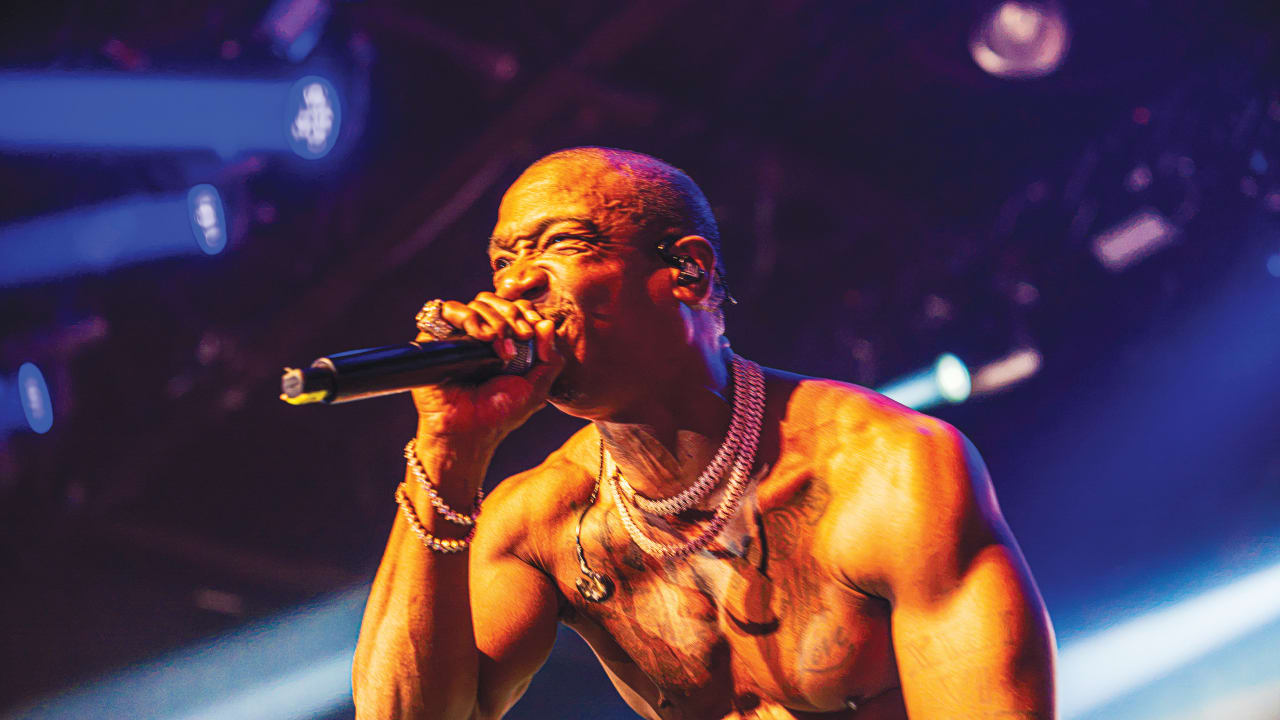
‘Tel Aviv! If you’re with me – say Yeahhhhhhhhh,” Mr. Rule shouts into the microphone wearing a turquoise suit. Singing his heart out from a riser in Hangar 11 – the crowd goes wild. What was even more impressive than the colorful set was what was underneath. At 50 years old, Ja Rule is still looking as fine as he was in his heyday circa 2004.
Now back to the story – there are artists who won’t even utter the name Israel out loud anymore. And then there is Jeffrey Atkins, better known as Ja Rule, who told the crowd he was happy to “be in the Holy Land” and asked, “What the f*** is up, Israel?” People loved that. Ja Rule didn’t treat it as a statement. He treated it as a gig, and that may be exactly why it landed with his audience.
The BDS movement has turned simple concert bookings into a public relations risk, and yet the hip-hop and R&B hitmaker checked into the Carlton Hotel in Tel Aviv and made his Israel debut. You might recognize the deep, low, raspy voice behind hits like “New York” or “Clap Back,” but his love songs are what really identify him.
For a stretch in the early 2000s, it was hard to turn on the radio without hearing him. Signed to Irv Gotti’s Murder Inc. label, he released his debut album, Venni Vetti Vecci, in 1999, and “Holla Holla” put him on the map. His 2001 album Pain Is Love went triple platinum. “Always on Time” with Ashanti and the “I’m Real” remix with Jennifer Lopez both hit No. 1 on the Billboard Hot 100. The formula was simple, and nobody did it better: a gravelly, street-tough bark over a sweet pop hook sung by a woman.
Then came the long, public feud with 50 Cent, which did real damage to his career. Next was a prison sentence in 2011 for gun possession and tax evasion. For a younger generation, he’s the co-founder of the 2017 Fyre Festival, the luxury island party that collapsed into tweeted cheese sandwiches and two documentaries. None of that came up on Thursday night, and it didn’t seem like journalists were asking him about it. Everyone came out for the nostalgic hits.
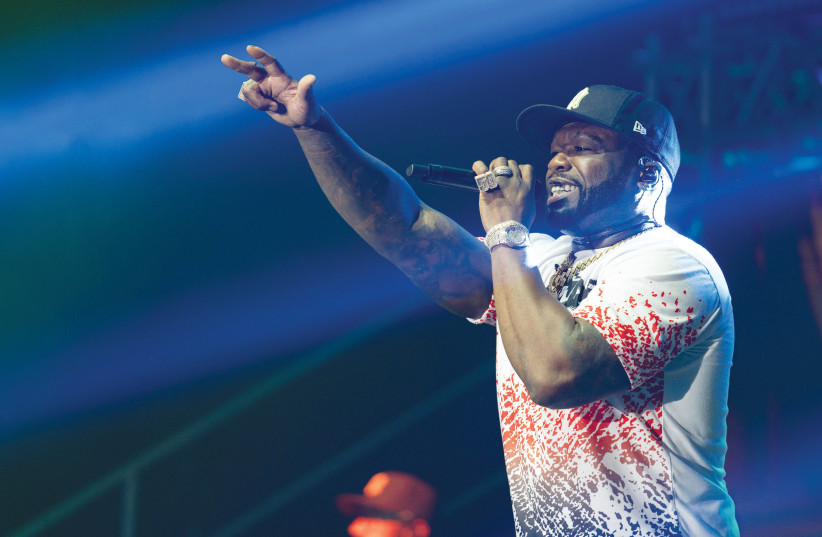
The Magazine was one of only two outlets to sit down with him for a full interview. It happened the night he landed, Wednesday, October 28, about an hour after he arrived and minutes before he finally got to eat dinner. His manager, it should be said, had not been told there would be interviews at all.
The Magazine asked why he chose to perform here and now
Mr. Rule answered with two words: “Why not?”
“They called and wanted me to do an amazing show here. You know, what better time to come out and experience, you know... entertainment with the people of Israel.”
Are you finding that you have a listener base here in Israel that is both Israelis and Americans?
Yeah, unbeknownst to me, yeah, I have a nice base here. You know, people really enjoy my music. So I’m looking forward to seeing what it’s going to feel like tomorrow.
I’m from South Queens. Do you still go back to your old neighborhood in Queens?
Queens in the building!
Sometimes. I haven’t been in a while. I still got a lot of homies out there. One of my friends, my guy Dirt, just came to see me a couple of days ago. We’re doing some business together, some real estate stuff, talking about doing some things in Queens and building back up the spaces where we grew up. A cool little project.
Congratulations – you and your wife, Aisha, just celebrated 25 years of marriage. How much of your artistry was she part of?
It’s actually been 26. I’d better get that right! She’s been with me every step of the way, since I was very young.
But it’s weird, because as an artist I’m kind of a recluse. I like going into my own little world, into these small pockets, and creating. For a long time, my wife thought I was going to be a boxer. I boxed, and I’d come home every night with my hands wrapped. I’d stop by her house after PAL [the Police Athletic League] to see her. So she thought that was the path I might take. But I was always building and creating in my little space. It took people by surprise when I jumped out and started doing this professionally.
What do you want Israelis to take away from tomorrow’s show?
Fun, peace, and love. That’s what entertainment is for: to bring fun and entertainment to the people and let them enjoy it, whatever they’re going through in real life. They get to unleash and unload that when they come see an artist perform, and they bring that energy. That’s what I’m looking forward to.
Have you gotten to enjoy anything here yet?
Not yet. I just got here tonight. The first thing I’m going to try to enjoy is a nice meal and see what the food is like. This is my first time here. I wish I could go out to the beach and feel it and touch it. I may do that tomorrow. My good friend Josh, he says if you’re by the beach, you must go in. I’m going to have an amazing time.
A one-night-only event
THE SHOW was sold as a one-night-only event at the MAX Amphitheater in Rishon Lezion, with seated tickets running from NIS 349 to 700. It ended up at Hangar 11 in the Tel Aviv Port. Fans messaged me afterward to say they had spent around NIS 1,000 and were never properly told about the move. The word in the crowd was that the rain forecast forced it indoors. At midnight, as we walked out, it rained. However, the difference in the venue, aside from the overhead cover, is some 10,000+ people.
Hangar 11 is not really built for a concert, but the production made it one: rows of seats up front, a gate, and standing room at the back that turned into a general-admission dance party by the end. Doors opened at 7 p.m. The show was called for 8:30. To the dismay of many, Ja Rule walked in at 10:30.
In between came a long run of local openers and DJs. Braindead, I-TEK, and Avi Pakado kept the room moving between sets. Israeli rappers Fishy HaGadol, Danny Din, and Kele 6 played throwbacks from the early days of Israeli hip-hop. Most of the room waited them out politely.
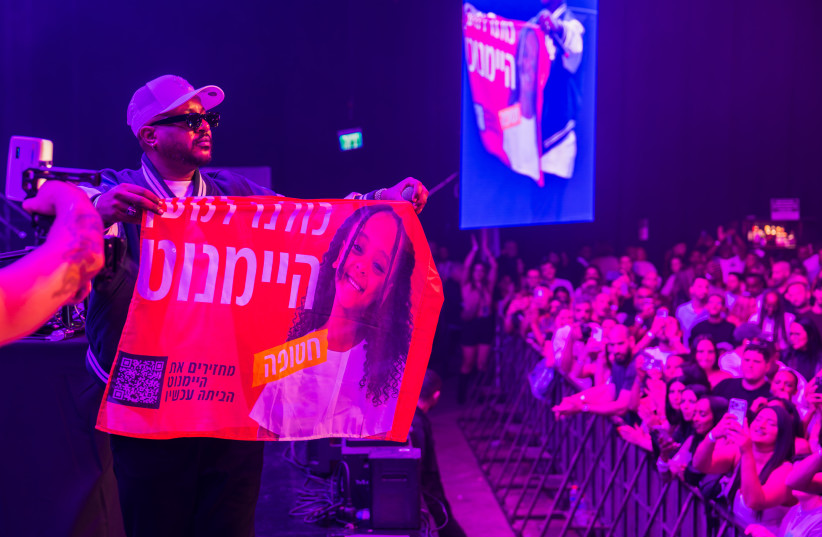
The exception was Bazzi B. The Ethiopian Israeli community came out in force on Thursday, and when Bazzi took the stage, that part of the room lit up. Hands went up. People sang along. He also held up a sign calling for the return of Haymanot Kasau, an Ethiopian Israeli girl missing since February 2024, and the hangar answered with a collective Tehillim prayer, concluding with “Amen.”
Rachel, 33, a longtime Ja Rule fan, said the night was built with her community in mind, and she said the only opener that she paid mind to was Bazzi B.
“The hip-hop culture in Israel is very much Black people, Ethiopian people,” she said. “The situation in Israel is very difficult, and I love the fact that he [Ja Rule] came here.”
Rachel says her message to other artists curious about performing in Israel is not to be shy and/or afraid to fly over.
The man of the hour
Finally, after much anticipation, Ja finally appeared.
He smiled the whole time. He did outfit changes. He came into the middle of the crowd to greet people while he rapped. At one point, he peeled off a blue suit and performed shirtless.
The energy was bombastic from the first beat. He ran through “Clap Back,” “Can I Get A…,” “Livin’ It Up,” “Put It on Me,” “Mesmerize,” and “I’m Real,” with hundreds of people spelling R-U-L-E back at him. There was loads of audience interaction, and it seemed that Mr. Rule was pleasantly surprised by the Tel Aviv energy.
After a short hour, it was over. It flew by. He left the stage so abruptly that some thought there was an intermission.
“The show was perfect, but it was a little bit short,” said one fan, 41. “I wish it was longer – about an hour more.”
Marina, 21, who discovered Ja Rule through movies, said he “finished the performance and never said goodbye. I didn’t believe that it was over!”
Not everyone minded. Another fan said Ja Rule “did what he came to do,” and that was enough. “He’s 50.”
“He didn’t care what people think about him,” one fan said. “Many other artists didn’t come to Israel because of the situation. And he came.”
A 24-year-old fan put it simply: “I wish more rappers would come to Israel.” ■