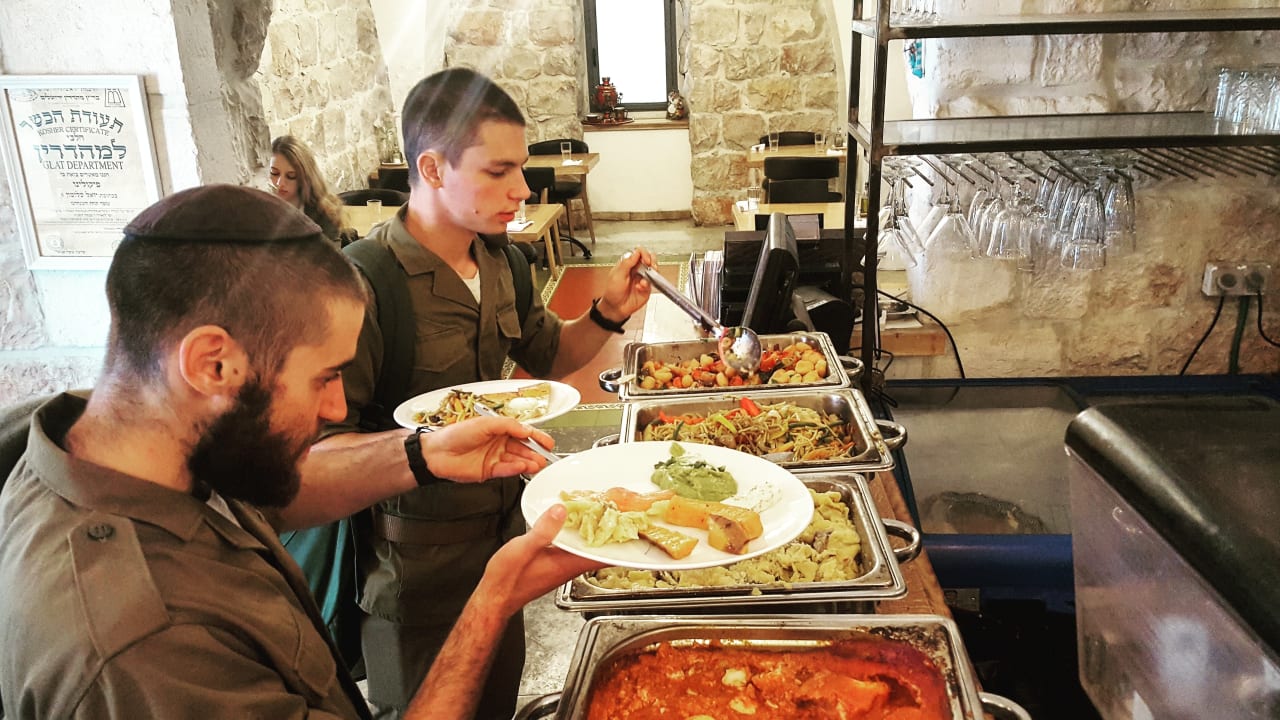
For diners at Piccolino, the Italian-style dairy restaurant in Kikar Hamusica, the news the popular eatery is closing at the end of the month is sad.
Founded by the late Nava Bibi after she made a tremendous success of managing the Ticho House restaurant, it was one of the first of several dining options in Kikar Hamusica. After she died in 2019, it was run by her daughters Anat Yazdi and Orit Dahan. Known for its friendly and efficient service, extensive menu, reasonable prices, and free Friday brunch for lone soldiers, Piccolino was the kind of place its clientele thought would last forever.
But nothing lasts forever, and after 35 years at Ticho House and Piccolino, the time has come to call it quits.
Other legendary Jerusalem restaurants such as Shemesh, A La Gondola, and more recently Eucalyptus have ceased to exist, and Jerusalem now has several patisseries opened by immigrants from France.
There was nothing dramatic about the decision to close Piccolino. Kikar Hamusica in Nahalat Shiva is largely unaffected by all the city construction projects, so people kept coming to eat and to celebrate birthdays and anniversaries.

They were also appreciative of the fact that although some of the staff had disabilities, this did not deter Nava’s daughters from employing them. They inherited their mother’s legacy of helping the needy with a job or a free meal and more.
Everyone, proprietors and staff alike, loved what they were doing at Piccolino. They loved meeting the people who ate there, and enjoyed listening to their stories. They lived through all the good times and bad that are part and parcel of any city, but perhaps more so of Jerusalem. They treated everyone equally, regardless of social or economic status.
There are still a few days left to have at least one more meal at Piccolino and to join the owners in a farewell toast. Don’t miss out.
Eli Sharabi is committed to telling the story of October 7
■ OF ALL the returned hostages rebuilding their lives, perhaps one of the best-known is Eli Sharabi. He is an articulate public speaker in English, not just Hebrew, and has spoken to audiences in different countries. He is committed to telling the story of October 7, ensuring it does not fade from public memory.
At the same time, he wants to do something meaningful for others. He has reached an agreement with Shalva, the national organization adding quality to the lives of children born with physical and/or mental disabilities.
Together, they are building the Shalva Sharabi Family Center in Ashkelon, which will operate in accordance with the Shalva principle that every life has value, every member of the family should be treated with dignity, and that inclusiveness is a natural right.Shalva president and co-founder Kalman Samuels is excited at the prospect of working together with Sharabi.
■ IN THE “Unetaneh Tokef” prayer recited during the High Holy Days, there is a listing of all the ways people might die after Judgement Day. There is also a reference to a still soft voice that makes the angels tremble. Whether this inspired the Voice of Silence series by Rabbi Dave Mason remains a mystery.
Suffice to say, the books are all based on questions that Mason asks himself, and which other Americans and people from English-speaking countries ask themselves in their quest to get closer to the Torah and to communicate with more people who are on a similar spiritual journey.
The launch of his third book in the biblical fiction series, The Age of Prophecy, took place last week in the spacious Rehavia apartment he shares with his family. Low couches lined the walls, lots of colorful scatter cushions were on the floor, and refreshments were served on the large balcony.
The event did not follow the custom of someone saying something about the author, then the author speaking about the book, and possibly reading an excerpt. Although Mason did speak, as did his wife before him, only people familiar with his previous books had an inkling of what his latest volume is about.
The launch was conducted as a competition between three people who each had to tell a true story about something spiritually uplifting that happened in their lives, with the winner to be written into Mason’s next book.
More than 90% of the people who crowded into the apartment were North Americans, collectively representing three generations, perhaps four. Some looked like kosher hippies. There was a certain Woodstock aura.
The three contestants were spiritual teacher, psychotherapist, and writer Chaya Lester; reality-show personality, marriage broker, and dating counselor Aleeza Ben Shalom; and Ari Abramowitz, author of The Land of Israel and founder of The Land of Israel Movement. All three were excellent speakers and natural comedians who raised a lot of laughs, even though their respective subjects were quite serious. In the final analysis, there was no outright winner, because all three received sustained applause.
Jerusalemites are fed up with the inconveniences of living near the PM's residence
■ REHAVIA-TALBIYEH seam residents are fed up with the inconveniences they have been subjected to for over a year.
Almost every day, they receive a WhatsApp message from the Shin Bet (Israel Security Agency) advising that vehicles cannot pass through Balfour Road, which is blocked by heavy-duty equipment for renovations to the Prime Minister’s Residence. Large sections of Keren Hayesod Street are closed to pedestrians, and side streets have been partially dug up. Bus routes are changed without warning, and despite developers having difficultry selling apartments, new residential and commercial projects are underway.
Resident Dr. Colin Leci objects to a proposed luxury hotel project on the corner of Ahad Ha’am and Keren Hayesod streets next door to the former President Hotel, currently a social space. Another hotel, on the other side, is in the final stages of completion. Leci has written his objections to City Hall. He is not the only one who has done so. As yet, all concerned are still waiting for a response.
greerfc@gmail.com