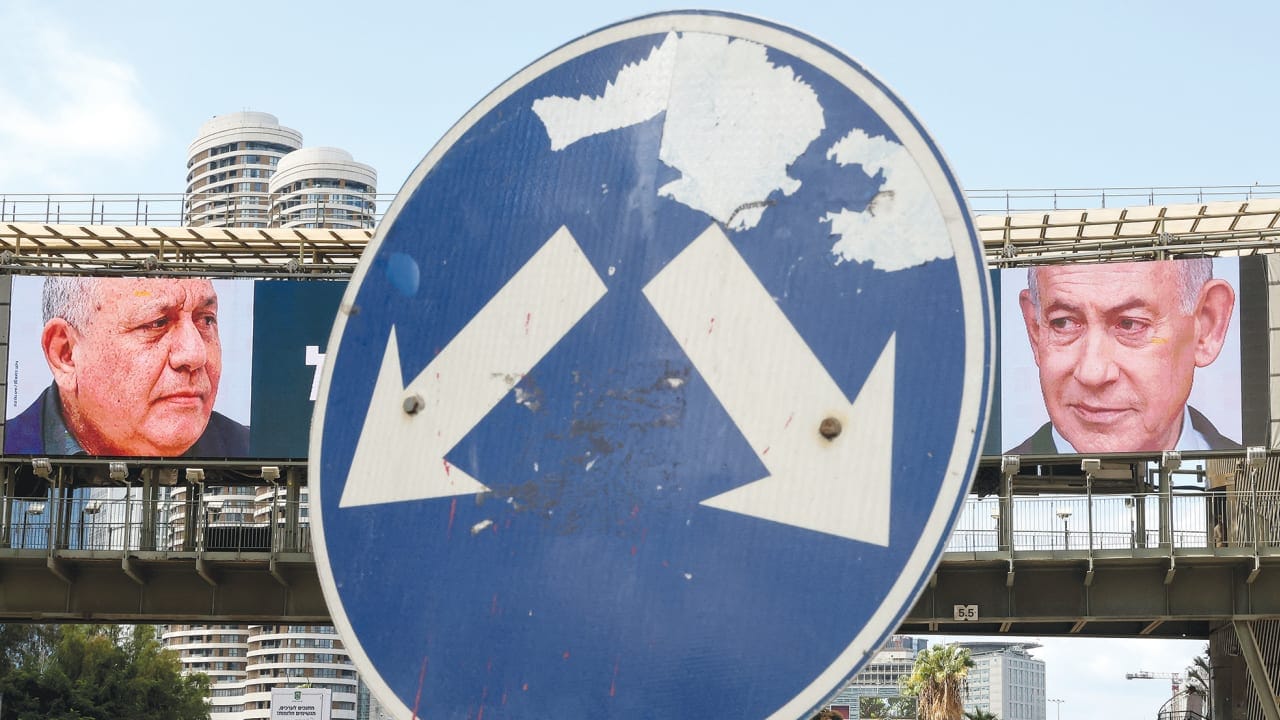
Night after night, or at least on the nights he anchors Channel 12’s nightly news, Danny Kushmaro introduces the election segment by calling them the most fateful elections in Israel’s history.
And he is not alone. “Israel’s most important elections” or “Israel’s most fateful elections” has become a refrain of this campaign.
It brings to mind a verse from Ecclesiastes (7:10): “Don’t say, ‘How was it that the former days were better than these?’ You would be asking an unwise question.”
Kohelet cautions against romanticizing the good old days. Here’s a related lesson for Tuesday’s election: don’t assume that the current one is more fateful or important than all those that came before. That would be an unwise assumption.
Besides, we seem to say that about almost every election.
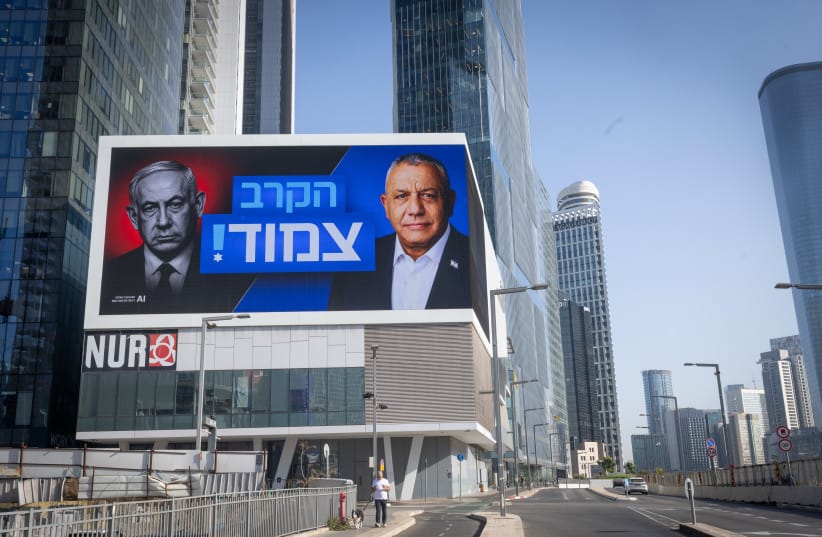
What about the December 1973 election, two months after the Yom Kippur War? That wasn’t critical? The 1977 election, which forever changed this country’s political landscape and brought Menachem Begin to power, wasn’t fateful? How about the 1996 election, just months after Yitzhak Rabin’s assassination? Or Ariel Sharon’s defeat of Ehud Barak in 2001, as the peace process with the Palestinians unraveled and the Second Intifada gathered force?
Every election feels like the most fateful and important one. Ever.
But perspective is needed.
How 'fateful' elections turns political battles into existential wars
And why does that matter? Because calling this the most important and fateful election ever turns the political competition, the battle between the pro-Netanyahu and anti-Netanyahu blocs, into nothing less than an existential matter. Defeat becomes harder to regard as a setback that can be corrected next time. Instead, it begins to sound like something the country cannot survive.
And that can make accepting the outcome harder.
Therein lies the problem.
Since Naftali Bennett formed his government in 2021, Israel has struggled with more than the question of who should govern. It has struggled with whether the losing side will give the other side a chance to do so.
Before Bennett’s government was even sworn in, Prime Minister Benjamin Netanyahu branded its formation “the greatest election fraud.” He meant broken campaign promises, not stolen ballots. But the message cast a government formed legitimately through the parliamentary process as fraudulent and, therefore, illegitimate.
From the minute Bennett’s government took office, the opposition worked tirelessly to bring it down. The main arena was the Knesset, where the coalition’s slim majority made every vote consequential.
As a result, the opposition sometimes voted against legislation it supported, believing it would weaken the government. In recordings published in May 2022, Likud MK Miri Regev defended voting against measures benefiting soldiers and vulnerable groups because the overriding objective was to topple the coalition.
The government spent much of its short life fighting for survival.
Then Netanyahu won the 2022 election and formed his hard-right government. Suddenly, the shoe was on the other foot.
Yair Lapid conceded the election and arranged an orderly handover. But as opposition to the judicial overhaul brought masses into the streets, the language of illegitimacy crept in again.
For instance, at a massive demonstration in Tel Aviv in April 2023, former Shin Bet (Israel Security Agency) director Yuval Diskin said that while the government had been elected legally, it was morally illegitimate because of its “appalling composition and reprehensible actions.”
By August, the Kaplan protest leadership was also calling the government illegitimate, amid questions about whether Netanyahu would obey the High Court. Once again, the distinction between fighting a government’s policies and denying its legitimacy was becoming blurred.
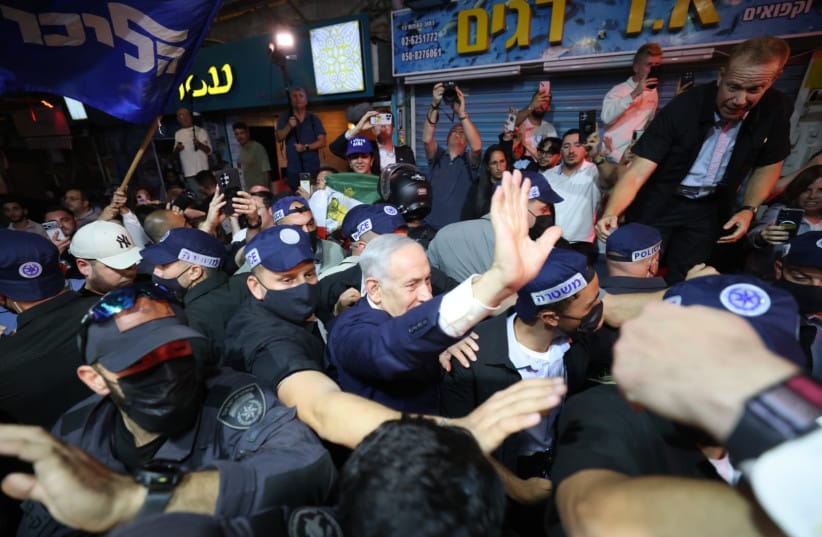
Will Israel's next government have room to govern?
That leaves a question hanging over Tuesday’s vote: will whichever government emerges be given room to govern, both in the Knesset and in the streets?
Calling this election “the most fateful ever” hardly prepares the ground for that.
If voters are told that the future of the country, and indeed the Jewish people, hangs in the balance, accepting defeat becomes that much harder.
Are these elections consequential? Of course. So were many of those that came before. But at this critical juncture, the country also needs to accept and live with the results. Israel desperately needs a government given the space to govern.
Accepting the outcome does not mean supporting the next government, abandoning opposition, or refraining from protest. Nor does winning an election give a government a blank check.
But opposing a government’s policies is different from treating its very existence as illegitimate. There is a difference between working to replace a government and, from the outset, seeking to make governing impossible.
That distinction must hold for whichever side wins.
Magnifying the stakes may bring voters to the polls. But it may also do something this country can ill afford: make it harder afterward for the losing side to accept the results and let the winners govern.
That is one takeaway from this campaign. Here are three more.
Election's fiercest battles taking place within blocs
Despite the characterization of these elections as the most fateful ever, the campaign has been relatively subdued: no televised debates between the leading candidates, no massive outdoor rallies. Much of the action has consisted of social media clips, interviews, and leaks to the press.
And some of the fiercest fighting has taken place inside the blocs: Netanyahu vs Ofer Winter, Gadi Eisenkot vs Avigdor Liberman.
In the anti-Netanyahu bloc, three candidates who regard themselves as worthy of the premiership have periodically sniped at one another: Eisenkot, Bennett, and Liberman. They share an interest in replacing Netanyahu, but each wants to be the one to do it.
The sharper fighting, however, has been on the Right, where Netanyahu and Religious Zionist Party head Bezalel Smotrich have spent considerable energy trying to persuade Winter and his People of Israel party to withdraw.
The stated concern is the electoral threshold. If Winter fails to cross the 3.25% bar, votes coming predominantly from the Right will not translate into seats.
The cautionary tale is April 2019, when Bennett and Ayelet Shaked’s New Right narrowly missed the threshold. Had it crossed, Netanyahu could have formed a coalition, and the country would have been spared the dizzying spiral of repeat elections.
But Winter also presents Netanyahu with an uncomfortable challenge from within his own political camp.
The anti-Netanyahu parties say this government failed: failed to prevent October 7 and failed to achieve its declared objectives afterward, with Hamas, Hezbollah, and the Iranian regime still standing. Netanyahu can dismiss those charges as the familiar carping of his opponents.
That is harder when Winter delivers a similar message from the Right.
Winter’s emphasis on new faces – his list includes no one who has previously served in the Knesset – reflects his contention that the political leadership associated with October 7 needs to be replaced. His indictment extends across the Knesset, but it also challenges Netanyahu’s claim to be the leader best equipped to keep the country safe.
The competition is therefore about more than whether Winter will waste right-wing votes. It is also about whether he will persuade right-wing voters that their own leadership has failed.
The rival across the political divide challenges your policies. The rival on your own side challenges your claim to speak for your own camp.
Polls are shaping Israel’s election, not just measuring it
Polls are supposed to measure public opinion. Good polls reflect what the public thinks.
In this campaign, however, polls don’t merely reflect opinion. They help shape it. And Israel’s electoral threshold gives them particular power to do so.
Israelis famously don’t want to be freiers – suckers. They don’t want to vote for a party that falls below the 3.25% threshold and wins no representation, because they will feel, and are repeatedly told, that they wasted their vote.
So voters wait to see whether polls show Winter’s party, or Yoaz Hendel and Yaron Zelekha’s party, crossing the threshold before deciding whether to support them. If the party looks likely to pass, they may vote for it. If not, they look elsewhere.
The result is a circular process: voters consult the polls to decide whether a party is viable, while its viability depends on whether they will vote for it.
A poll showing a small party below the threshold can frighten away the very voters who might otherwise put it over. One showing it above the threshold can give hesitant supporters the confidence to vote for it.
At that point, the polls are doing more than reflecting opinion. They are shaping it.
Their influence also extends to the choices available on the ballot. Benny Gantz’s withdrawal this week followed polls consistently showing his party below the threshold. The fledgling party led by Gilad Erdan and Yuli Edelstein withdrew before the lists were finalized, against a similar polling backdrop.
Polls are critical in elections. They become a problem when they start to decide those elections.
The airwaves and newspapers have been filled with candidate interviews. Netanyahu, Eisenkot, Lapid, Winter – everybody is getting airtime.
And everybody is being asked a version of the same question: whom will you refuse to sit with in a coalition?
It is a natural and legitimate question. Voters are entitled to know which government their vote might help bring into being.
But insisting on unequivocal answers encourages candidates to make commitments before they know the parliamentary arithmetic they will have to work with.
If candidate X promises never to sit with party Y or candidate Z, and then does precisely that, the recording of his promise will be played on an endless loop. The candidate will be branded a liar.
Bennett’s signed pledge before the 2021 election not to allow Lapid to become prime minister, even through a rotation, and not to form a government dependent on Mansour Abbas is the obvious example. He subsequently formed precisely such a government.
Did he break a campaign pledge? Obviously. But his defense was that the election results left a choice between breaking that promise and sending the country into yet another election. So here’s a formula for understanding politics: politicians don’t break promises; they encounter changed circumstances.

That line might invite a knowing smirk, but it makes a serious point: coalition government requires compromise, and the election results determine which compromises will be necessary.
If everyone adheres to every coalition veto issued during this campaign, the country may end up with plenty of promises intact and no government for a very long time. Politicians should leave room for compromise before the election, rather than making absolute promises they may have to abandon afterward for the good of the country.
Changing course does not necessarily mean a lack of backbone. Sometimes it is what separates a functioning government from yet another round of inconclusive elections.