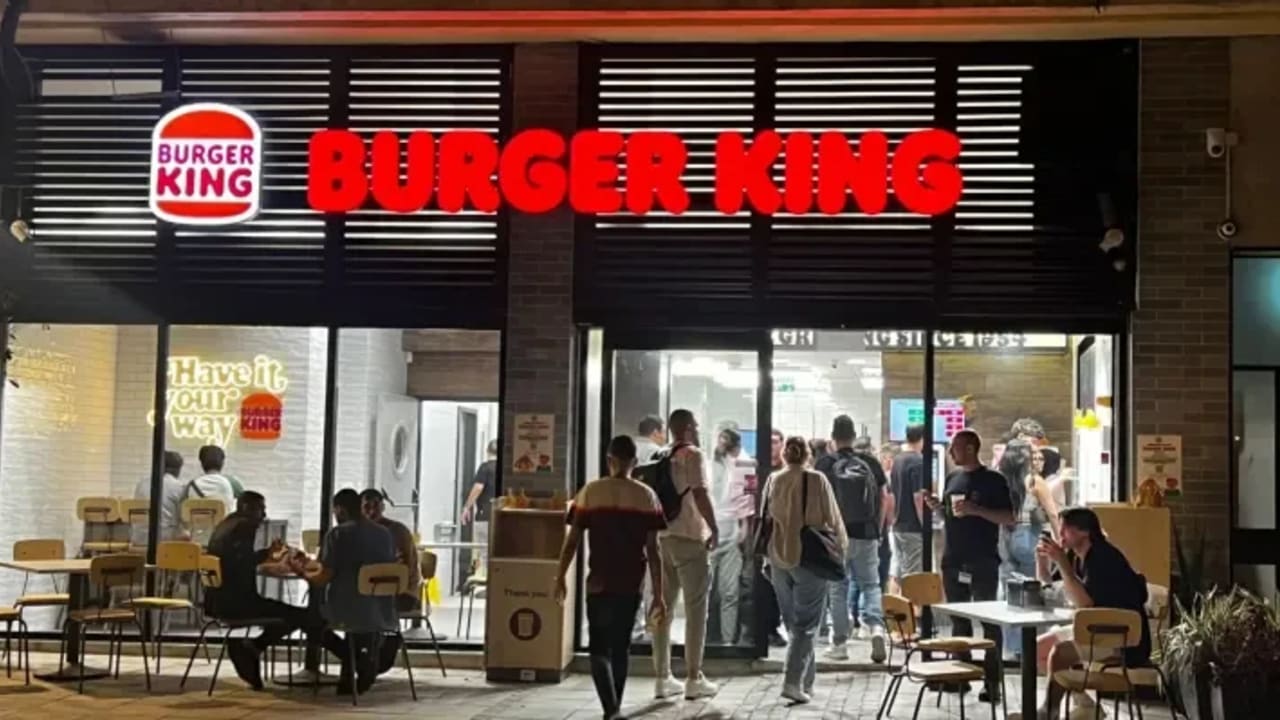
Burger King is piloting an artificial intelligence assistant nicknamed Patty in roughly 500 U.S. restaurants, with plans to expand to 7,000 North American locations by the end of 2026. Integrated into employee headsets as part of the BK Assistant platform and powered by OpenAI technology, the tool analyzes drive-thru exchanges for hospitality phrases such as “welcome to Burger King,” “please,” and “thank you.” The company says the feature identifies overall service patterns rather than evaluates individual workers and listens from the moment a car arrives to when it departs. It can contribute to a location-level “friendliness” assessment that Burger King describes as a coaching aid, not a script-enforcement or personal scoring mechanism, according to BBC News.
Patty also serves as a voice-based operational guide. It aggregates data from kitchen equipment, inventory, employee schedules, and digital orders to surface real-time information to staff through their headsets. It can walk employees through recipes and ingredient counts, give step-by-step cleaning instructions for equipment such as milkshake machines, and help with meal preparation. The system manages live inventory and can automatically update digital menus when ingredients run out or equipment goes down, with menu boards updating immediately and inventory reflected across digital channels within about 15 minutes. Managers receive alerts if a customer submits an issue via a QR code - such as a messy bathroom - or if a product like Diet Coke is out of stock.
Burger King describes Patty as a guidance tool for training and coaching, emphasizing that hospitality remains a human skill and that the technology is meant to support teams so they can stay present with guests. The company says the system is not designed to record conversations or grade individual performance and that monitored keywords are only one signal among many to help managers understand service patterns and location-level friendliness. Data collected by the platform is intended to provide managers with detailed reports on location performance, with the stated use focused on coaching rather than surveillance or enforcement. As the assistant evolves, its language analysis is being trained to capture conversational tone in addition to detecting key phrases to give managers a clearer picture of how hospitality shows up across different shifts and contexts.
Burger King has used the AI to remove unavailable items from digital menus and the company’s app, assist with questions on how to prepare specific items, and analyze drive-thru audio for order accuracy. Staff can ask Patty to recite recipes, confirm steps for limited-time offers, and guide cleaning procedures. When equipment breaks or ingredients run low, the assistant can notify managers and prompt teams to adjust menus or prep accordingly.
Mixed customer response
Although Burger King is advancing use of AI in its operations, it is not planning to deploy AI-powered drive-thrus to take customer orders, citing mixed customer experiences and error-prone chatbots tested by rivals. The BK Assistant platform is slated to be available to all U.S. restaurants later this year, according to CNET. The company has explicitly steered away from automating drive-thru ordering for now, characterizing that approach as risky given ongoing dissatisfaction with error-prone chatbots. At the same time, it is centralizing operational data - point-of-sale, kitchen equipment, inventory, and digital ordering - into a single command center intended to optimize performance across restaurants.
The rollout has prompted concerns about surveillance and workplace intrusion. Critics liken the technology to always-on monitoring and warn that language and tone tracking could create intrusive oversight, especially in high-pressure environments where employees manage difficult interactions. Employee rights organizations caution against scenarios in which every word is effectively measured and graded, arguing that this could be especially problematic for hourly workers under constant time stress. Some online commenters worry that AI cannot account for the context of tense or volatile customer encounters, potentially misreading interactions that require discretion or de-escalation. Supporters contend that in a sector with high turnover and short training windows, a tool that delivers immediate answers and promotes more consistent service could benefit employees by reducing guesswork and improving on-the-job guidance.
Burger King’s strategy comes amid broader industry experimentation with AI to streamline operations and cut costs, a path pursued by McDonald’s, Wendy’s, White Castle, Arby’s, Popeyes, and Taco Bell. Results have been mixed, with some chains reporting order-taking mistakes, customer trolling of bots, and privacy questions related to workplace monitoring.