
Agriculture is under growing pressure to meet the demands of an increasing global population while simultaneously reducing its environmental footprint. The traditional reliance on chemical fungicides to combat crop diseases and their overuse has led to numerous adverse effects. For example, fungicides are often washed off plants, leading to soil degradation, harm to aquatic ecosystems, and reduced biodiversity.
Modern agriculture also faces mounting challenges from climate change and the rise of fungal diseases that destroy about a third of the world’s agricultural yield, causing economic losses of more than $70 billion per year. Traditional methods of combating plant diseases rely heavily on chemical pesticides that seep into the soil, endangering both the environment and human health.
At the same time, pesticides themselves pose dangers to humans, including acute poisoning and chronic health issues such as cancer, neurological disorders, and reproductive problems, often resulting from long-term low-level exposure or direct contact during application. Children are especially vulnerable because their organs and nervous systems are still developing.
Now, researchers at the Technion-Israel Institute of Technology offer hope for minimizing this harm – via a new technology called SafeWax. It was presented in research recently published in the journal Small, first authored by Dr. Iryna Polishchuk from the Materials Science and Engineering Department, under the title “SafeWax: A Bio-Inspired Multifunctional Coating for Sustainable Crop Protection.” Funded by an EU-EIC Pathfinder grant, this technology could reduce the impact of crop disease and lower pesticide use by more than 50%, according to the SafeWax team.
Coordinated by Prof. Boaz Pokroy, also from the department, the project collaborated with another Technion laboratory led by Prof. Ester Segal from the Faculty of Biotechnology and Food Engineering, along with four international partners: BASF (Germany), the University of Bologna (Italy), the French Wine and Vine Institute (France), and Eurofins (France).
Israel's Technion launches SafeWax
The team concluded that SafeWax is “an innovative technology with the potential to become a breakthrough in the field of sustainable crop protection.”
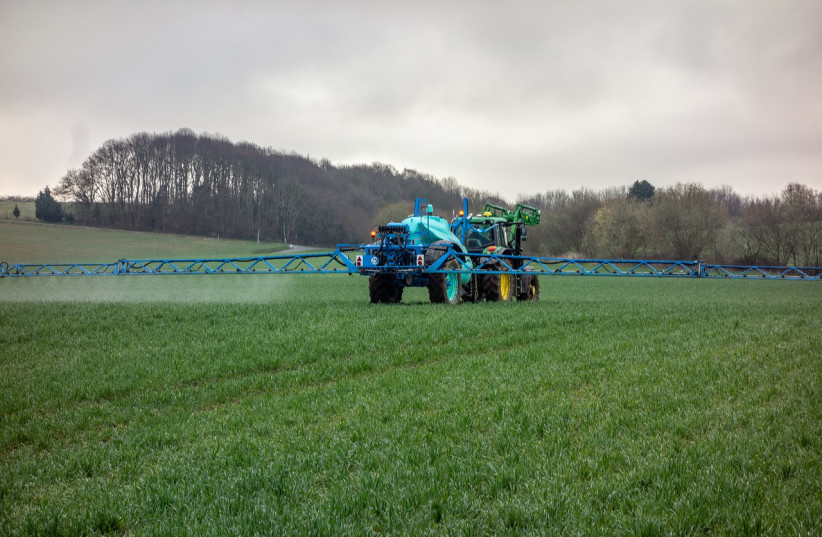
Many pesticides have lost their effectiveness due to fungal resistance. Pokroy told The Jerusalem Post in an interview that SafeWax offers a “promising, sustainable alternative to pesticide use.” Through a simple spray application, it creates a thin, uniform, biodegradable layer of superhydrophobic (water-repellent) material on the plant surface that passively prevents fungal spores from germinating, thereby inhibiting disease development.
The inspiration for this technology is the plant cuticle, a natural waxy layer that covers plants such as lotus leaves and broccoli, enabling them to self-clean by repelling bacteria and other contaminants, and promoting robust growth and productivity.
The SafeWax technology was tested on tomatoes, peppers, grapevines and bamboo plants, proving to be both feasible and effective in protecting crops without affecting essential physiological processes such as photosynthesis. In addition, the unique coating filters out intense UV radiation that damages crops, shielding plants from heat and exposure while slowing dehydration.
The coating, based on biodegradable fatty acids that can be derived from food waste, is transparent to visible light, which is necessary for photosynthesis, and may also help reduce global food waste. Harm from pathogen epidemiology, and especially the rising severity of crop diseases such as powdery and downy mildew, may increase and require adaptive disease-management strategies.
The researchers estimate that SafeWax could halve the use of chemical pesticides.
“This is an ecological, efficient, and multifunctional alternative for crop protection, especially in view of the challenges that climate change poses to modern agriculture,” said Pokroy, a former postdoctoral fellow and Fulbright Scholar at Harvard University and Bell Labs.
Although the tech still requires more research, he hopes that within two years it will be implemented. He noted that his team suggested the subject in 2021 for a joint grant from the Israeli and Italian Ministries of Science. “It received four very enthusiastic reviews, but we didn’t get the grant because – we were told – the translation of the research call from Italian to English was not accurate.
“A year later, we established an Israeli-European consortium, applied to the European Innovation Council, and received the grant.”
The European Green Deal is the EU’s comprehensive growth plan that was launched in 2019. Its “Farm to Fork” strategy aims to halve the overall use and risk of chemical pesticides by 2030, including more hazardous ones, as part of broader goals for sustainable food systems, biodiversity, and zero pollution.
Viticulture – the science, art, and practice of cultivating grapevines, focusing on growing high-quality grapes for winemaking, table grapes, or raisins – is particularly vulnerable to the complex impacts of climate change, especially in the Mediterranean. There, the accumulation of CO2 and other greenhouse gases in the atmosphere is driving a significant rise in average temperatures. Pokroy hinted that because of climate change, the production of Chardonnay-grade wines in France may be endangered in the near future.
Projections indicate that these effects will intensify over the next decade and pose major challenges to grape production and wine quality. Elevated temperatures directly affect viticulture through soil overheating, changes in plant fertility, and physiological alterations in grapevines, the researchers wrote.
Although SafeWax is not designed to combat insects, Pokroy said his lab is also exploring that possibility using related technologies. While the results of the initial trials are highly promising, several basic challenges must be addressed before the technology can be widely adopted. These include issues related to the supply of raw materials and the production of the spray formulation at the scale required for the agricultural market, as well as costs that ensure economic competitiveness.
“As with other protective agricultural coatings, periodic reapplication of SafeWax will be necessary to maintain sufficient coverage and long-term efficacy, particularly as plants grow and develop new foliage over time.
“While the current study focuses on short-term efficacy, application frequency and antifungal performance upon reapplication must be examined,” he said in conclusion.
More on SafeWax can be found here.