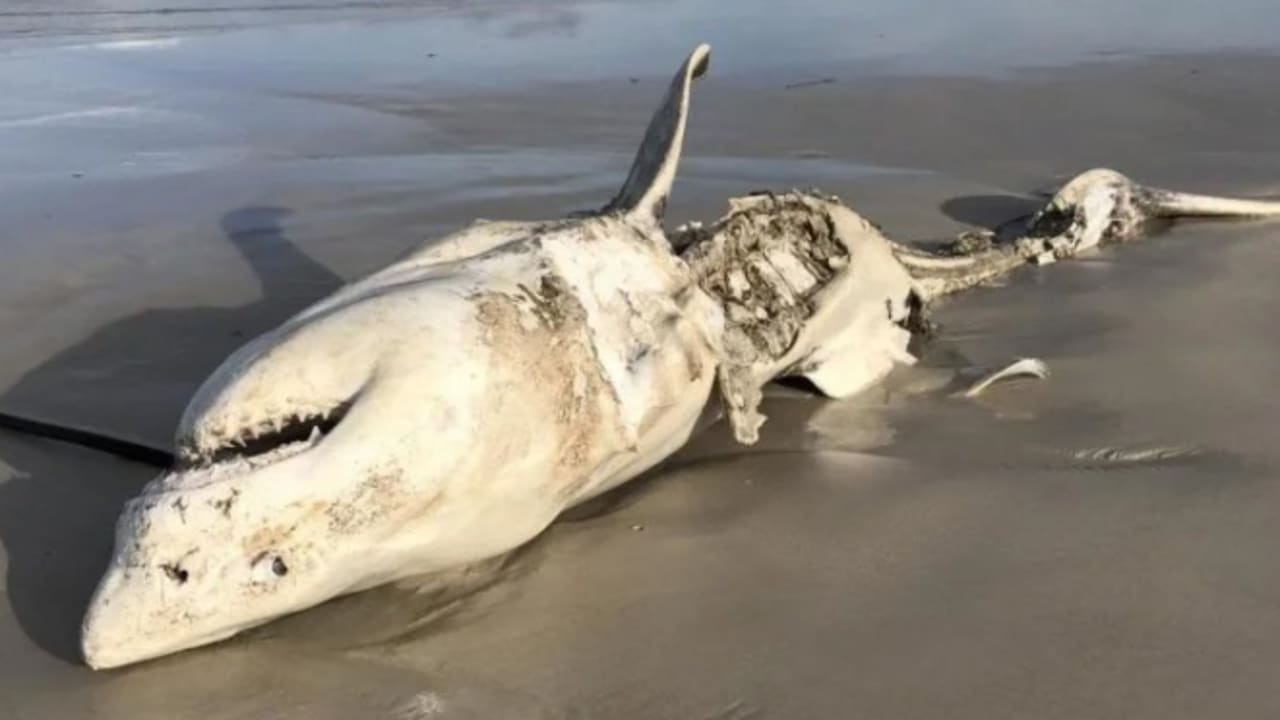
Great white sharks have nearly vanished from the waters off South Africa's coast, particularly near Dyer Island and Gansbaai, a situation unprecedented and alarming to scientists and local communities. Recent research points to a pair of orcas, nicknamed Port and Starboard, as the primary cause of the disappearance, according to Science Alert.
Marine biologist Alison Towner of the Dyer Island Conservation Trust led a study using long-term observation and tracking data from tagged sharks. The study, published in the African Journal of Marine Science, found that orcas are driving great white sharks away from their traditional habitats. "Initially, following an orca attack in Gansbaai, individual great white sharks did not appear for weeks or months," Towner explained, according to Science Alert.
Towner and her team documented that 14 GPS-tagged great white sharks rapidly left the area when orcas were sighted. Since 2017, at least nine great white sharks with their livers removed have washed ashore in Gansbaai, a telltale sign of orca predation. Researchers noted that Port and Starboard have been observed attacking sharks and consuming their livers, which are rich in fats and nutrients.
Recognized by the curvature of their dorsal fins, the orcas Port and Starboard have developed a hunting method targeting great white sharks for their nutrient-rich livers. "The livers of sharks are particularly energy-rich because they consist mainly of fats and can make up to a third of the shark's body weight," Towner and her colleagues explained, according to Scinexx.
Orcas are not only attacking great white sharks but also other shark species. In a single day, Port and Starboard are attributed with killing up to 17 broad-nosed seven-gill sharks (Notorynchus cepedianus) in the same region. Their hunting method involves grabbing the shark by the pectoral fin and turning it onto its back, inducing tonic immobility. This allows the orcas to remove the shark's liver with surgical precision, leaving the rest of the carcass untouched. "Orcas have demonstrated a level of surgical precision in the extraction of vital organs from their prey," noted researchers.
The absence of great white sharks is altering the ecosystem, raising concerns about long-term ecological impacts. In their absence, copper sharks (Carcharhinus brachyurus) are moving in to fill the vacant ecological niche but are themselves becoming prey for orcas. The orcas are hunting the copper sharks with the skill of predators experienced in hunting large sharks.
"To put it simply, although this is a hypothesis for now, there is only so much pressure an ecosystem can take, and the impacts of orcas removing sharks are likely far wider-reaching," Towner said, according to Science Alert. The reduction in great white shark numbers has indirect effects, including increased predation pressure on vulnerable species. With fewer predators regulating their behavior, sea lions now threaten vulnerable species like the critically endangered African penguin.
Towner emphasized that targeting especially young individuals may have a devastating effect on this slow-growing and late-maturing species. Research is ongoing to understand the long-term effects of orca predation on the ecosystem using citizen science, fishers' reports, and tracking technologies. "Increased vigilance using citizen science, as well as continued tracking studies, will aid in collecting more information on how these predations may impact the long-term ecological balance in these complex coastal seascapes," Towner added.
Until recently, the fishing town of Gansbaai was a mecca for shark watchers, heavily populated with great white sharks and considered one of the most important observation points in the world. Nearby Dyer Island, known as the great white shark capital of the world, has also seen a decrease in sightings since 2017. Initially, the disappearance of great white sharks off the South African coast was attributed to human activity, such as overfishing. However, scientists now believe that the pair of orcas is responsible for many more great white shark deaths that have not washed ashore.
Despite being one of the ocean's top predators, the great white shark now appears to avoid areas frequented by orcas. Studies show that the presence of orcas can drive great white sharks away, reinforcing the idea that orca presence functions as a powerful deterrent. A 2020 study found that great white sharks will flee from their preferred hunting waters off the coast of San Francisco if an orca makes an appearance. Similar behavior is now being observed off South Africa's coast, with great white sharks leaving traditional habitats like Mossel Bay to avoid orca attacks.
Given that great white populations are declining worldwide, the added pressure of an efficient predator like orcas is a cause for concern. Some orcas are possibly adapting to preferentially hunt sharks, particularly great white sharks, in response to declining numbers of their preferred prey. It is unclear how the orcas figured this out or why they might seek shark livers as a preferred source of nutrition. "From orcas, it is known that they selectively hunt energy-rich prey, but there have been only a few cases where the predators specifically remove organs from their prey," Towner and her colleagues noted.
Written with the help of a news-analysis system.