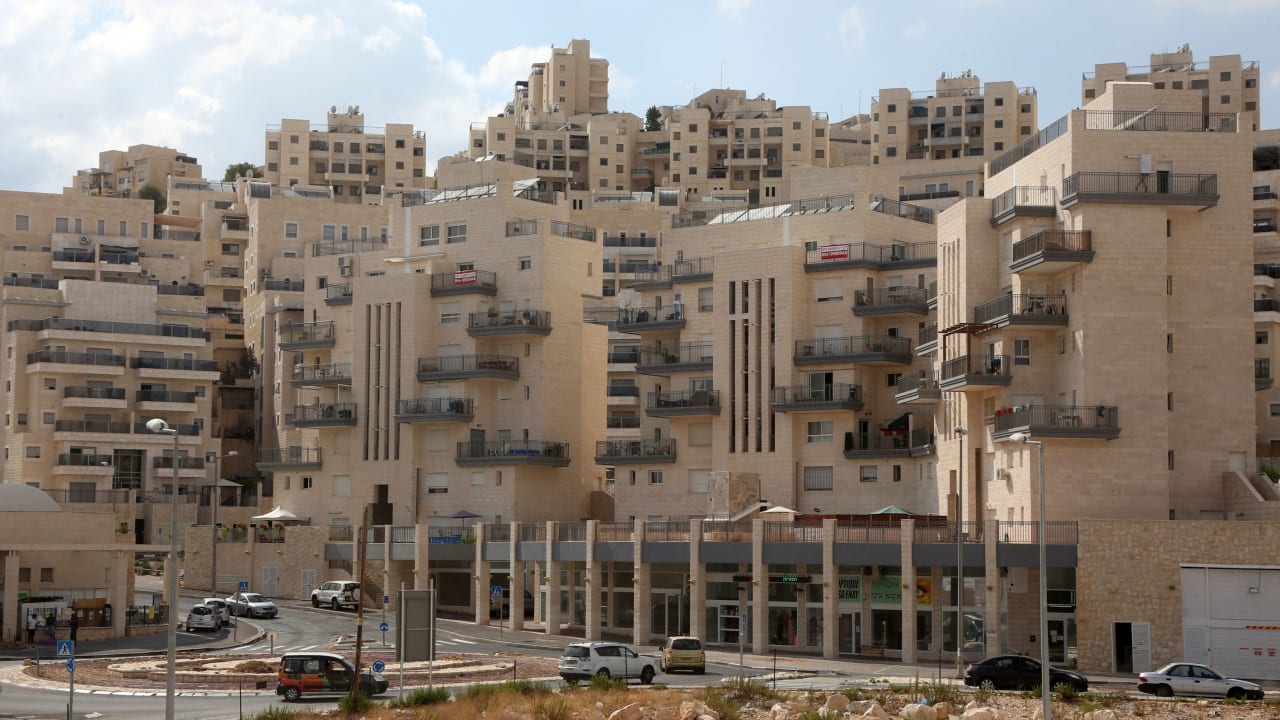

From the heights of Har Homa, officially known as Homat Shmuel, residents gaze out over the Judean Desert and the ancient fortress of Herodion. At 770 meters above sea level, this southeastern neighborhood of Jerusalem stands as both a geographic boundary and a symbol of the city’s complicated modern history.
Today, nearly 25,000 people call this hilltop home, living in what has evolved from one of Israel’s most controversial construction projects into a thriving residential community complete with schools, synagogues, and the everyday rhythms of family life.
The story of Har Homa begins long before 1997, when the first residents moved in. In the 1940s, a group of Jews purchased 13 hectares of land at a site known in Arabic as Jabal Abu Ghneim. After the purchase, the Jewish National Fund (KKL-JNF) forested the hill, planting trees that would become a point of contention decades later.
During Israel’s War of Independence, the hill changed hands dramatically. Muslim Brotherhood soldiers advancing from Egypt captured it, only to see it transferred to the Jordanian Legion by late 1948. The name Har Homa, which means “wall mountain,” originated from Palmach fighters stationed at nearby Kibbutz Ramat Rachel, who observed a structure built on Byzantine church ruins and saw its wall as a fortification for Jordanian forces.
Uniquely, the Jordanians preserved the KKL-JNF forest, unlike other captured areas where they cut down trees. This decision would later fuel environmental debates about the site’s future.

After the reunification of Jerusalem in 1967, Israeli authorities began purchasing land from Arab owners, while the JNF continued expanding the forest. By the 1980s, plans emerged to develop the area, but environmental organizations successfully opposed them, arguing that the site formed part of Jerusalem’s essential “green belt.”
The hill’s fate took unexpected turns. In 1979, officials proposed building a soccer stadium there, an idea revived in 1989 by then-interior minister Yitzhak Haim Peretz as an alternative to Teddy Stadium. Neither plan materialized.
The real turning point came in 1992 with an expropriation order for private lands – about 30% Arab-owned. Legal challenges from both Jewish and Palestinian landowners failed. By 1995, during Yitzhak Rabin’s government, plans for a residential neighborhood were complete, but political calculations intervened.
Facing a potential no-confidence vote, with the Arab Democratic Party opposing the project and the Right wing eager to topple the government over the Oslo Accords, Rabin shelved the construction. Palestinian official Faisal Husseini warned that building would be considered a casus belli, a catalyst for war.
Construction finally began in March 1997 under Prime Minister Benjamin Netanyahu. Opposition parties and left-wing activists erupted in protest, warning that another Jewish neighborhood in “east Jerusalem” would trigger Palestinian violence. International pressure mounted. However, construction proceeded and, contrary to predictions, the initial storm gradually abated.
The neighborhood took its official name from Shmuel Meir, a deputy mayor and National Religious Party council member who was killed in a car accident in 1966. Then-Jerusalem mayor Ehud Olmert honored Meir’s advocacy for the project by naming it Homat Shmuel, though residents commonly call it Har Homa.
Like Gilo, Ramot Alon, and Pisgat Ze’ev, Har Homa sits beyond the Green Line, in territory where Israeli law was extended after 1967. This status has kept it in diplomatic crosshairs. After the 2007 Annapolis Conference, Palestinians cited continued construction as violating settlement freeze commitments. Former foreign minister Tzipi Livni countered that Israel considers it a Jerusalem neighborhood, not a settlement.
While then-US president George W. Bush remained publicly neutral, his secretary of state Condoleezza Rice pressured the Olmert government to halt expansion. The Obama administration later experienced its own crisis over building approvals. Israeli governments have responded with periodic construction freezes, though development has generally continued.
A young, growing community
Today’s Har Homa bears little resemblance to the political flashpoint of 1997. The neighborhood has experienced remarkable growth, with its population swelling by 10,000 residents over the past 15 years to reach 26,446 people today.
The demographics tell the story of a young, family-oriented community. Some 3,000 children under age five toddle through its playgrounds, while more than 8,000 children between six and 18 fill its classrooms. Young adults aged 19 to 35 number 5,693, many of them young parents building their families.
The senior population remains relatively small at 2,337 residents over 65, reflecting the neighborhood’s recent establishment and its appeal to younger families seeking affordable housing on Jerusalem’s periphery.
The neighborhood suffers from distinctly mundane problems: parking shortages due to high housing density, and rush-hour traffic jams, partially relieved by new traffic lights at the neighborhood’s entrance.
Its location brings both advantages and challenges. Less snow falls there than in other Jerusalem neighborhoods, thanks to its proximity to the Judean Desert. Residents enjoy sweeping views but live at the city’s southeastern edge, bounded by Jerusalem’s security barrier.
Education defines much of neighborhood life. Eight elementary schools serve families from three distinct streams: two state secular, two ultra-Orthodox, and four national-religious schools, such as Ofarim and the Ilan Ramon School. In 2019, Derech High School opened, giving older students a local option.
Torah schools like Yesodot Oz and Eretz HaMoriah serve religious families, while youth movements – from Bnei Akiva to the Scouts – struggle with a shortage of buildings, often meeting outdoors.
In 2017, Har HaMor Yeshiva, led by Rabbi Tzvi Yisrael Tau, moved into a new campus at the neighborhood entrance, relocating from temporary quarters in Kiryat Yovel.
For a neighborhood with a substantial national-religious population, Har Homa faces an unusual problem: too few synagogues. A standoff between the municipality and building contractors over who bears responsibility for construction has left residents improvising. Temporary prayer spaces have sprouted in parking garages, building lobbies, and kindergartens.
Progress has come slowly. Construction of a large domed synagogue at the neighborhood entrance began in 2014. In 2022, two major synagogues opened: Mishkan Ariela for Ashkenazi worshipers, and Noam Siach for those following Moroccan Jewish traditions. They joined existing congregations, such as Sha’arei HaChoma (Sephardi), Orot Yehuda, and Tiferet Tzion VeSara. Still, community leaders continue seeking sites and raising funds for additional houses of worship.
Even recreation has proven contentious. A newly completed swimming pool remains closed, caught in legal battles between religious and secular residents over its character and operating hours – a microcosm of tensions that simmer beneath Har Homa’s surface.
The neighborhood has the usual amenities: a community center, medical clinics, and a community administration to coordinate services. However, every development seems to carry echoes of the larger disputes that marked its birth.
The view from Givat HaArba’a
Northwest of Har Homa stands Givat HaArba’a (“the hill of the four”), named for four people killed by Jordanian snipers from that position in 1956. It serves as a geographical and historical marker, a reminder of the contested landscape where Har Homa now rises.
Nearly three decades after construction began amid international outcry, Har Homa has become what its planners envisioned: a substantial Jerusalem neighborhood with schools, families, and everyday concerns about parking and swimming pool hours. Its 25,000 residents live their lives largely removed from the diplomatic disputes that still swirl around their address.
Yet standing at 770 m., gazing toward Herodion, where King Herod built his mountain fortress two millennia ago, it’s impossible to forget that Jerusalem, even the newest neighborhoods, carry so much history on their shoulders, and that geography, here more than anywhere, remains inseparable from politics.
The hill that changed hands from Jewish buyers, to Muslim Brotherhood fighters, to the Jordanian Legion, to Israel, which was proposed for stadiums and opposed by environmentalists, sparked government crises and international condemnation, is now simply home. Whether that transformation represents progress, pragmatism, or simply the passage of time depends, like so much in Jerusalem, on where you stand.