
I am not going to write about whether this Iran deal is good or bad for Israel. Smarter people than me, with more access and more information, will spend the next weeks and months arguing that out, and they should. What I want to write about is something else entirely: how we treat a friend when we disagree with him.
US President Donald Trump’s effort to bring the final Israeli hostages home was nothing short of extraordinary. He invested enormous political capital, remained personally engaged, and ultimately helped achieve what many believed was impossible.
When he spoke about the hostages in the Knesset, I witnessed the reaction firsthand. The applause was thunderous. Members rose to their feet. The gratitude was palpable.
Later, Trump spoke about the return of the hostages before Arab leaders and legislators. The contrast could not have been more striking. The announcement was met with silence. There was no applause, no visible celebration, no acknowledgment of the immense effort required to secure the freedom of innocent men and women held in captivity.
That silence spoke volumes. Trump chose to make the hostages a priority even when doing so offered little political benefit in some of the rooms he entered. He pressed forward because he believed it was the right thing to do. Whether one agrees with him on every issue or not, that determination deserves recognition and admiration.
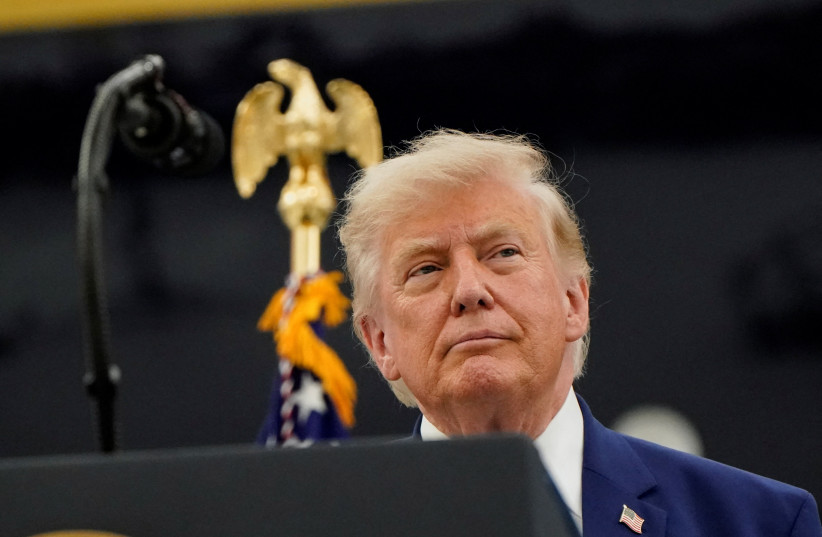
I was at the White House at the Hanukkah party in the months after the final hostages were released. President Trump got up and spoke. He admitted that when he first got involved, he thought his job was simply to bring home the living and let everyone move on.
He hadn’t understood that the Jewish people don’t move on, not while a single body remains in a tunnel in Gaza. So he readjusted. He went after all of them, the living and the dead, until every last hostage came home. If that were the only thing Trump had ever done for the Jewish people, we would owe him an enormous debt of gratitude.
He also moved the American embassy to Jerusalem. He recognized Israeli sovereignty over the Golan Heights. He built the Abraham Accords, which reshaped the Middle East in ways no one thought possible. This is not a small record. This is a record most presidents couldn’t dream of leaving behind.
So when I hear people questioning his loyalty to Israel over this Iran deal, even people raising legitimate concerns, I think we owe it to the man who accomplished all of the above to pause and not pass judgment so quickly.
Disagreement is not betrayal
Former US president Ronald Reagan once said, “The person who agrees with you 80% of the time is an 80% friend, not a 205 enemy.” We, as a people who argue about everything from Talmud to politics, sometimes forget: disagreement is not betrayal.
A friend who sees things differently on one issue is still a friend. We are allowed to push back, to lobby, to make our case as hard as we can on this deal. That is our job, and we should do it without apology. But we are not allowed to erase a record of friendship because of a single disagreement, however serious it may feel at the moment.
A dear friend of mine, Chris Ruddy, the CEO of Newsmax, has long been one of the great Christian friends the Jewish people have. We were texting recently about all of this – about Iran, about the uncertainty so many of us feel – and I told him I believe God has our back no matter what happens. He agreed, but added, “God helps those who help themselves.”
He was right, and it is worth sitting with. Faith does not mean passivity. We are meant to fight for our own security, to advocate, to use every tool available to us, including our relationships with leaders who have proven their friendship.
But at the end of the day, there is a partnership in this world, the partnership between God and man, and it’s our job to fight and to work as hard as we can, but at the end of the day, when you’ve done all that you can, you have to have faith. You have to understand that God is there and He is not going to abandon the Jewish people or Israel.
I remember writing something similar last year, when President Trump visited the Gulf states on a trip that didn’t include Israel, and people were furious, certain he had abandoned us. I wrote then that we need to have faith in our friends, and that sometimes leaders do things for reasons we cannot see.
Ingrained in Jewish history and DNA is knowing how to disagree while maintaining strong relationships. The Talmud, in particular, is full of stories of this kind; it is ingrained in who we are. We need to trust our friends, even if we disagree with some of their opinions.
The Jewish people have been here for thousands of years. We did not survive because every world leader stood with us at every moment. We survived because we fought for ourselves, and because, as I believe with full faith, God has carried us the rest of the way. That has not changed.
None of this means we stay silent if we believe this deal endangers Israel. It means we say so honestly, that we make our case to the administration and to Congress, and we do it as people who recognize a friend when we have one.
Let’s fight for what we believe is right, and let’s do it as people who remember that our friends are still our friends even if we disagree with some of their policies or actions.
The writer is the International CEO of Aish, a global Jewish educational movement. He formerly served as Eastern Director of the Simon Wiesenthal Center, where he oversaw the Museum of Tolerance in New York City.