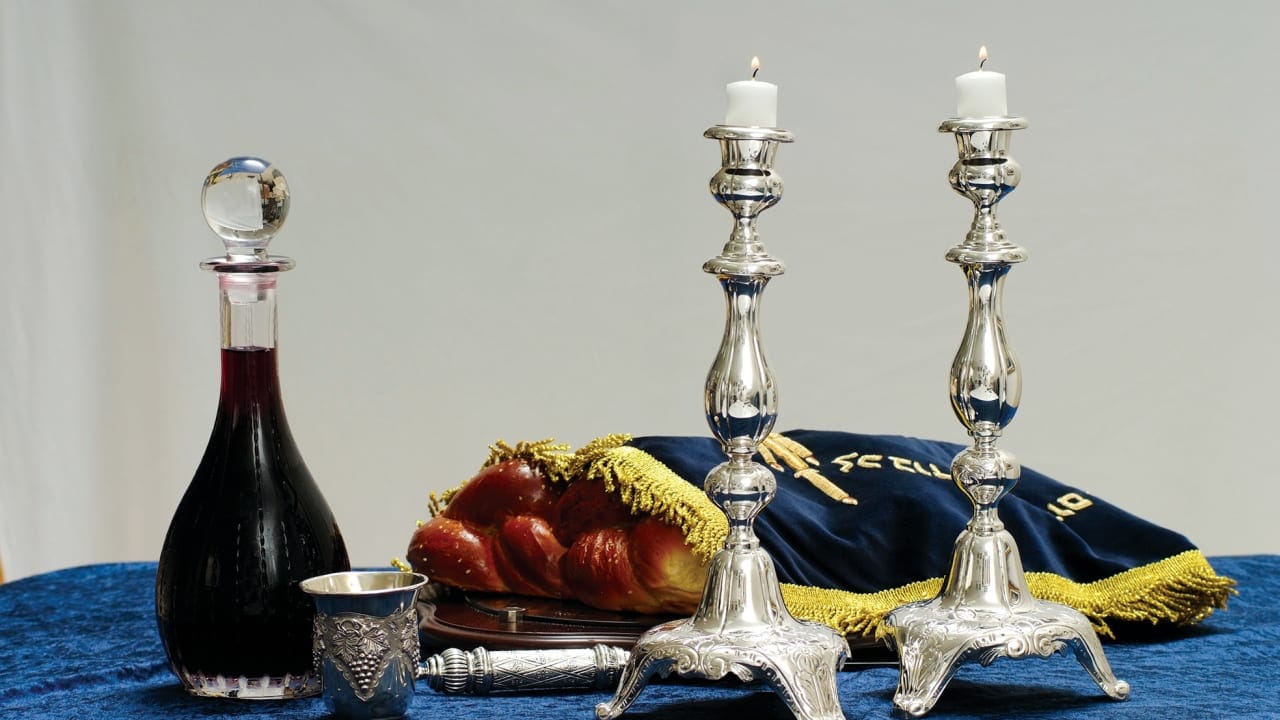
At the precise moment influential Jewish voices were publicly debating whether Shabbat itself had become obsolete, the US president did something almost politically unimaginable: he formally inserted Shabbat into America’s 250th anniversary celebration.
In an official White House proclamation recognizing Jewish American Heritage Month, US President Donald Trump called on Americans to celebrate their “faith and freedom” and “especially on Shabbat to celebrate our 250th year.”
Not innovation. Not activism. Not identity politics.
Shabbat.
The symbolism of that moment was extraordinary.

At one of the most culturally fragmented moments in modern American life, the White House unexpectedly elevated one of Judaism’s oldest civilizational institutions as part of a national milestone celebration.
Orthodox Jews spent decades fighting to preserve Shabbat from secular erosion. Few imagined they would one day hear an American president publicly elevate it during a national anniversary celebration.
And yet that is precisely what happened.
Only weeks earlier, parts of modern Jewish discourse were openly questioning whether traditional structures like Shabbat still belonged in contemporary life. While some dismissed those conversations as internet provocation, they revealed a deeper tension quietly unfolding inside modern Jewish identity itself.
Increasingly, many Jews are eager to embrace Jewish symbolism while distancing themselves from the religious civilization that gave those symbols meaning in the first place.
Since October 7, Jewish identity has surged visibly across public life. Influencers, celebrities, activists, and public figures proudly wear Magen David necklaces, wave Israeli flags, post hostage graphics, and publicly defend Jews against rising antisemitism.
In many ways, that visible Jewish pride has been important and admirable.
Yet at the very same time, many openly broadcast lifestyles fundamentally detached from the structures that preserved Jewish continuity across generations. Public Jewish pride increasingly coexists alongside open disregard for Shabbat, kashrut, covenantal obligation, and the religious framework that historically sustained Jewish civilization itself.
That contradiction matters.
Because Judaism was never built solely on symbolism. It was built on transmitted obligations, discipline, memory, continuity, and covenant.
World still sees Jews as a collective
October 7 forced many Jews to rediscover an uncomfortable reality: the world still sees Jews collectively, whether individual Jews personally embrace Judaism or not. But once that awakening occurs, another question inevitably follows: what exactly is the substance of the identity now being defended so passionately?
A Jewish star without Judaism eventually becomes jewelry.
A map of Israel without Torah eventually becomes geography.
And a civilization detached from the practices that sustained it eventually becomes spiritually fragile.
That is precisely why the America 250 proclamation resonated so deeply with many Jews across the spectrum.
The US president was not celebrating vague ethnicity or generic multiculturalism. He publicly elevated a distinctly Jewish institution that preserved Jewish continuity for thousands of years: Shabbat itself.
That distinction matters because the modern Jewish crisis is not fundamentally about visibility. Jews today are often highly visible. The deeper crisis is whether Jewish identity can remain rooted once it is reduced primarily to politics, aesthetics, slogans, and performance.
For years, many Jewish institutions operated under the assumption that Judaism would survive by becoming less demanding, less distinct, and more interchangeable with contemporary culture. Ritual became optional. Obligation became uncomfortable. Identity increasingly shifted from covenant toward aesthetics and politics.
But the current cultural moment suggests many Jews are not starving for less Judaism.
They are starving for more permanence.
The uncomfortable truth is that modern Jewish culture increasingly celebrates Jewish visibility while resisting Jewish restraint. Jewish identity is proudly displayed, politically defended, and aesthetically marketed, yet the covenantal structures that preserved Jewish civilization are often treated as optional, outdated, or burdensome.
But civilizations are not preserved through aesthetics alone.
Every enduring civilization requires structures strong enough to outlive comfort, trend cycles, political movements, and social media performance. Judaism was no exception.
The Jewish people survived exile, persecution, pogroms, forced conversion, terrorism, and genocide because Jewish civilization maintained structures powerful enough to preserve identity across generations.
Shabbat stood at the center of that framework.
For thousands of years, Jews stepped away every single week from commerce, distraction, public pressure, and endless labor in order to reconnect with family, prayer, learning, and community.
That weekly return to covenant became one of the central mechanisms of Jewish continuity itself.
That is why the White House proclamation struck such a nerve. Not because Americans suddenly became religious overnight. And not because a national movement spontaneously materialized on its own.
What happened instead was culturally revealing.
The moment Shabbat was publicly elevated within the America 250 conversation, many Jews reacted with genuine surprise and emotion. The proclamation spread rapidly through Jewish communal spaces, where people openly expressed disbelief that a sitting American president had formally inserted Shabbat into a national anniversary celebration.
Recognizing the deeper symbolic significance of the moment, I helped launch the independent grassroots “250 Shabbat” initiative designed to transform a fleeting headline into actual participation.
The goal was simple: encourage Jews from all backgrounds to reconnect, even in small ways, with the institution that preserved Jewish continuity for thousands of years.
To join the 250 Shabbat initiative:
The response revealed something many Jewish leaders still fail to understand.
People are increasingly exhausted by performative identity without substance beneath it.
The deeper irony is that while parts of modern Jewish culture increasingly treat Shabbat as expendable, broader society may be beginning to recognize its necessity again.
Because the question confronting modern Jewish life is not whether the Jewish people will survive.
The Jewish people always survive.
The real question is whether Jews themselves still recognize the eternal foundation that made that survival possible in the first place.
The writer is an author, activist, and political strategist. Following the White House proclamation encouraging Americans to observe Shabbat during America’s 250th anniversary year, she helped launch the independent grassroots “250 Shabbat” initiative. She hosts the Silent Revolution podcast on Spotify and Apple Podcasts. Follow her on Instagram @lindaadvocate and on X @lindargalgi.