
At his first press conference after his resounding win, Hungary’s incoming Prime Minister, Péter Magyar, declared his intention to amend the constitution to limit the prime minister’s tenure to two terms. That is, a maximum of eight years.
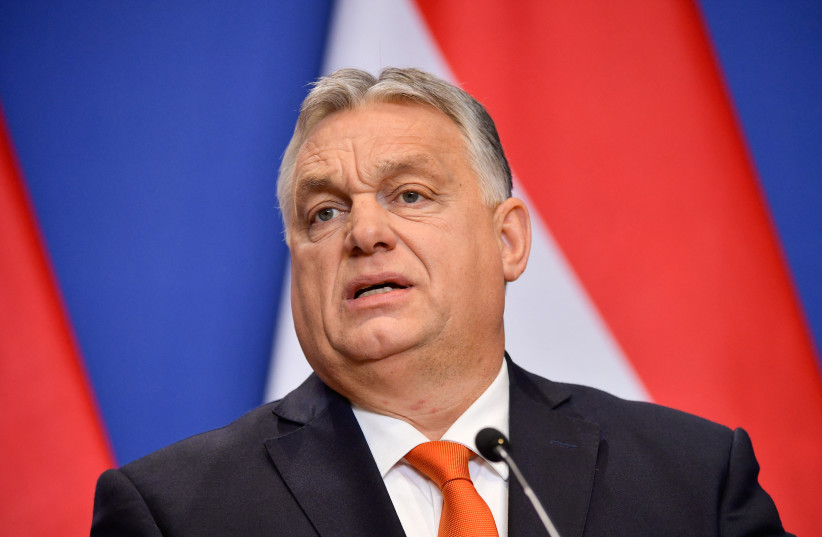
According to the proposal, this limitation would apply retroactively, meaning that Viktor Orbán, who has served as prime minister for 16 consecutive years, would not be able to run for the position again.
A term limit is an institutional mechanism that sets a restriction on the length of time or the number of terms a person may serve in public office. Its purpose is to prevent the excessive concentration of power in the hands of a single individual over time.
While in presidential systems it is an almost default feature of the system, in parliamentary systems – such as those of the United Kingdom, Germany, or Israel – it is a highly exceptional tool.
The reason lies in the nature of the parliamentary system. In such systems, prime ministers are not directly elected by the public, and therefore, the danger of accumulating excessive and potentially dangerous power, based on direct public legitimacy, is lower than in presidential systems.
Moreover, prime ministers are subject to several internal checks and balances: votes of no confidence, coalition pressures, and internal challenges within their own party. Term limits also pose a real challenge to the dynamics of the parliamentary system, which stem from the fact that the terms of parliament and government are not fixed.
Government turnover and early elections occur frequently, and as such, imposing a rigid limitation is perceived as incompatible with the system’s flexible structure.
Nevertheless, in recent years, initiatives to impose term limits have been increasing even in parliamentary democracies. The primary reason is a process of “presidentialization.” This refers to the strengthening of the prime minister’s position as an individual (as opposed to a representative and leader of their party), and the transformation of the role of prime minister into a more central and concentrated figure, both in the executive sphere and in the public and electoral arenas.
When long tenures combine with a high concentration of power and with trends of democratic backsliding, as in Hungary or Israel, concerns about the erosion of democratic institutions intensify, along with calls for a “safety valve” in the form of term limits.
The case for and against term limits
Supporters of term limits advance several central arguments.
First, they prevent the excessive concentration of power in the hands of one individual over time and reduce the incumbency advantage. Second, they encourage leadership renewal and the introduction of new ideas into the political system. Third, they may strengthen democratic norms by conveying that no leader is irreplaceable.
In addition, term limits may contribute to strengthening party institutions and their ideological dimensions, since the limitation applies only to a specific individual and not to the party itself. In other words, term limits allow voters to continue supporting the same party and enable it to remain in power, while at the same time weakening the identification of the government with a single leader.
On the other hand, there are also significant disadvantages.
The central argument concerns harm to the will of the voter: if the public desires a particular leader, why prevent it from continuing to elect him or her? A leader who has served for a long time has also accumulated political experience, an advantage that may be significant, especially in times when the state needs “an experienced hand at the helm.”
Term limits may also create a “lame duck” effect: a situation in which a leader nearing the end of his or her constitutionally permitted tenure loses power and influence because he or she has no political horizon. Moreover, term limits may undermine stability and continuity in governance.
And what about Israel?
The idea of limiting the tenure of a prime minister has arisen repeatedly over the past decade, and has even taken the form of a government bill introduced in the Knesset. Ahead of the upcoming elections, several candidates have already declared their intention to promote term limits for prime ministers.
Naftali Bennett, for example, proposed limiting the prime minister’s tenure to a maximum of eight years. However, it must be emphasized that even if term limits are adopted, within Israel’s fragile constitutional reality, they could be repealed relatively easily, by a decision of a majority of the Knesset.
Ultimately, term limits in a parliamentary system are still considered an exceptional tool: they may serve as a check in extreme situations of prolonged tenure accompanied by an unusual concentration of power in the hands of the prime minister. However, they are not a substitute for strengthening the institutions of oversight and checks and balances themselves.
In order to ensure the dispersion of power, reliance on an arbitrary mechanism such as term limits is insufficient. To that end, it is necessary to improve decision-making processes in the government and the cabinet, to enhance parliamentary oversight of the government, to strengthen the gatekeepers, and to rehabilitate the political party as a significant institution within the political system.
The question is not only how long a prime minister will serve, but to what extent the system as a whole is capable of limiting his or her power.
Dr. Dana Blander is a research fellow at the Israel Democracy Institute.
Prof. Ofer Kenig is a research fellow at the Israel Democracy Institute and a senior lecturer at Ashkelon Academic College.