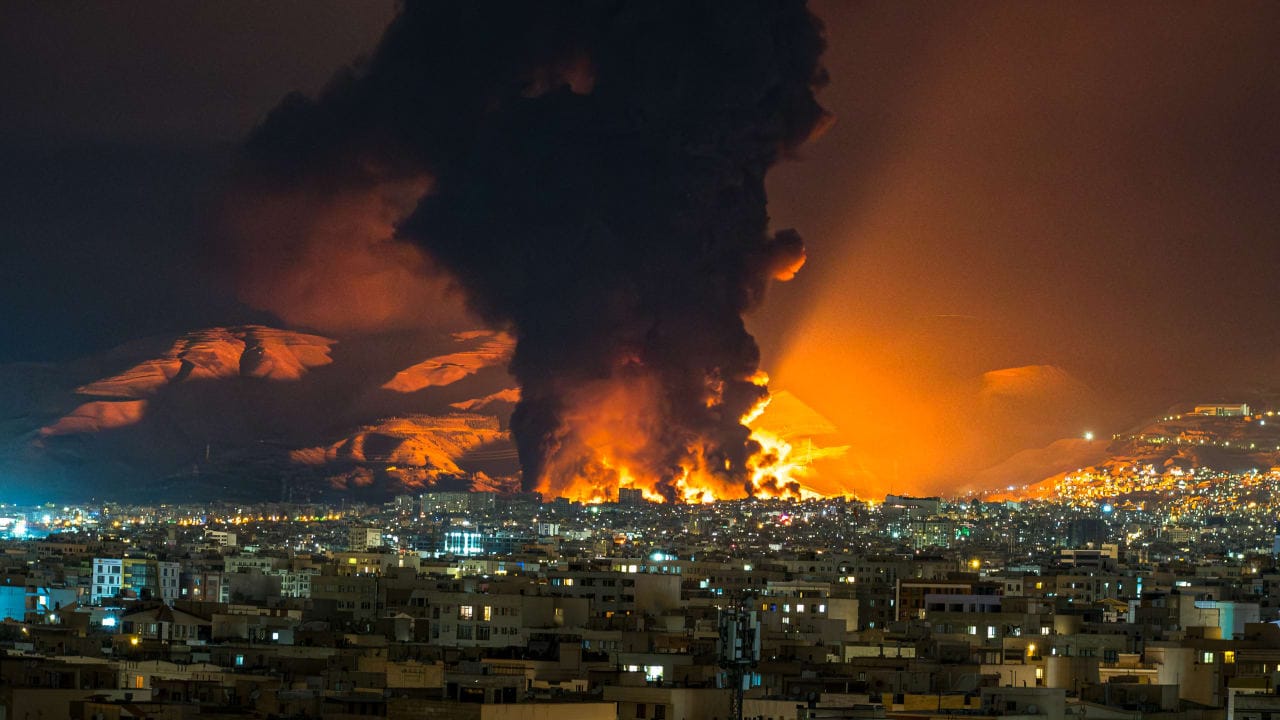
“The fox knows many things, but the hedgehog knows one big thing.” – Archilochus
Whatever is decided by US President Donald Trump, the American-Israeli war against Iran could at some point take on a nuclear dimension. Though generally overlooked, the Iranian nuclear threat is not just about creating a bomb. Even without chain-reaction nuclear explosives, Tehran could use portions of its enriched uranium stockpile to fashion radiation dispersal devices. There is little or nothing that Israel or the United States could do to capture this fissile material.
Even if Iran had no weapons-grade stockpiles and was unable to continue enrichment activities, that country would still present a threat to Israel’s nuclear reactor in Dimona. Though an Iranian strike on Dimona “missed” earlier this month, it is only a matter of time before Tehran gets it right. Then, in a lethal but plausible scenario, a catastrophic release of ionizing radiation occur.
There is more. Even a non-nuclear Iran could cause a nuclear war. To wit, any continuously escalating use of conventional missiles against Israeli civilian populations and/or regional American military installations could provoke an American or Israeli “first use.” In the formal language of strategic theory, this scenario would represent an “asymmetrical nuclear war.”
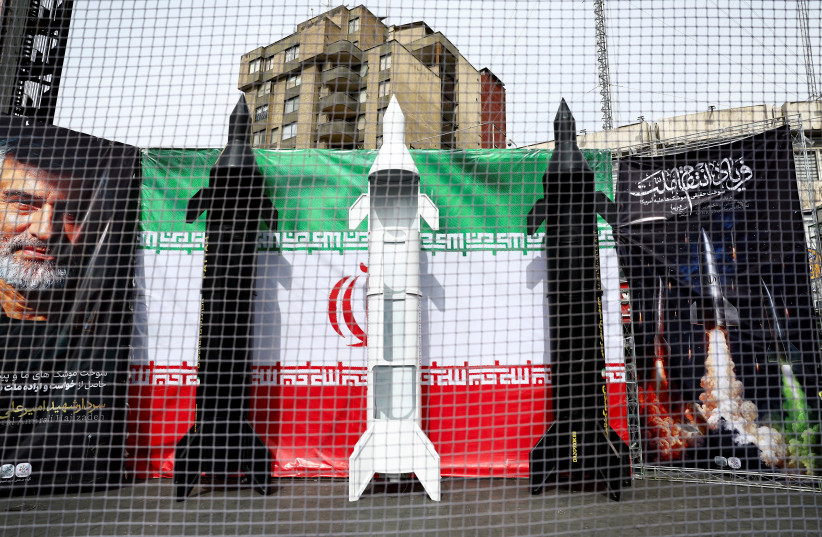
Lessons from history and international law
Pertinent historical and legal (international law) backgrounds warrant immediate attention. What should American and Israeli decision-makers learn about such backgrounds? Since the Peace of Westphalia in 1648, world politics have been shaped by sovereignty-centered belligerence. Considered over time, especially as the technologies of global destruction become more widespread, indiscriminate, and refined, this 17th-century system of competitive nationalism will undermine every nation-state’s core security interests.
This conclusion highlights the “biggest picture” of all. Unless national leaders finally take tangible steps to implement an organically cooperative planetary civilization, there will be no civilization at all. Right now, amid Trump’s unreasoned threats to “obliterate” Iran, intellectual incoherence dominates every page of America’s strategic playbook.
A more thoughtful approach by the American president could yield a far more rational military axiom: There is no valid reason to assume that American threats of massive destruction will be more effective against Iran than expressly calibrated threats. There are even circumstances in which such conspicuously unmeasured threats would vary inversely with desired operational outcomes.
There is also a genuinely fundamental background issue. In all world politics, not just in the current war against Iran, everything begins and ends with the individual. Generally, we humans fear solitude or “aloneness” more than anything else, sometimes more than death. Accordingly, amid the murderous chaos that is now stampeding across entire continents, we wittingly remain loyal to the primal claims of “tribe.” Always, and almost everywhere, individuals desperate to “belong” will subordinate themselves to the massively destructive expectations of state and faith.
Sometimes, especially in the Middle East, such subordination carries acceptance of “martyrdom.” Recalling the marooned English schoolboys in William Golding’s Lord of the Flies, all should be reminded here that the veneer of human civilization is continuously razor-thin. Scientific discoveries aside, whole swaths of humankind remain fiercely dedicated to every conceivable variant of “sacrifice.”
In the end, this atavistic dedication could shape Iran’s “last resort” military choices. In essence, a desperate jihadist Iran could transform itself into a suicide bomber in macrocosm.
The meaning of human intelligence
There is more. As a species, we remain determinedly irrational. How can this be true? The best answer lies in our manifestly shortsighted views of “realism.” Examined in the clarifying light of history, science, and logic, we ought finally to agree with Italian film director Federico Fellini: “The visionary is the only realist.”
Hope exists, we may still assume, but today it must “sing” softly, with circumspection, inconspicuously, almost sotto voce. Though counterintuitive, the time for celebrating gleaming new information technologies and artificial intelligence is coming to an end.
To survive on a self-defiling and deeply imperiled planet, all should aim to discover an individual life that could struggle valiantly against collective (nuclear) death. What is most sorely needed right now is not artificial intelligence, but human intelligence reinforced by empathy and ethics.
In his landmark work, The Decline of the West, first published during World War I, Oswald Spengler inquired: “Can a desperate faith in knowledge free us from the nightmare of the grand questions?” This remains a profound and indispensable query. The necessary answer would accept that the suffocating conflicts of life on earth can never be overcome by creating unthinkable weapons or shrieking endless threats of “obliteration.”
In the final analysis, as we may learn from an ancient parable, it is high time to focus not only on the “many things” of the present US/Israel/Iran war, but also on the “one big thing” of eventual nuclear war. It’s not that the component dialectics of any regional conflict should ever be minimized or disregarded, but rather that continually changing interstate relations ought always to be understood “with background.”
The complexity of war with Iran
For Israel and the United States, a nuclear war in the Middle East could take place even while Iran is still non-nuclear. Its onset could take place suddenly or incrementally, in both foreseeable and unforeseeable forms. Furthermore, its cause could be either “deliberate” or “inadvertent.”
There is one last point that generally goes unnoticed. For the moment at least, any deliberate or intentional nuclear war would be “limited.” As to an inadvertent or unintentional nuclear war, that conflict would express outcomes of decision-making miscalculation, hacking intrusions, or an accident.
The ongoing war against Iran displays multiple issues of bewildering complexity, but the most complex and urgent issue concerns nuclear war. Until this logic-based assessment is “officially” appreciated in Washington, Jerusalem, and Tehran, the 17th-century “Westphalian” structure of civilized international relations will place itself at existential risk.
The writer was educated at Princeton (PhD, 1971) and publishes widely on world politics, terrorism, and international law. A native of Zurich, he has written some of the earliest major books on nuclear war and nuclear terrorism, including Terrorism and Global Security: The Nuclear Threat (1979), Apocalypse: Nuclear Catastrophe in World Politics (1980), and Security or Armageddon: Israel’s Nuclear Strategy (1986). He is a frequent contributor to The Jerusalem Post.