I should apologize for what I’m about to do. Ever since the World Happiness Report 2026 was released last week, while Israel was under heavy missile attacks from Iran and its proxy Hezbollah in Lebanon, the song “Don’t Worry, Be Happy” has been stuck in my head. And now it might be about to get into yours, too.
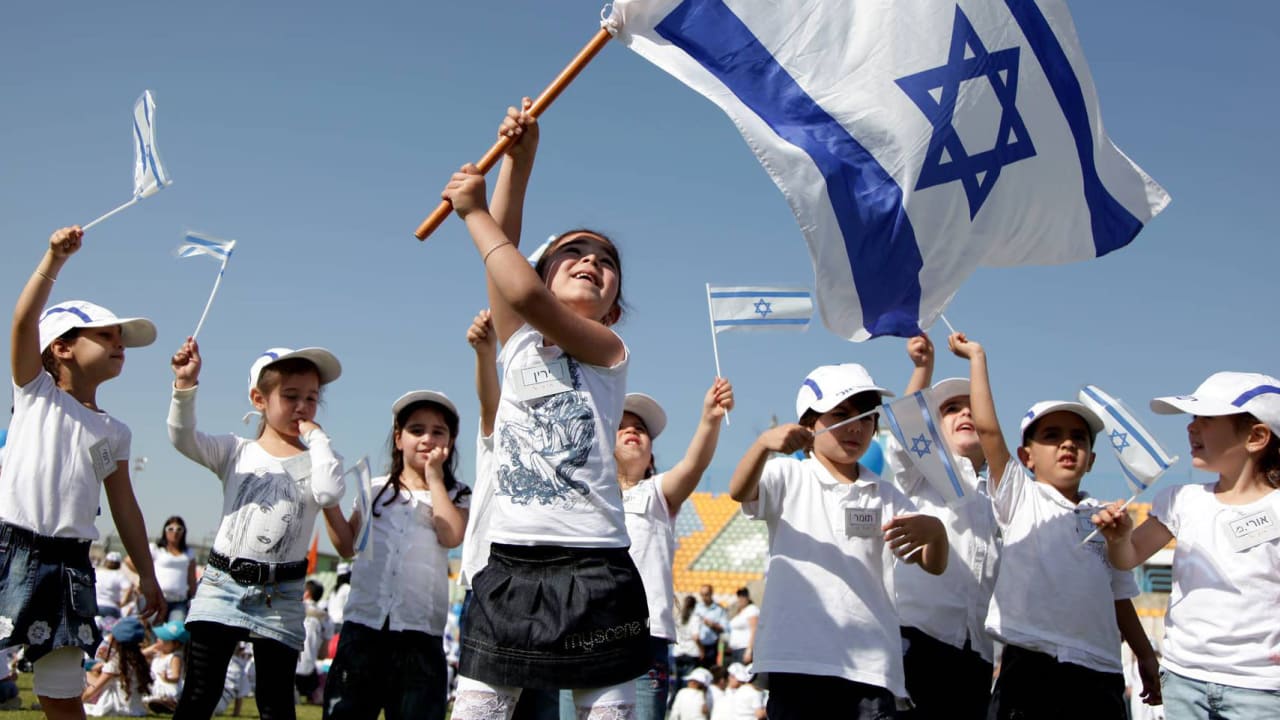
To the frustration (and perhaps secret envy) of our many enemies, Israel consistently holds a high position in the World Happiness Report’s annual index. This year, we were again in the top 10, maintaining for the second year the eighth slot out of the 147 countries ranked.
The report is produced by Gallup, the Oxford Wellbeing Research Centre, and the UN Sustainable Development Solutions Network. That an UN-affiliated body acknowledges something positive about Israel is enough to bring a smile to my face.
The 2026 report is based on a three-year average for the years 2023-2025 – the period every Israeli will forever associate with the October 7, 2023, Hamas invasion and mega-atrocity in which 1,200 people were slaughtered and 251 abducted to Gaza, the consequent war and rocket and killer drone attacks from seven fronts, and the huge surge globally in antisemitic attacks. You might think that there wasn’t much to sing and dance about but never underestimate Israeli spirit and resilience. We’re neither down, nor out.
The report was completed in July 2025, after the 12-day war with Iran (ranked 97) but before the release of the last live hostages from captivity in Gaza in October last year. The fall of the ayatollahs’ regime in Tehran would make a lot of people happy – and safer – both in Iran itself and around the global village, where increasingly large regions are within Iran’s ballistic missile range.
The WHR is based on people’s own assessment of their happiness, as well as economic and social data using variables such as GDP, healthy life expectancy, social support, generosity, freedom to make life choices, and perceived absence of corruption.
The biggest surprise was Costa Rica’s appearance in fourth place, the only non-European country to make the top five. As usual, the top places went to Nordic countries: Finland, followed by Iceland and Denmark. Costa Rica preceded Sweden, Norway, the Netherlands, Israel, and Luxembourg, with Switzerland rounding out the top 10 slots.
Noticeably, no English-speaking country was in the top 10, with New Zealand in the 11th spot, Ireland ranking 13th, Australia at 15, the US in the 23rd spot (immediately after Saudi Arabia and the United Arab Emirates), Canada in the 25th place, and the UK only 29, considerably lower than Israel. Taliban-controlled Afghanistan remained at the bottom of the scale in 147th place.
The grass is greener on our side
Israel’s proverbial grass is definitely greener than its neighbors’: Syria (107), Jordan (119), Egypt (139), and Lebanon (141). The “State of Palestine” was ranked 109, but it’s not clear what territory was polled as the UN-recognized entity does not have internationally defined borders.
There are other anomalies. I searched for Taiwan and found it in the 26th spot, listed as “Taiwan Province of China.” Of course, if it were a province of the People’s Republic, as the Beijing regime so desires, Taiwan would not be nearly as happy. China is in the 65th spot, and Hong Kong, listed as a Special Administrative Region of China, is only 90th.
STUDYING HAPPINESS is a serious business. This year’s research focused on the impact of social media, and the results did not make for happy reading. The report states: “Life satisfaction is highest at low rates of social media use and lower at higher rates of use, according to data from the Programme for International Student Assessment (PISA) covering seven Internet activities for 15-year-old students in 47 countries...
“When combined, the PISA and Gallup data show significantly higher youth wellbeing in countries that spend more time using the Internet for communication, and insignificantly lower youth wellbeing in countries with higher average hours of social media use.”
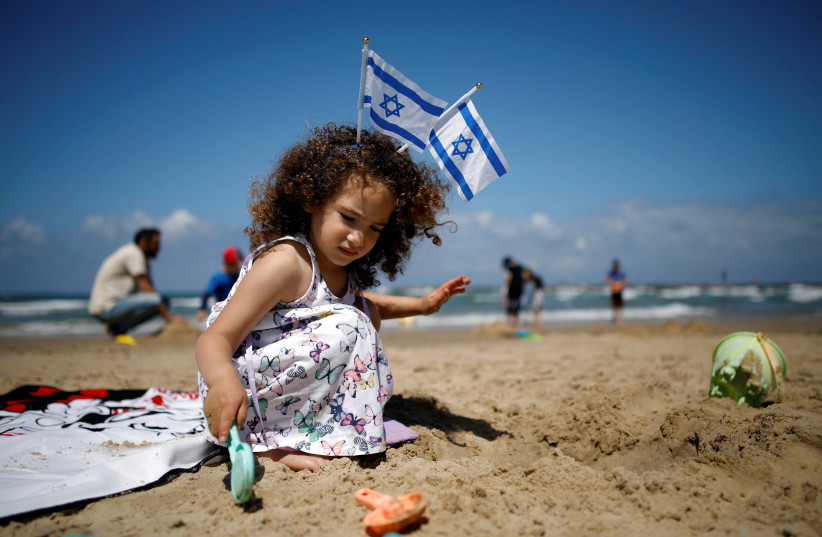
Among other things, the report studies attitudes in different age groups, and here lies one of Israel’s surprising strengths – Israelis under the age of 25 are the happiest age group within the country’s population and in third place in the world.
The more we are tested, the more we pull together to collectively fight back – physically and emotionally. As Douglas Altabef wrote in The Jerusalem Post this week: “Basically, our young people are doing something that many of their elders had doubted that they were capable of: they have embraced the mission of protecting the country they love. They have internalized the importance of Israel and the need for Israel for their defense, protection, and nurturing of it…
“While their 18-year-old peers elsewhere are learning about safe spaces or acceptable pronouns in colleges and universities, or creating false identities for themselves on social media, young Israelis [doing military service] are learning that it’s not about me, but about us.”
Israel’s overall high placing stems in large part from social togetherness. Perfect strangers love to help in emergencies, and we have no lack of them. Perhaps our longevity, another factor in our high ranking, stems from the fact that it’s hard to die of boredom here.
The report’s editors summed up in their “Key insights”: “In general, most Western industrial countries are now less happy than they were between 2005 and 2010…
“In a ranking of happiness changes for under-25s, the United States, Canada, Australia, and New Zealand (the NANZ region) rank between 122 and 133 in the list of 136 countries...
“Negative emotions are becoming more common in all global regions. They are less frequent for the young, except for NANZ, where the increases, relative to other regions, were in sadness. Worry rose more broadly for the young, while the frequency of anger fell everywhere, for young and old alike.”
On the bright side, “Positive emotions continue to be twice as frequent as negative emotions. In all regions, they are higher for those born recently than for their elders, except for NANZ, where that gap has closed in recent years.”
Bar-Ilan University researcher Anat Fanti, quoted by The Media Line, noted that the findings for Israel point to underlying societal strengths: “Israel’s results reflect resilience, but not the psychological cost of war.” She said the data suggests that factors such as family ties, community, faith, and social cohesion are sustaining overall life evaluations even under extended pressure.
THESE FACTORS will all come to the fore next week. I cannot predict what the security situation will be in Israel (or anywhere else) by the time you are reading these lines, but I’m willing to bet that on the evening of April 1, Jews everywhere will sit down with family, friends, and members of the greater community to celebrate the Seder marking the start of Passover, the week-long Festival of Freedom. But Iran and terrorist organizations would love to spoil the holiday, just as October 7, 2023, coincided with the joyous Simchat Torah festival.
Forget the “Don’t worry, be happy” ditty, join me in the Seder song “Vehi she’amda,” recalling how “In each and every generation they rise up against us to destroy us. And the Holy One, blessed be He, saves us from their hands.”
Israel’s identity in a way starts with the Passover story of the Exodus from Egypt, more than 3,000 years ago. It was the return of the Children of Israel to the Land of Israel and the incidents on the way, particularly receiving the Torah at Mount Sinai, that turned the tribal families into a people with a religion.
The Exodus is a central part of Judaism, recalled in daily prayers, on the Sabbath, and on festivals. It is so important that we are commanded to tell the story to our children as if each of us personally went out from Egypt.
Almost every Jew has memories of Seder nights; it’s part of being Jewish, even in non-religious families. The celebration of Passover for thousands of years is a miracle in its own right. It is one of those Jewish holidays often summed up as: “They tried to kill us, we survived, let’s eat.”
And on that happy note, I wish all those celebrating it a “Happy Passover” and as we traditionally say at the end of the Seder: “Next year in Jerusalem.”