If you spend enough time in this country, and enough time in a newsroom here, you learn to recognize the difference between noise and judgment.
There is always noise around Prime Minister Benjamin Netanyahu. There is always noise around US President Donald Trump. Personality, branding, ego, performance, endless political static.
Then a war comes, and the static drops. People ask a simpler question: Who understands the threat, and who knows what to do with power once the talking stops?
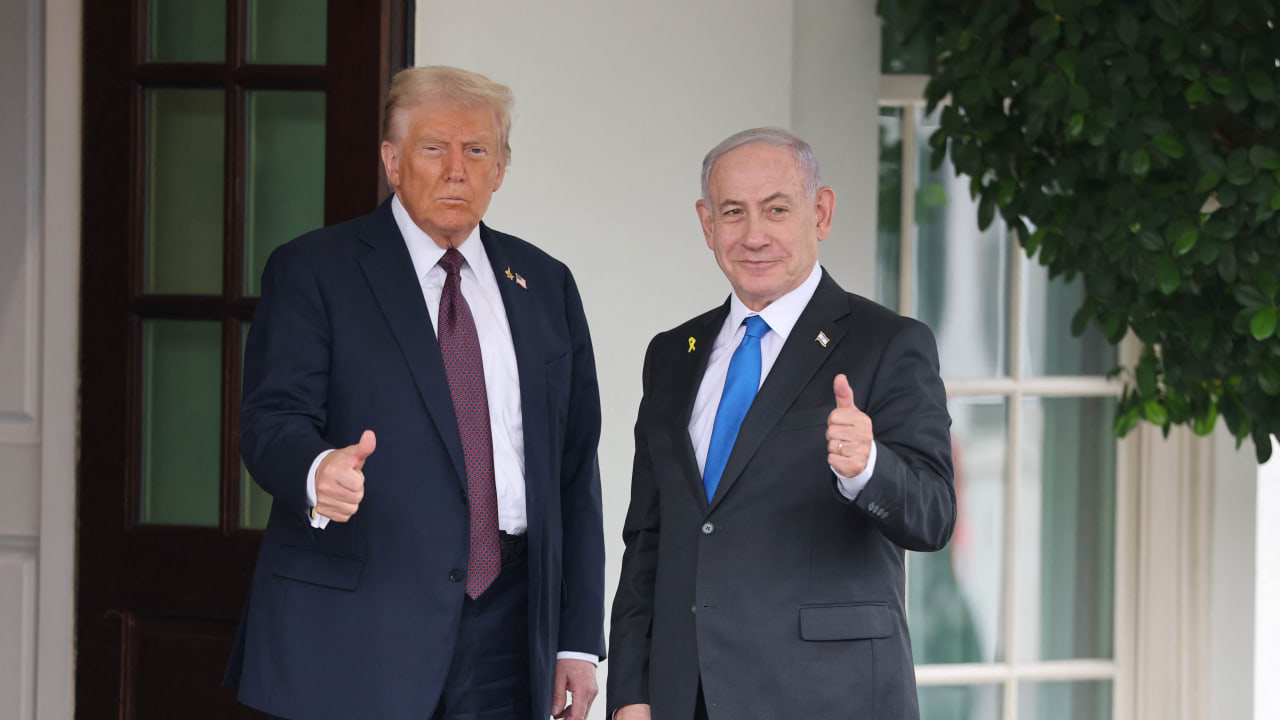
That is why one finding in the JPPI (Jewish People Policy Institute) March survey stands out. On Iran, connected American Jews rate Netanyahu more positively than Trump. Netanyahu gets 54%. Trump gets 46%.
These are not automatic Netanyahu people. Many have been angry with him for years. Some still are. They know his flaws. They also know what Iran is, and they know what this war demands. On that front, they seem to believe Netanyahu looks more serious, more prepared, and more convincing than Trump.

I think they are picking up on something real: Trump has built an entire image around strength. He knows how to sell force. He knows how to dominate a stage. Iran is not a stage. Iran is years of intelligence work, timing, patience, nerve, and the willingness to act when the moment comes. On that test, Netanyahu is getting more credit.
The rest of the survey points the same way. Support for the war against Iran still stands at 62%, even after slipping from 68% in the first week. Nearly half, 46%, say the war should be considered a success only if it ends in regime change in Iran.
That is a public with little patience left for vague achievements and familiar talk about deterrence. They want a result they can recognize. They want something that changes reality.
That helps explain Netanyahu’s standing here. Whatever else people may think of him, many clearly believe he saw the Iranian threat for what it was and approached this campaign with the seriousness it required.
Say what you want about Netanyahu, and there is plenty to say. On Iran, there is a reason even skeptical Jews in America are giving him more credit than Trump.
They are also watching something bigger. Netanyahu has changed the way wars are waged. The fusion of intelligence, reach, patience, and precision has produced a campaign that military officers and decision-makers will study for decades.
Israel went after senior commanders and strategic targets with maximum precision and with a clear effort to keep civilian casualties as low as possible under wartime conditions. People will argue over every war. They will still study this one.
US Jews believe Iran war won't come without consequences
At the same time, nobody reading this survey should confuse support with comfort. The same respondents who rate Netanyahu above Trump on Iran also think Jews in America may end up paying part of the price. Fifty-six percent say the war will hurt Israel’s image in the US. Sixty-five percent say it will increase antisemitism. Both numbers rose sharply from the first week of the war.
That rings true to anyone who has covered Israel long enough and spoken to enough Jews abroad during wartime. The strike is here. The backlash is there. A missile lands in the Middle East, and the argument shows up in an American classroom, office, synagogue, or family chat.
American Jews know this cycle well by now. They can support the war and still brace for the fallout. That is exactly what this survey shows.
There is something else in these numbers. This public sounds harder than many Israelis still assume. More grounded too. Seventy-five percent say there is no chance of a peace agreement with the Palestinians in the foreseeable future. At the same time, 66% say there is no substitute for a long-term peace arrangement.
That feels like a sober reading of reality. They are not pretending peace is around the corner. They are also not pretending that permanent drift is a strategy.
The settlements finding fits that mood. A majority, 55%, say Jewish settlements in Judea and Samaria (the West Bank) are a burden on the IDF and harm Israel’s security. That tells me these respondents are not moving in some neat ideological direction. They are becoming more demanding. Tougher on enemies. Less patient with illusion. More interested in strategy than slogans.
That is why Netanyahu’s edge over Trump on Iran feels bigger than a routine poll number.
Connected American Jews are making a judgment that is sharper than the usual Diaspora commentary about Israeli politics. They are saying that when the issue is Iran, when the threat is existential, when the war is real and no longer theoretical, Netanyahu inspires more confidence than Trump does.
Trump should take that seriously. So should Netanyahu’s critics. So should Israelis who still imagine that American Jews mainly want softer language and endless restraint.
This survey shows a public that can support force, demand a real outcome, fear the backlash, and still conclude that on the most serious security question in the region, Netanyahu has shown more steadiness, more discipline, and a better understanding of the moment.
That is a pretty understandable conclusion.