In 1992, James Carville, the political strategist behind Bill Clinton’s successful presidential campaign, coined what became one of the most famous phrases in modern politics: “It’s the economy, stupid.” His point was simple. Voters, for all their professed values and ideals, tend to make decisions based on what affects their wallets.
More than three decades later, that blunt insight has taken on a far more troubling, even damning, dimension. Today, it is not just voters who are guided by economic self-interest. It is governments. It is alliances. It is the moral posture of the West itself.
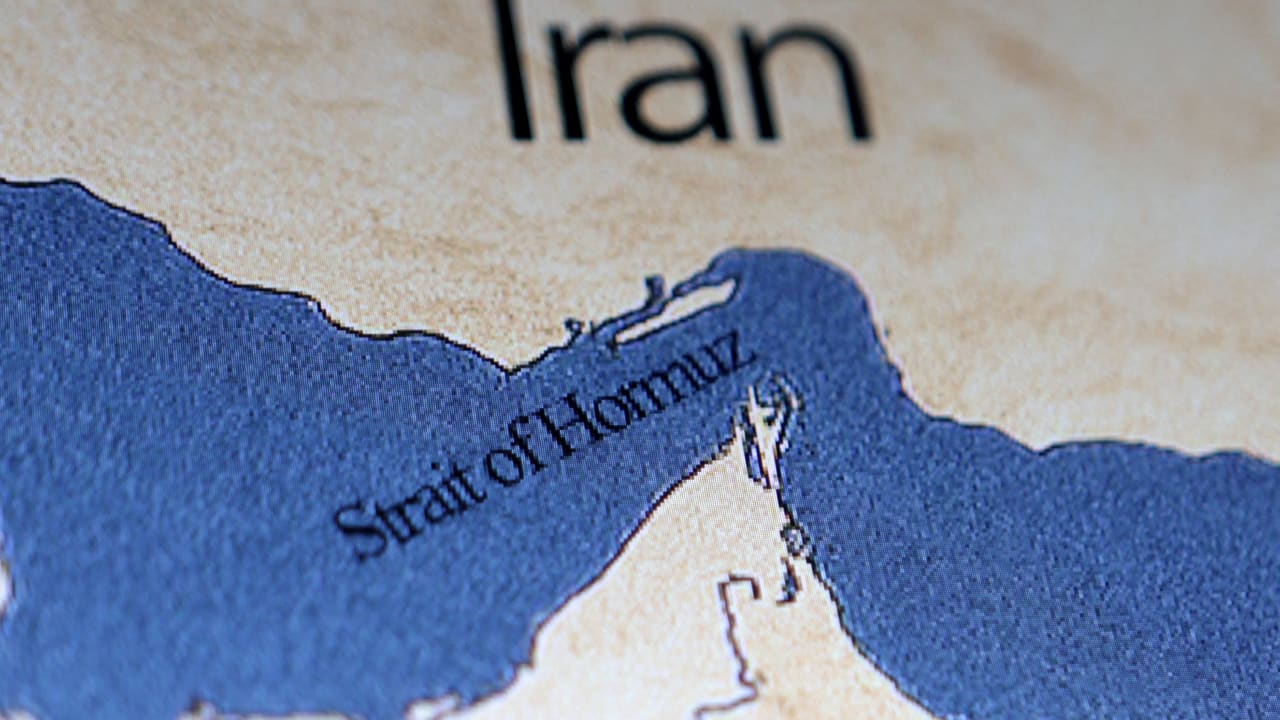
Because right now, as oil prices rise following the US-Israeli strikes on Iran and Tehran’s retaliatory blockade of the Strait of Hormuz, the mask is slipping.
And what we are seeing beneath it is not pretty.
In the immediate aftermath of the strikes, Western leaders were unequivocal. Iran was condemned as a destabilizing force, a regime that funds terrorism, represses its own people, and threatens regional and global security. The language was familiar: strong, principled, morally clear.
But that clarity, it turns out, was fragile.
Because as soon as oil prices began to spike, sending energy markets into panic, raising the cost of living, and threatening already shaky economies, the tone began to shift. Subtly at first. Then more openly. Calls for “restraint.” Appeals for “de-escalation.” Thinly veiled criticisms of the very operation that, days earlier, had been quietly endorsed or at least understood.

It did not take long for moral outrage to give way to economic anxiety. Because, in truth, it’s not just “the economy, stupid.”
It’s the oil prices.
The Strait of Hormuz is not just another geopolitical flashpoint. It is the artery through which roughly a fifth of the world’s oil supply flows. When Iran moves to choke it, the consequences are immediate and global. Fuel prices surge. Inflation rises. Governments panic. Voters grow restless.
And suddenly, the question is no longer: Is Iran a malign regime that must be confronted?
It becomes: Can we afford this?
When oil prices override moral clarity
This is the uncomfortable truth that the past weeks have exposed. For all the lofty rhetoric about human rights, democracy, and standing up to evil, the West’s moral compass appears to be calibrated, above all, by the price per barrel.
Let us be clear. Nothing fundamental has changed about Iran in the past few weeks. It is still the same regime that arms and funds Hezbollah, Hamas, and other proxies. It is still the same government that brutally suppresses dissent, executes protesters, and denies basic freedoms to its citizens. It is still the same ideological force committed to Israel’s destruction and deeply hostile to Western interests.
If anything, the case against Iran has only grown stronger. And yet, as energy prices climb, the willingness to confront that reality weakens. This is not pragmatism. It is moral surrender dressed up as prudence.
Of course, governments must consider economic consequences. No responsible leader can ignore the impact of rising fuel costs on ordinary citizens. But there is a difference, an enormous, consequential difference, between weighing economic factors and allowing them to dictate one’s entire moral posture.
What we are witnessing now is the latter. It is the quiet recalibration of principles in the face of economic discomfort. It is the willingness to tolerate, excuse, or even indirectly empower a regime like Iran because confronting it has become inconvenient.
And it is, quite frankly, a disgrace.
History has taught us, time and again, that appeasing dangerous regimes for the sake of short-term stability is not only morally dubious but strategically foolish. It does not prevent conflict. It postpones it, often at a far greater cost.
Yet the temptation persists.
Because oil prices are immediate, tangible, and measurable. Moral clarity, by contrast, is abstract. It does not show up on a monthly bill or a quarterly report. It does not trigger instant political backlash. So it is sacrificed.
But what does it say about us, about the West, about the values we claim to uphold, if our commitment to justice can be so easily shaken by the fluctuations of the energy market? What does it say if the difference between standing up to a terrorist-sponsoring regime and urging restraint against those who confront it is measured in dollars per barrel?
It says that our priorities are deeply, profoundly skewed. It says that we have confused comfort with conscience. And it says that, when pushed, we are willing to choose the former over the latter.
There is an irony here that should not be lost. For years, Western leaders have warned about the dangers of dependence on hostile regimes for energy. They have spoken about diversification, resilience, and the need to break free from precisely this kind of leverage.
And yet, when that leverage is exercised, when Iran uses control of a critical chokepoint to exert pressure, the response is not defiance but hesitation.
Not resolve, but retreat. Because the system we have built, and the choices we have made, have left us vulnerable, not just economically, but morally.
It does not have to be this way. A principled foreign policy does not require recklessness. It does not demand ignoring economic realities. But it does require consistency. It requires the courage to say that some things matter more than short-term cost.
That there is a line between right and wrong that cannot be redrawn every time markets fluctuate.
And that standing up to regimes that sponsor terror and threaten global stability is not optional, it is necessary.
Yes, oil prices matter. Yes, economic stability matters.
But if they become the sole lens through which we view the world, then everything else, justice, security, morality, becomes secondary.
And once that happens, we are no longer leading. We are reacting. We are no longer upholding values. We are negotiating them. Carville was right, in his way. The economy does matter. It always has.
But if the lesson we have taken from that insight is that only the economy matters, if we allow it to override every other consideration, then we have learned the wrong lesson entirely. Because there are moments in history when the question is not what is cheapest, or easiest, or most immediately beneficial.
It is what is right. And if we cannot answer that question without first checking the price of oil, then perhaps the problem is not Iran.
It is us.
The writer is a rabbi and physician. He writes and teaches on Jewish ethics, leadership, and resilience. His work appears on rabbidrjonathanlieberman.substack.com and youtube.com/@rabbidrjonathanlieberman.