Justifiable though the February 28 US-Israeli pre-emptive strike on Iran may have been on moral, humanitarian, strategic, and political grounds, it was arguably not so strong in terms of international law. France has criticized it as illegal, while Spain has explicitly declared it a breach of that law.
Which international law is the action presumed to violate?
The UN Charter, binding on all member states, is generally regarded as the central component of international law. Article 2(4) bars a state from using force “against the territorial integrity or political independence” of another state, but elsewhere, the charter specifies two accepted routes to its legal application: Security Council authorization, and self-defense.
Legal limits and the UN charter
The US-Israel strike did not receive Security Council authorization, and self-defense under Article 51 is permitted only “if an armed attack occurs.”
When the US and Israel struck, therefore, Iranian strategists could have reasoned that their two great enemies had breached international law and laid themselves open to universal condemnation in the UN and in the court of world opinion.

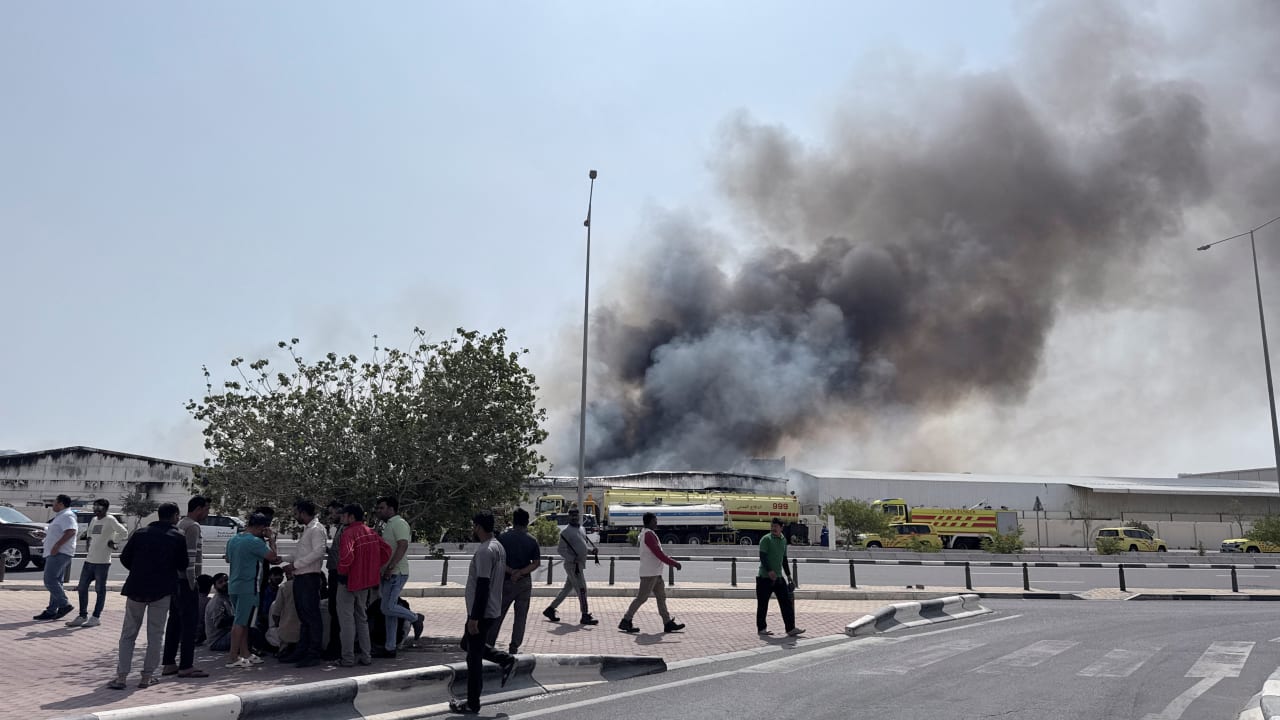
But blinded by their long-standing doctrine of regarding US forward bases and regional hosts as part of the hostile “system,” they ignored the political potential of the situation. They sanctioned the launching of missiles and drones at Israel and at US bases in Bahrain, Kuwait, Qatar, the UAE, Jordan, and Saudi Arabia. Inevitably, some hit civilian areas.
Iranian officials framed this onslaught as a “legitimate right and duty” of self-defense and revenge. They explicitly declared “all US resources in the vicinity” to be lawful targets, warning that the operation would continue until America and Israel were “definitively defeated.”
The decision to strike US bases regardless of their location was a tactical error of major proportions. It could also, in the long run, prove existential for the regime. By attacking states that were not direct participants in planning or carrying out the February 28 strike, Tehran has pushed them toward tighter alignment with the US and Israel, solidifying a broad anti-Iran coalition.
Joint statements by Saudi Arabia, Qatar, Bahrain, UAE, Jordan, Kuwait, and the US have explicitly denounced Iran’s strikes. They “reaffirm our right to self-defense,” signaling a willingness to treat Iran as a common threat and to act accordingly. The Gulf monarchies in particular host critical US infrastructure and missile defense networks. Having framed Iran’s attacks as aggression against their own territory and civilians, they can justify far-reaching cooperation in a prolonged campaign against Iran’s military and economic base.
Regional fallout and Iran’s tactical misstep
By striking a range of Middle East states, Iran has turned Charter Article 51 – the “self-defense” justification for military action – against itself. Host states whose territory or US bases were attacked now clearly have their own self-defense claims against Iran. Many of those governments publicly condemned Iran’s strikes as “blatant aggression” and “flagrant violations” of sovereignty. The UAE has severed diplomatic relations with the Islamic Republic, closed its embassy in Tehran, and withdrawn its ambassador and staff.
For Western states with facilities and military personnel in those countries, Iran’s attacks strengthen the argument for continued, or even expanded, defensive action against Iranian launches. Even experts who were highly critical of the original US-Israeli raid affirm that once Iran widened the battlefield to third-state territory not directly involved in the February 28 attack, its own self-defense claim was weakened, and those of third-states became correspondingly stronger.
Iran’s broad regional retaliation has done a good deal of Washington’s coalition-building work for it.
Tehran has realized the magnitude of its tactical mistake too late. Speaking on Iranian state TV on March 7, Iranian President Masoud Pezeshkian apologized “on my own behalf and on behalf of Iran to the neighboring countries that were attacked by Iran… no more attacks will be made on neighboring countries, and no missiles will be fired, unless an attack on Iran originates from those countries.”
The eminent British lawyer Geoffrey Robertson conducted the inquiry into “arguably the worst crime since the Second World War” – the mass murder by the Iranian regime in 1988 of many thousands of political prisoners. Writing on March 5, he has suggested how the UN could act to provide some justification for the US-Israeli strike.
He points out that just two weeks before the invasion, the state of Iran “murdered at least 15,000, and possibly upward of 35,000, of its own peacefully protesting citizens.”
Many more, he reports, were crippled by a new form of torture carried out by Islamic revolutionary guards, namely shooting them in the face. This barbarism, he claims, was ordered by Ali Larijani, supreme head of Iran’s National Security Council, and came after government newspapers had urged a return to the “spirit of 1988.”
Robertson suggests that the UN, without condoning or condemning a war that has divided its members, could act under Chapter VII of its charter. This gives it power – used before for wars in the Balkans, Rwanda, and Sierra Leone – to set up a war crimes court to investigate and indict those responsible for crimes against humanity prior to the war in question.
“The work,” he writes, “could begin immediately in The Hague and the indictments made available to a new government when it emerges.”
Agreeing with US President Donald Trump that UK Prime Minister Keir Starmer “is not Winston Churchill,” Robertson says that Starmer at least respects international law. He suggests that Starmer could urge the UN to establish an international criminal court for Iran, to prepare indictments against those officials and military officers who over the past 47 years have committed international crimes against political prisoners and peaceful protesters.
What of the immediate future? While Trump has clarified his war aim as “unconditional surrender,” the Iranian regime is struggling to reconstitute itself after the killing of its supreme leader. Effective governance in Iran could be bombed out of existence. Russia could act to prevent regime collapse – media reports indicate that Moscow is currently providing Iran with targeting intelligence on US forces and assets. Meanwhile, a coalition of those states attacked by Tehran is possible, but not assured.
As for Iran’s tactical blunder, only time will tell whether it actually becomes existential for the regime.
The writer, a former senior civil servant, is the Middle East correspondent for Eurasia Review. Follow him at: www.a-mid-east-journal.blogspot.com