Israel’s High Court of Justice recently decided a technical, bureaucratic question that, on its face, raises no real legal issue. The ruling, less than a page long, was unanimous. Trifling? The composition of the panel – seven judges, including Chief Justice Yitzhak Amit and Deputy Chief Justice Noam Sohlberg – suggests otherwise.
As do the 15 attorneys representing the parties, the 27 petitioners, and the many respondents. This “technical” matter has already sparked a coalition storm, and it carries destructive potential for Israel-Diaspora relations.
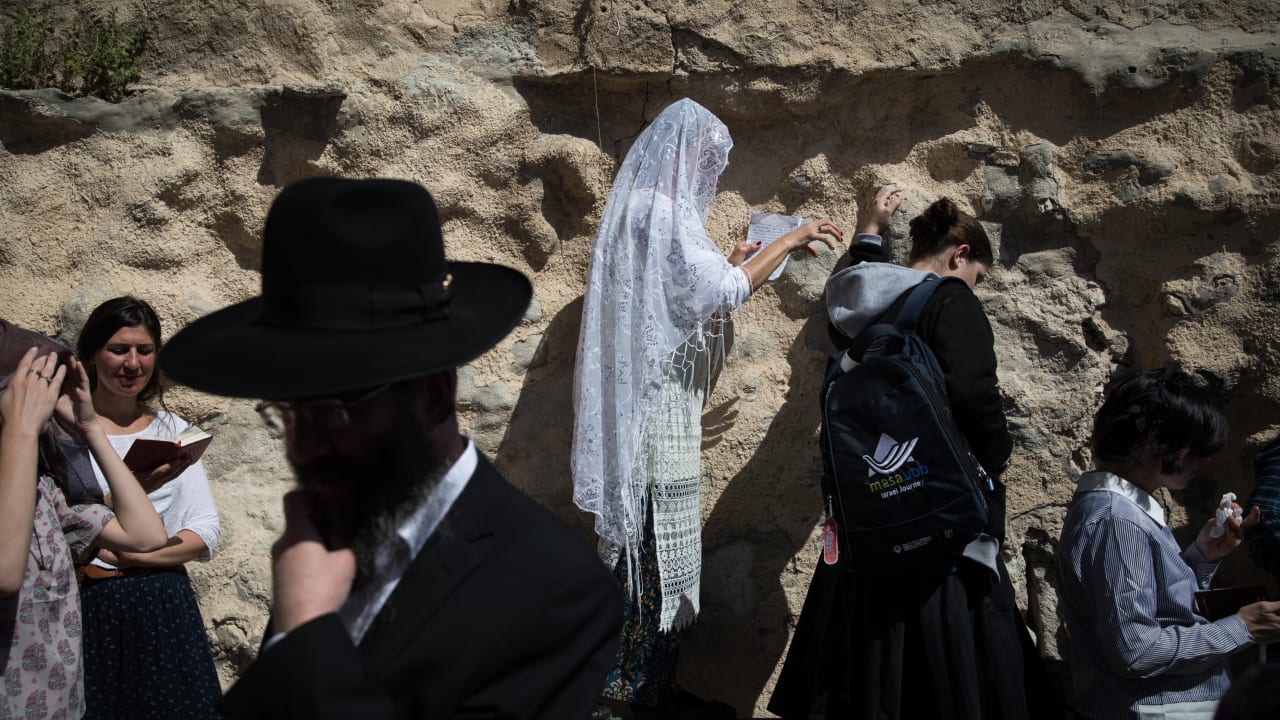
At issue is the implementation of a 2018 decision of the Ministerial Committee concerning the “Western Wall compromise” struck two years earlier. As you may recall, there is a plaza known as “Ezrat Yisrael” near the southern section of the Wall where non-Orthodox prayer services may be held. At the time, the compromise was adopted by Netanyahu’s government without ultra-Orthodox (haredi) opposition.
Later, however, the haredi parties changed their position, and implementation of the compromise was frozen.
This resulted in a major uproar among segments of Diaspora Jewry – where the largest denominations are not Orthodox – who felt shut out from the greatest national and religious symbol of all.

The current High Court hearing dealt with the narrow question of whether the state must submit a building permit application to enable access from “Ezrat Yisrael” to the Western Wall itself. The state dragged its feet for years, and the High Court held that it must file the application. A small matter rendered huge.
The titans of identity politics, which casts a heavy shadow over public life in Israel, recognized a golden opportunity for a trifecta: to attack the Court on the governmental level – “the High Court has crossed the last red line”; to foment religious fervor – “the High Court has raised its hand against the Holy of Holies of the Jewish people”; and to inflame nationalist sentiment – “a decision that contradicts the state’s core values.”
From the vantage point of the nationalist, religious, and ultra-Orthodox identity camp, the Court’s ruling is – pardon the allusion – an expression of the “banality of procedure.” The High Court’s values-tribunal disguises a normative decision under the cloak of dry procedure: a ruling sparse in words yet rich in meaning.
Procedure, not provocation
However, the opposite is true: as a matter of law, the High Court had no other option. Any other outcome would have been judicial activism on steroids. That is precisely why Israel’s conservative justice minister should have accepted the result as self-evident. By unleashing his fury at the justices, he commits the very sin he attributes to them: favoring ideology over professional duty.
And indeed, the ruling was unanimous, signed not only by secular and liberal justices but also by religious and conservative ones.
Addressing the issue itself, the heart is soured observing the inability of leading Israeli politicians to accommodate the religious pluralism of our time. Why do they insist on blocking the realization of an elementary right – of Jewish brothers and sisters – to express their faith in a way that is not accepted by Israel’s majority, yet authentically reflects their inner world?
This is not a zero-sum game. A pleasant, accessible “Ezrat Yisrael” will not diminish in the slightest the power of the moving, uplifting gatherings of the multitudes of Israel – many of them not religious in the halachic sense – who regularly fill the main Western Wall plaza.
The price of this coercive narrow-mindedness is high. Significant swaths of Diaspora Jewry sees the State of Israel’s attitude toward their ability to practice Jewish worship at the Western Wall as a litmus test of Jewish cohesion. They are the other half of the Jewish family, currently under attack by antisemitic groups on both the Right and the Left.
Those groups not only fail to distinguish between Jews in Israel and Jews in the Diaspora, but at times, they even persecute Diaspora Jews because of the state’s actions. Shouldn’t we honor them in our own home? Should we deny that we are the nation-state of the Jewish people – and not just the state of Israel’s citizens?
Now a bill has been introduced – aptly titled “Thorns in the Eyes” – that seeks to prevent implementation of the Western Wall compromise by declaring Israel’s Chief Rabbinate the sole authority regulating prayer in the southern plaza as well. It also stipulates that non-Orthodox prayer – such as prayer services organized by women’s groups – constitutes a “desecration” of the holy sites.
Prime Minister Benjamin Netanyahu, who understands the sensitivity well, decided that coalition members would be able to vote “according to the dictates of their conscience.” Now we can only hope that our politicians will listen – either to reason or to the pangs of their conscience.
The writer is president of JPPI – the Jewish People Policy Institute – and a professor (emeritus) of law at Bar-Ilan University.